Skip to content
Keith Brown is a Bay Area real estate agent who built his business calling expired and canceled listings every morning, long before he ever looks at anything else on his schedule. A former Cal State East Bay professor, he has used REDX for years to keep that list full. That system has produced more than $10 million in sales volume for him in a single year.
What wins Brown the listing happens in the days between setting the appointment and knocking on the door. His listing appointment checklist covers a pre-qualification call while the seller is still on the line, a calendar confirmation, a day-of check-in, and a packet he drops on the porch himself. Here is how he prepares for a listing appointment so that by the time he sits down at the table, all that is left to talk about is price and timeline.

Co-authored by the REDX Publishing Team and:
Keith Brown
Keith Brown is a San Francisco Bay Area real estate agent with more than 20 years in the business. A former Cal State East Bay professor, he built his practice on daily expired and canceled listing prospecting.
Quick Links:
- Why Do Most Expired Listings Actually Fail to Sell?
- What Do You Do the Moment You Set the Appointment?
- What Do You Actually Ask on That Pre-Qualification Call?
- How Do You Confirm the Appointment So It Actually Holds?
- What Do You Send or Drop Off Before You Get There?
- What Does the Listing Appointment Itself Look Like When You Have All That?
- What Would You Tell an Agent Who Is Winging Their Listing Appointments?
- Keith Brown’s Listing Appointment Checklist for Monday Morning
Why Do Most Expired Listings Actually Fail to Sell?
According to REDX MLS tracking data, 43% of expired listings relist within 90 days. Brown traces most of those failed sales back to the seller. Getting one of those sellers on the phone is a different skill from the prep work that follows, and REDX’s expired listing scripts cover the openings that earn the appointment.
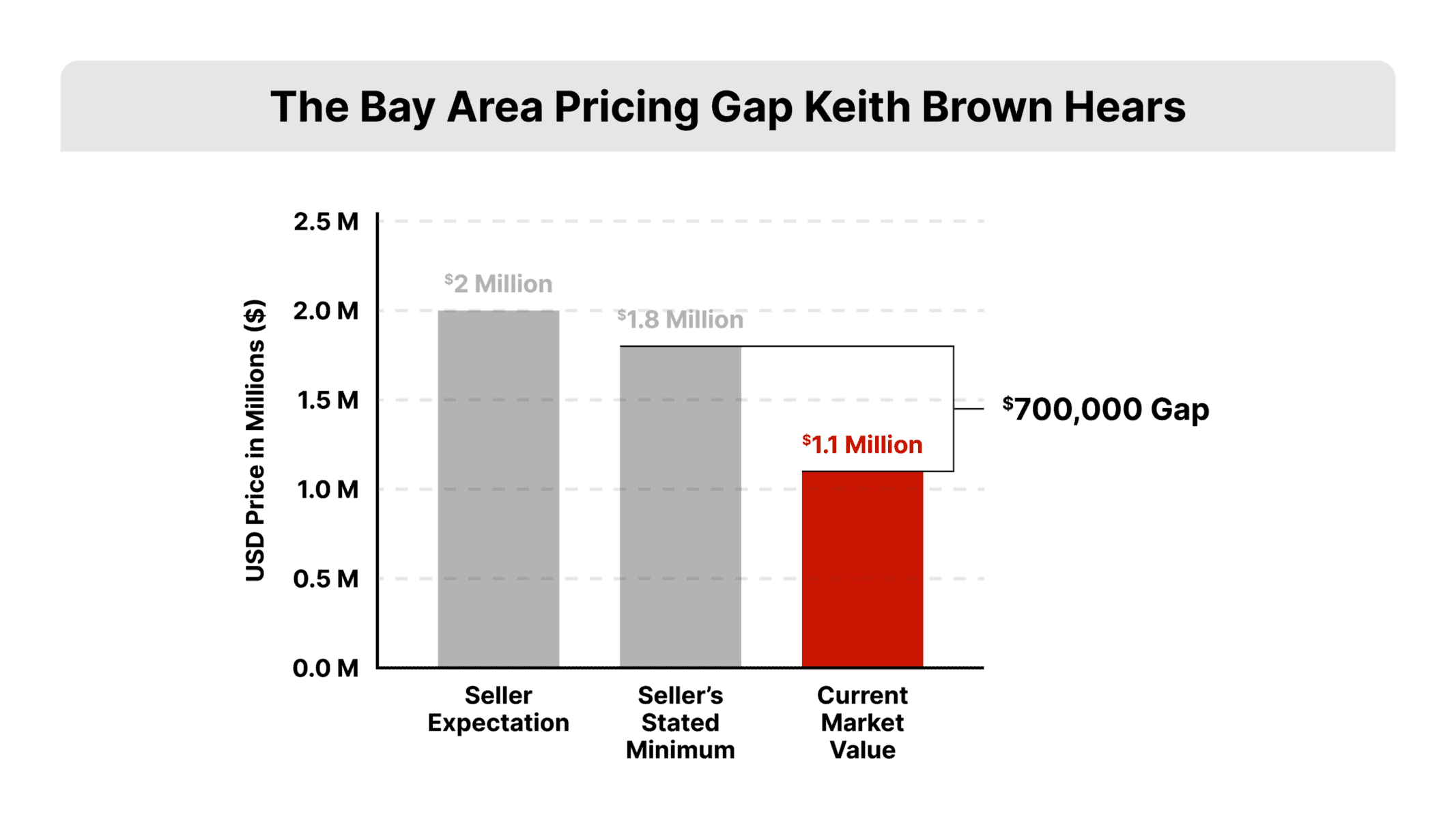
“A vast majority of people, sellers don’t have a reason for selling their home,” he said, and in his Bay Area market, that shows up as a pricing gap. “Now everybody expects their house to be $2 million, but now it’s worth $1.1 million, and they’re like, I’m not going to accept anything less than 1.8 million for it,” he said. “I’m like, well, then you’re going to wait for 20 years.”
What Do You Do the Moment You Set the Appointment?
The listing appointment checklist starts while Brown is still on that first call.
“It’s one of the more important things, and if I forget to do this, I generally will not get the listing.”
The moment a seller agrees to meet, Brown tells them he will send a calendar invite and asks them to accept it right away. Then, while he still has them on the phone, he asks for two or three more minutes. “Would you mind answering a few questions for me so I’m better able to prepare for our meeting?” is how he puts it, and he says most sellers say yes because he is already on the call with them.
What Do You Actually Ask on That Pre-Qualification Call?
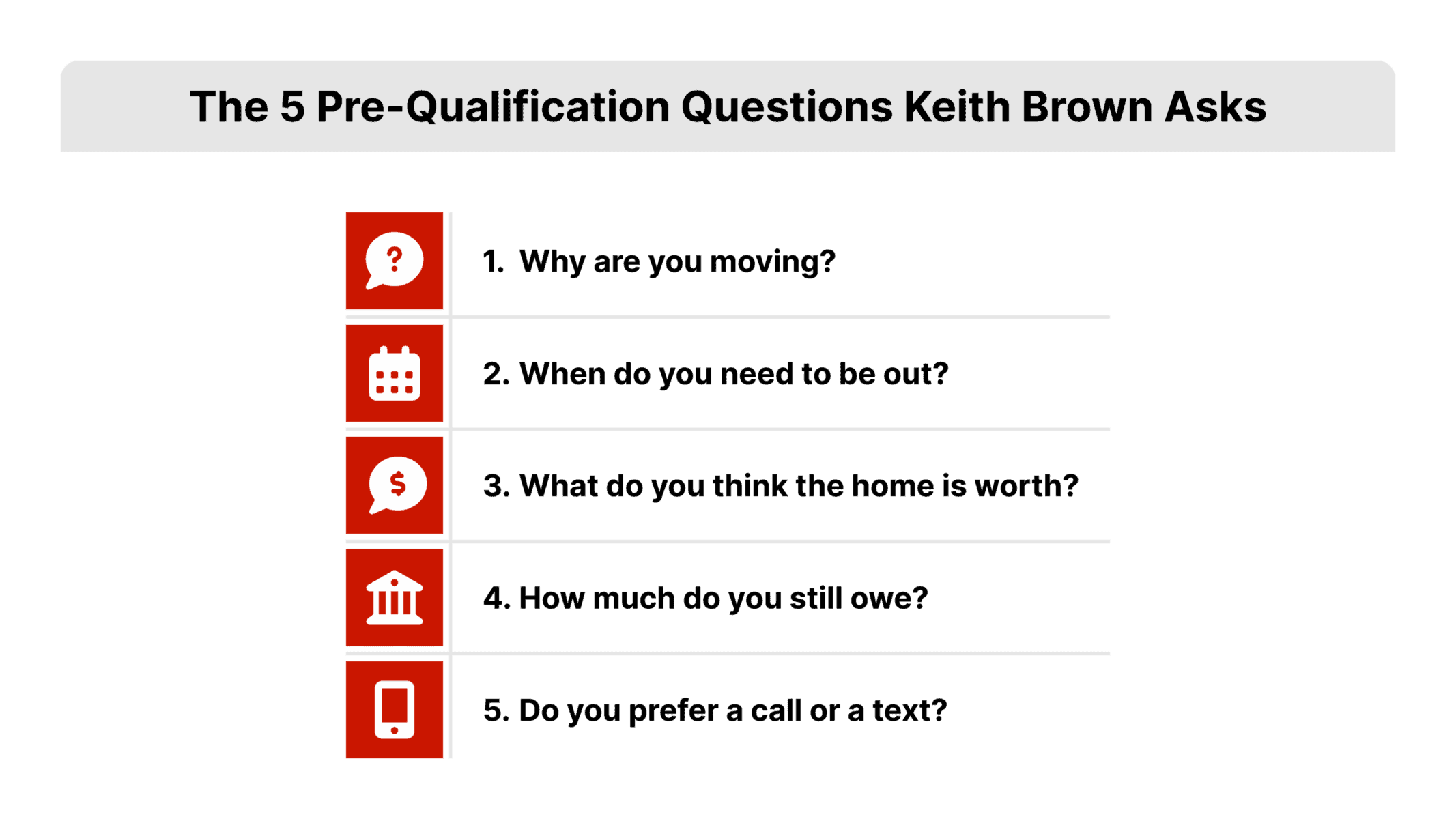
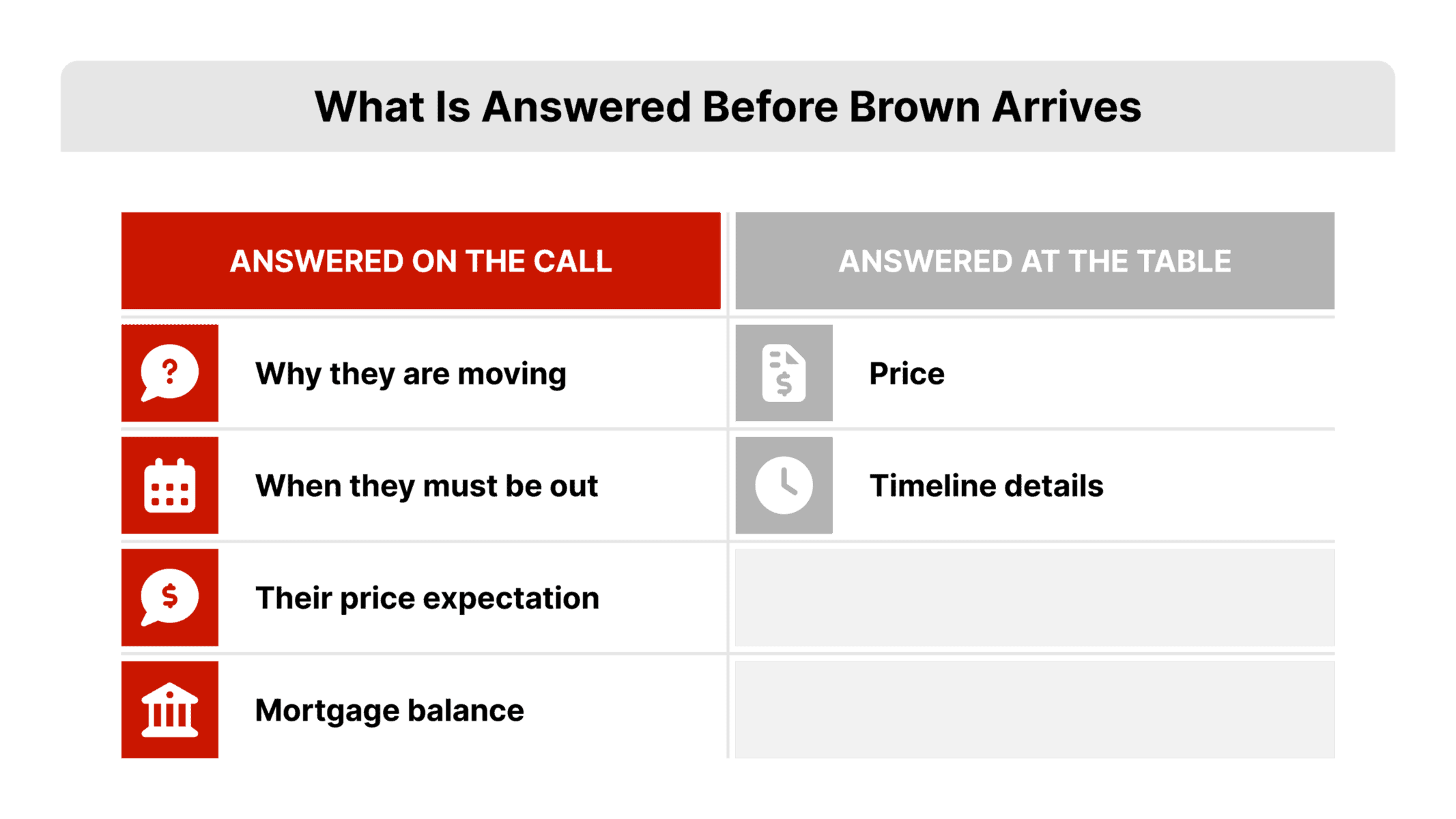
Brown’s list of listing appointment questions follows a deliberate order. It covers why the seller is moving, when they need to be out, what they think the home is worth, and how much they still owe on it.
He also asks how they prefer to hear from him, a call or a text, because he uses the answer later to confirm the appointment. “They’re designed to kind of lead them to always be saying yes to me,” he said, “so that by the time I’m at the listing appointment, I already know everything that I need to know.”
Brown keeps all of it organized in Vortex, REDX’s free lead management hub. “I’m a folder person,” he said. He keeps a separate folder for every lead type and situation, from expireds to residential income, so nothing gets lost between the call and the appointment.
How Do You Confirm the Appointment So It Actually Holds?
Brown confirms twice before he ever drives to the appointment. The calendar invite goes out first, and he asks the seller to accept it so the appointment is locked on both ends.
“I always send an email confirmation for all appointments,” he said. “I always call the day of to confirm. That’s always important.” He calls or texts, whichever the seller told him they prefer back on the pre-qualification call.
What Do You Send or Drop Off Before You Get There?
Between the confirmation and the appointment, Brown sends a packet by email: a short guide to selling a home, plus a few of the techniques he uses that are a little different from other agents. If a seller does not use email, he does not mail it.
“I don’t believe in sending things through the mail. I’ll drive by and drop it off on their doorstep, so I know they’re going to get it.”
That habit answers what to bring to a listing appointment before the appointment even starts: nothing, because the seller already has it.
Brown also sends a running series of email templates that explain what happens next at every stage. “I believe in overcommunicating,” he said. “If your clients know what’s going to happen, they tend to not freak out.”
He estimates that communication with a previous agent is the complaint he hears from sellers most often, and that frustration sits behind many of the most common expired listing objections.
What Does the Listing Appointment Itself Look Like When You Have All That?
By the time Brown sits down at the seller’s table, the pre-qualification call has already answered the questions that eat up most listing appointments. “I don’t have to go through and say, okay, why do you want to move, what time do you have to be there, what do you want to price it at, how much do you owe,” he said. “All those things are already answered.”
He tells sellers exactly that on the phone before he ever shows up. “All we need to do is talk about price and timelines and details,” he said. It is the same reason his pre-qualification system exists: a shorter, more focused meeting where nothing is left to figure out except the two things that actually decide whether a house gets listed.
What Would You Tell an Agent Who Is Winging Their Listing Appointments?
Brown’s answer goes back to the idea that runs through his whole system: get to the seller’s motivation first. “It’s always about asking the right question to get to motivation,” he said. “Why do they want to sell their home?”
He does not soften the advice about the prep work either. Skip the pre-qualification call, and those same questions surface at the appointment, using up time that belongs to the seller.
Keith Brown’s Listing Appointment Checklist for Monday Morning
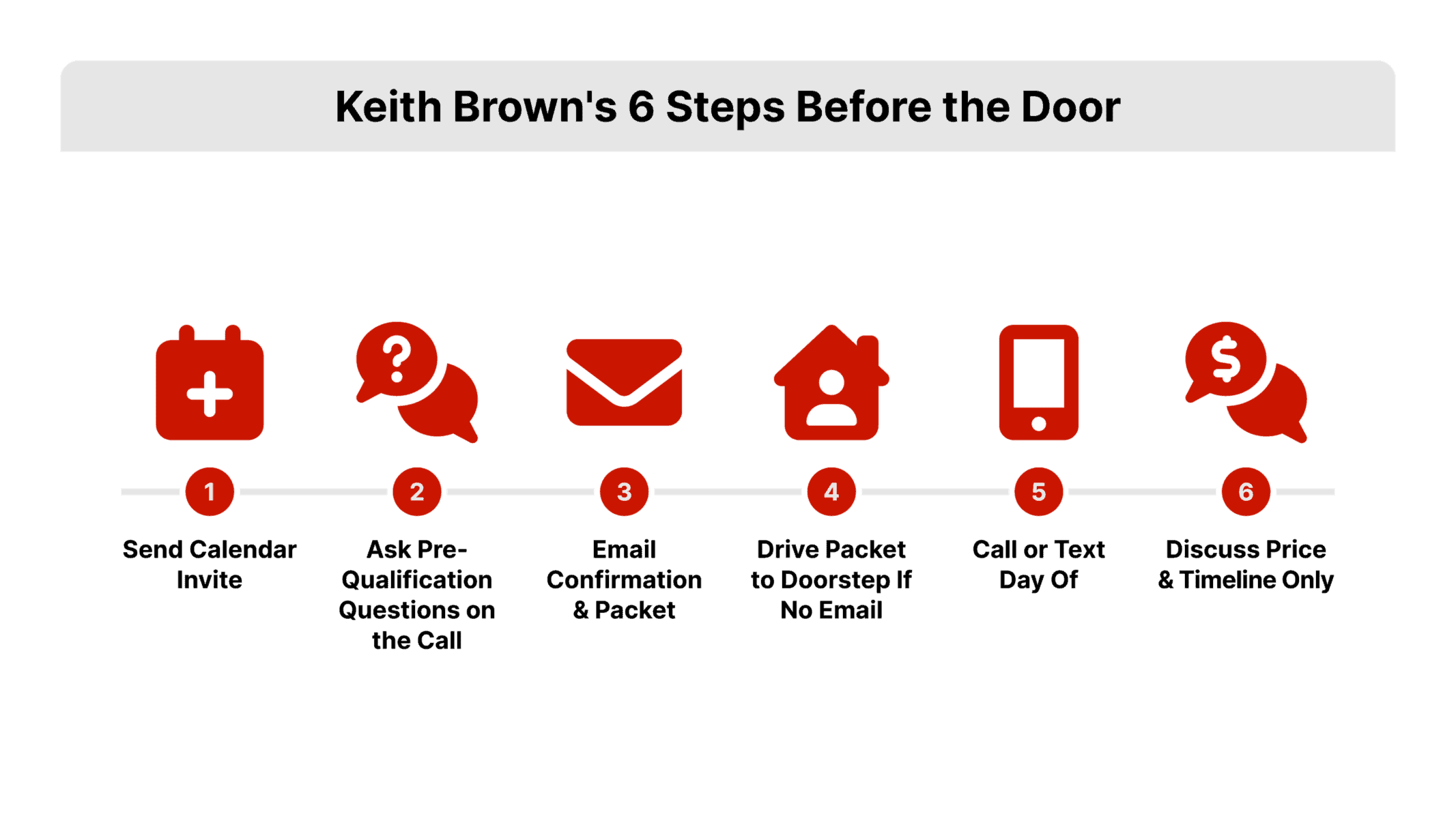
Brown’s listing appointment checklist stays simple, and it all happens in the days between the phone call and the front door, never at the appointment itself.
- The moment a seller agrees to meet, send the calendar invite and ask them to accept it on the spot.
- While you still have them on the phone, ask for two or three more minutes to run your pre-qualification questions: why they are moving, their timeline, their price expectation, their remaining mortgage balance, and how they prefer to be reached.
- Send a confirmation email along with a short packet, a guide to selling their home plus anything else that helps them trust you before you arrive.
- If they do not use email, drive the packet to their doorstep yourself.
- Call or text the day of the appointment to confirm, using whatever method they told you they prefer.
- Walk into the appointment ready to talk about exactly two things: price and timeline.
Expired leads convert at 22.8%, per REDX’s 2.7M lead study. Brown’s version of that number comes from treating the pre-qualification call as the real work and the appointment itself as the formality.
Key Takeaways
- Keith Brown’s listing appointment checklist starts the moment he sets the appointment, days before he ever shows up.
- He asks his pre-qualification questions while the seller is still on the phone, covering why they’re moving, their timeline and price expectations, and what they still owe, before he ever confirms the meeting.
- He confirms twice: a calendar invite up front and a call or text the day of, based on how the seller said they want to hear from him.
- He never mails a packet. If a seller has no email, he drives it to their doorstep himself.