Skip to content
 Key Takeaways
- Posting more content is not the fix. Real estate social media marketing works when you pick a specific audience, meet them where they already spend their time, and speak directly to the problem they’re facing.
- Before writing a single post, marketers answer three questions: who is the audience, where do they spend their attention, and what will actually make them stop scrolling.
- The message matters more than the production value. A clear, relevant message beats a polished video aimed at nobody in particular.
- Platforms reward consistency, not virality. Posting on a regular schedule and engaging with the people who respond builds a real estate brand faster than chasing views.
You’re posting. You’ve been posting for months, maybe years. And the phone still isn’t ringing because of it. That’s the most common complaint agents have about social media, and it’s rarely a content problem. It’s a targeting problem.
Most agents approach real estate social media marketing in 2026 the same way they’d approach a hobby: post something, see what sticks, post again. That works fine for building a following. It doesn’t work for building a listing pipeline, because a following and a pipeline aren’t the same thing.
This post breaks down the framework that separates agents who get listings from social media from agents who just get likes. It starts with a mindset shift, then walks through the three questions every marketing plan has to answer before a single post goes out.

Co-authored by the REDX Publishing Team and:
Connor Snyder
Connor is the co-founder and CEO of STORYY, a social media video editing service agents can use to scale their online brand.
Quick Links:
- Why Isn’t Your Real Estate Social Media Marketing Getting You Listings?
- What Are the Three Questions Every Social Media Plan Needs to Answer?
- Who Should Real Estate Agents Target on Social Media?
- Where Should Real Estate Agents Focus Their Social Media Content?
- How Do You Get Buyers and Sellers to Actually Pay Attention to Your Posts?
- What’s the Formula for a Real Estate Social Media Post That Converts?
- How Often Should Real Estate Agents Post on Social Media?
- What Should You Check Before You Publish a Real Estate Social Media Post?
Why Isn’t Your Real Estate Social Media Marketing Getting You Listings?
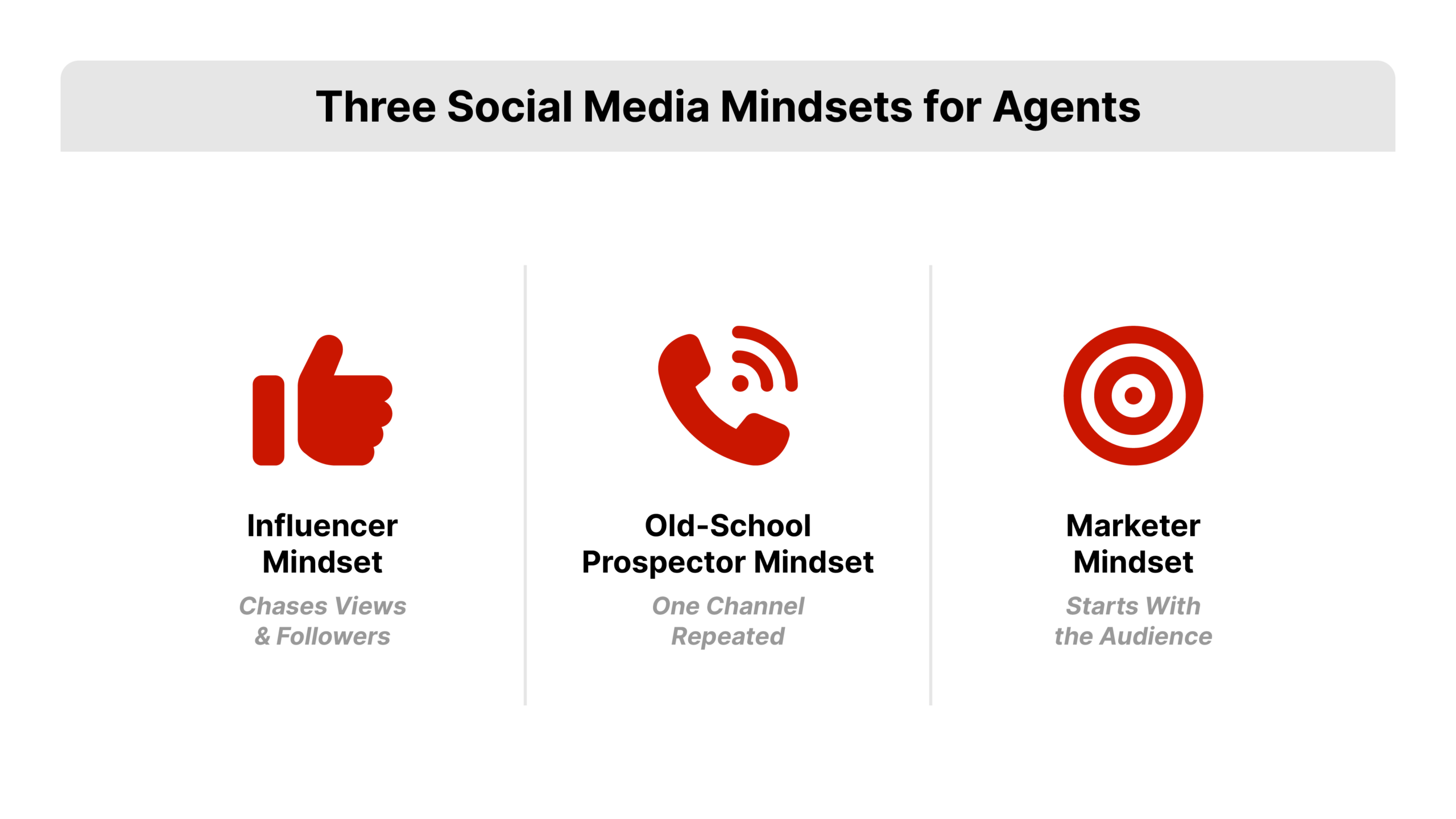
Most agents are stuck in one of two mindsets that actively work against them: the influencer mindset or the old-school prospector mindset. Neither one is built to produce listings on a repeatable basis.
The Influencer Mindset
Agents who fall into this trap measure success in views, followers, and likes. Those numbers feel good, but they’re vanity metrics. They don’t tell you whether a buyer or seller is one step closer to calling you. A video with 50,000 views and zero relevant comments from homeowners in your market has done nothing for your business.
The Old-School Prospector Mindset
The opposite problem shows up in real estate social media marketing as treating it like there’s only one channel that works, and grinding on it without any strategy behind the grind. This mindset built plenty of successful real estate careers on the phone and at the door. It just doesn’t translate directly to social media, where the algorithm decides who sees your content, not how many times you show up.
The Marketer Mindset
A marketer starts with the outcome, not the content. Before writing a caption or filming a video, a marketer asks who the content needs to reach and why that person would care. That single shift, starting with the audience instead of the content, is what turns real estate social media marketing from a hobby into a lead source. It also lines up with NAR’s own research on how buyers and sellers choose an agent, which points to reputation and referral over one-off viral moments.
What Are the Three Questions Every Social Media Plan Needs to Answer?
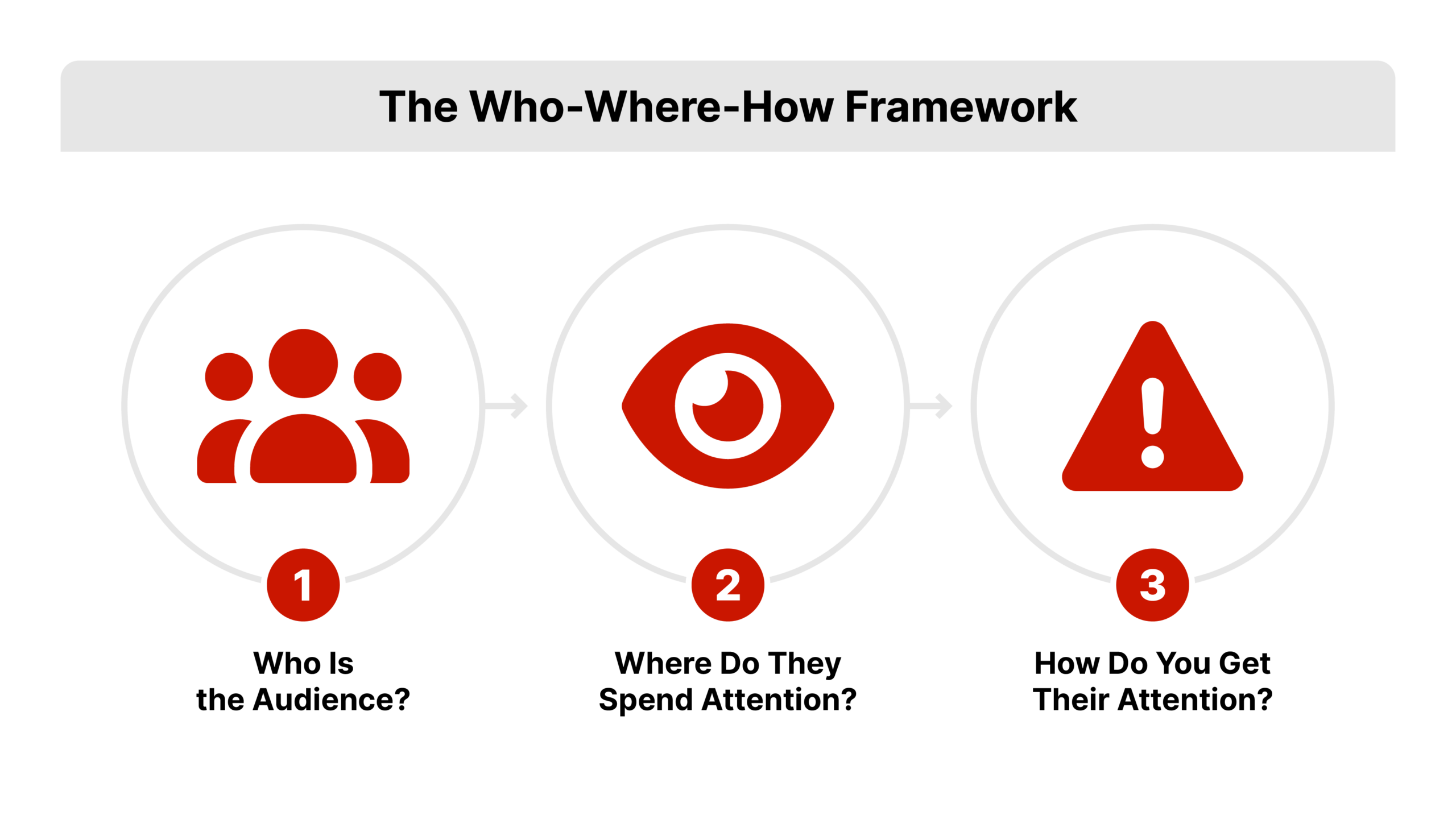
Every effective real estate social media marketing plan, REDX included, answers three questions in order: who is the audience, where does that audience spend their attention, and how do you get that specific audience to notice you. Skip any one of these and the plan falls apart.
The order matters. Agents who start with “how do I get attention” before deciding who they’re trying to reach end up with content that’s technically well-made and strategically pointless.
Who Should Real Estate Agents Target on Social Media?
Pick an audience with real listing opportunity, not just an audience that’s easy to reach. Your sphere of influence is a fine starting audience, but it’s a slow one on its own.
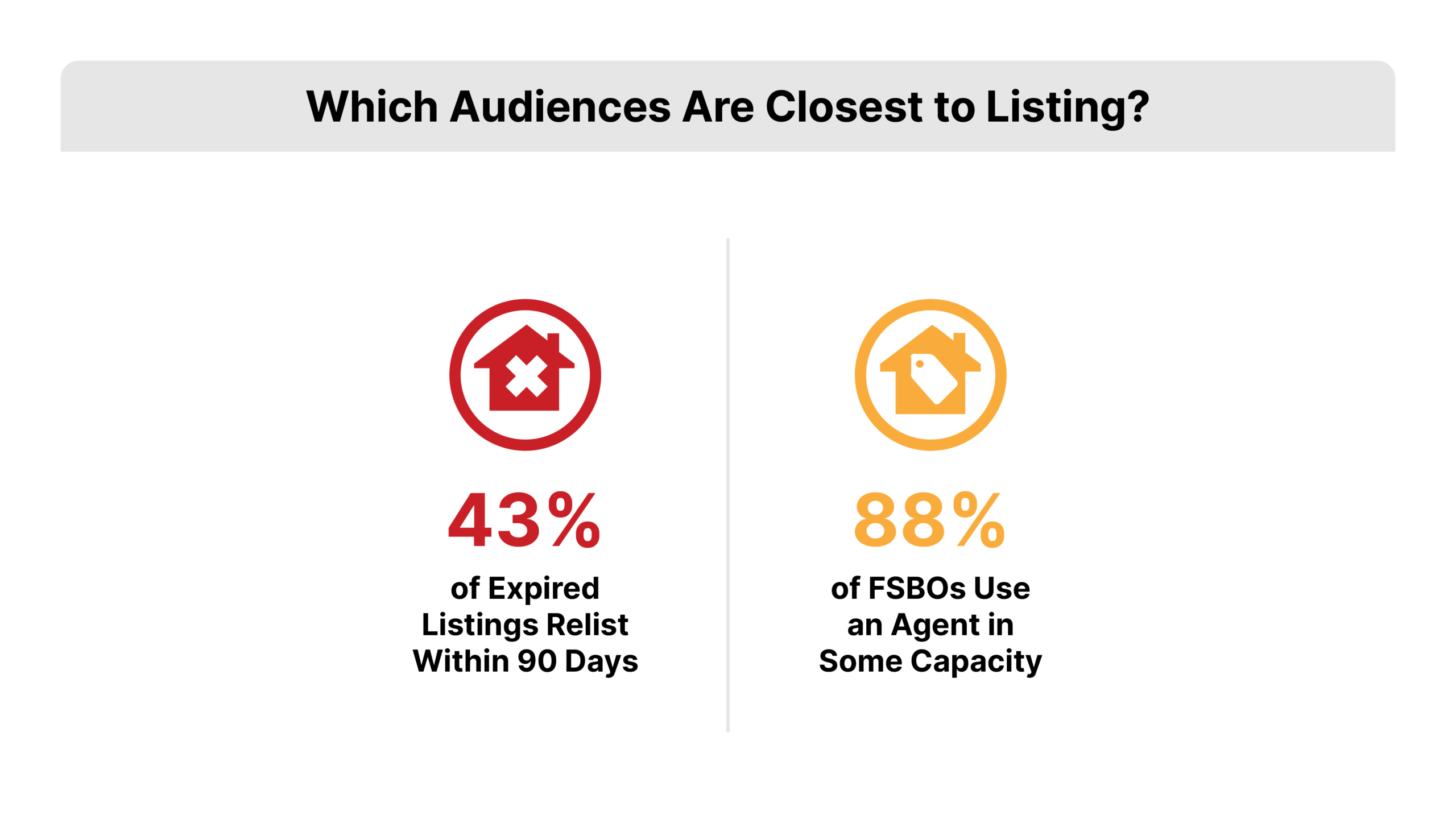
Compare that to expired listings or FSBO (For Sale By Owner) sellers. According to REDX MLS tracking data, 43% of expired listings relist within 90 days, and 88% of FSBO sellers end up using an agent in some capacity even after trying to sell on their own. Those are audiences already moving toward a decision. A general neighborhood post competes with everything else in someone’s feed. A post built for someone whose listing just expired competes with almost nothing, because you’re the only one speaking directly to their exact situation.
This doesn’t mean abandon your sphere or your neighborhood farm. It means your highest-effort content should go where the opportunity is largest, and your audience choice should be authentic to what you’re actually good at talking about.
Where Should Real Estate Agents Focus Their Social Media Content?
For most agents, that’s Facebook and Instagram. Both platforms remain where the broadest cross-section of homeowners, not just younger buyers, spend meaningful time every day. Video-first platforms matter too, but if you’re choosing where to start, start where your actual audience already scrolls, not where the content trends look the most impressive.
If you want to go wider once you’ve got the fundamentals of real estate social media marketing working, YouTube, TikTok, and direct mail all reinforce the same message across more touchpoints. That’s not a channel to write off either: NAR’s own reporting on buyer and seller behavior notes that younger buyers and sellers increasingly use TikTok as a search engine, researching agents and neighborhoods before ever reaching out, even though most agents still aren’t posting there. But adding channels before the message is right just multiplies the wasted effort. If filming and editing is the part that keeps you from posting consistently, REDX’s Brand Builder handles the production side, turning your listings and market updates into ready-to-post video content, so the bottleneck is the strategy in this post, not the camera work.
How Do You Get Buyers and Sellers to Actually Pay Attention to Your Posts?
Quality in real estate social media marketing is messaging plus production, and messaging carries more weight than production. A well-produced video that says nothing specific to anyone will underperform a rough, one-take video that speaks directly to a real problem a real person is facing right now.
There’s a well-known example of this from outside real estate. When Febreze first launched, the company’s ad agency built commercials around pet owners, since the product was designed to eliminate pet odors. The campaign nearly failed. It turned out people who live with strong smells stop noticing them, so pet owners didn’t feel the problem the ad was describing. Febreze became a billion-dollar product only after the company shifted its message to people who noticed other people’s smells, like parents recognizing the smell of a teenager’s gym bag. Same product. Same production budget. A completely different result once the message matched the right audience.
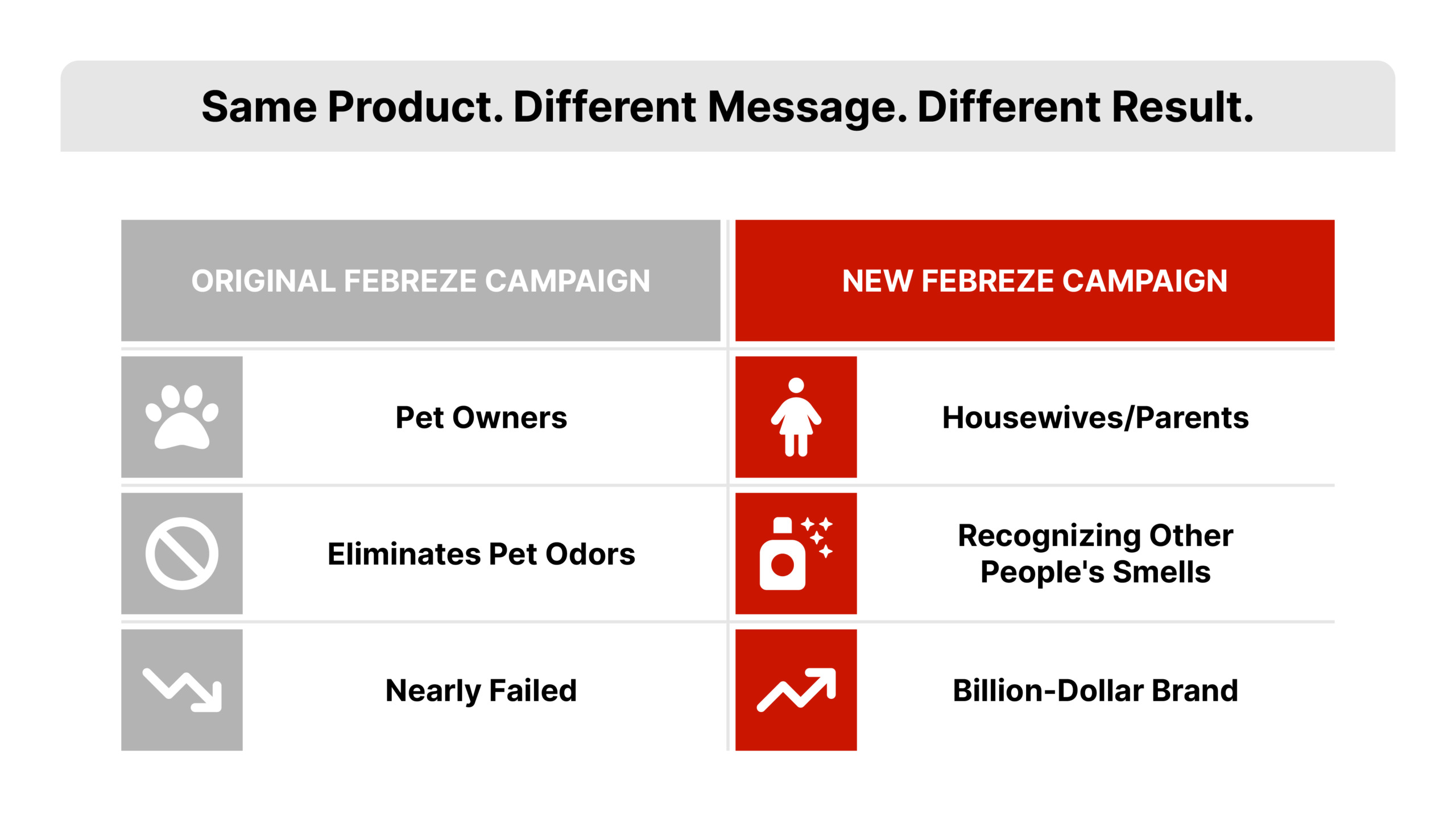
The lesson for real estate social media marketing: you can have the right product (your services) and still miss completely if the message isn’t built for the specific person you’re trying to reach.
What’s the Formula for a Real Estate Social Media Post That Converts?
Every high-converting real estate social media marketing post answers the same four questions before a word gets written: who it’s for, what their problem is, how they feel about it, and what you need to say to them. Build every post around those four questions, in this order:
- Who is this for? Name one audience. Not “everyone thinking about selling,” but a specific group, like homeowners whose listing just expired.
- What’s their problem? Be literal. For an expired listing, the problem is that the home didn’t sell.
- What are they feeling? This is where most agents skip a step. An expired seller isn’t just frustrated, there’s usually discouragement underneath it. A FSBO seller who’s overwhelmed by paperwork feels differently than one who’s simply proud of trying it themselves.
- What do you need to say? Only after answering the first three questions should you write the hook, story, and call to action. A caption like “Here’s why your home didn’t sell, and what usually fixes it” speaks directly to the feeling you identified in step three.
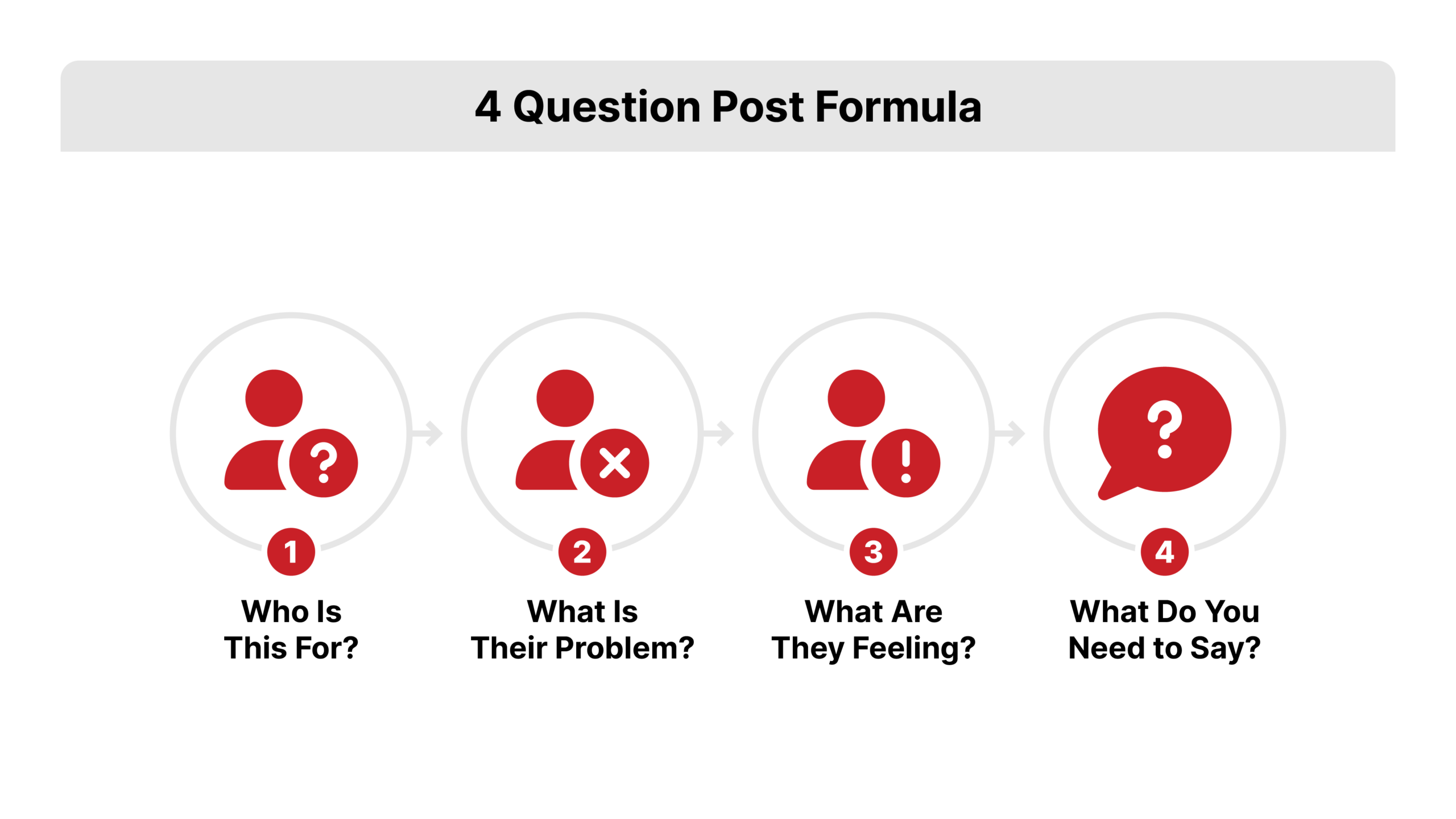
This formula works whether you’re filming yourself, using a faceless format, or scripting content for someone else to produce. The order is what makes it work, not the production value.
How Often Should Real Estate Agents Post on Social Media?
Consistency matters more than volume in real estate social media marketing. Three to five posts a week, on a regular schedule, outperforms an inconsistent stream of daily posts followed by two weeks of silence. Batch your content when you can, since it keeps the message and style consistent across posts, and try not to miss more than one scheduled post in a row. Platforms are built to notice patterns, and a broken pattern resets a lot of the momentum you’ve built.
Scheduling tools are safe to use. Platforms have moved away from penalizing scheduled content, so batching a week or a month of posts in advance won’t cost you reach the way it might have several years ago.
What Should You Check Before You Publish a Real Estate Social Media Post?
Run every post through five questions before it goes live. This catches the posts written for nobody in particular before they go out instead of after they flop.
- Does this post name a specific audience, or is it written for “everyone thinking about real estate”?
- Does the caption or hook name the exact problem that audience is dealing with right now?
- Does the message address a feeling, not just a fact, about their situation?
- Is there a clear next step, whether that’s a comment, a call, a form, or a saved post for later?
- Would this post still make sense for a completely different audience? If yes, it’s not specific enough yet.
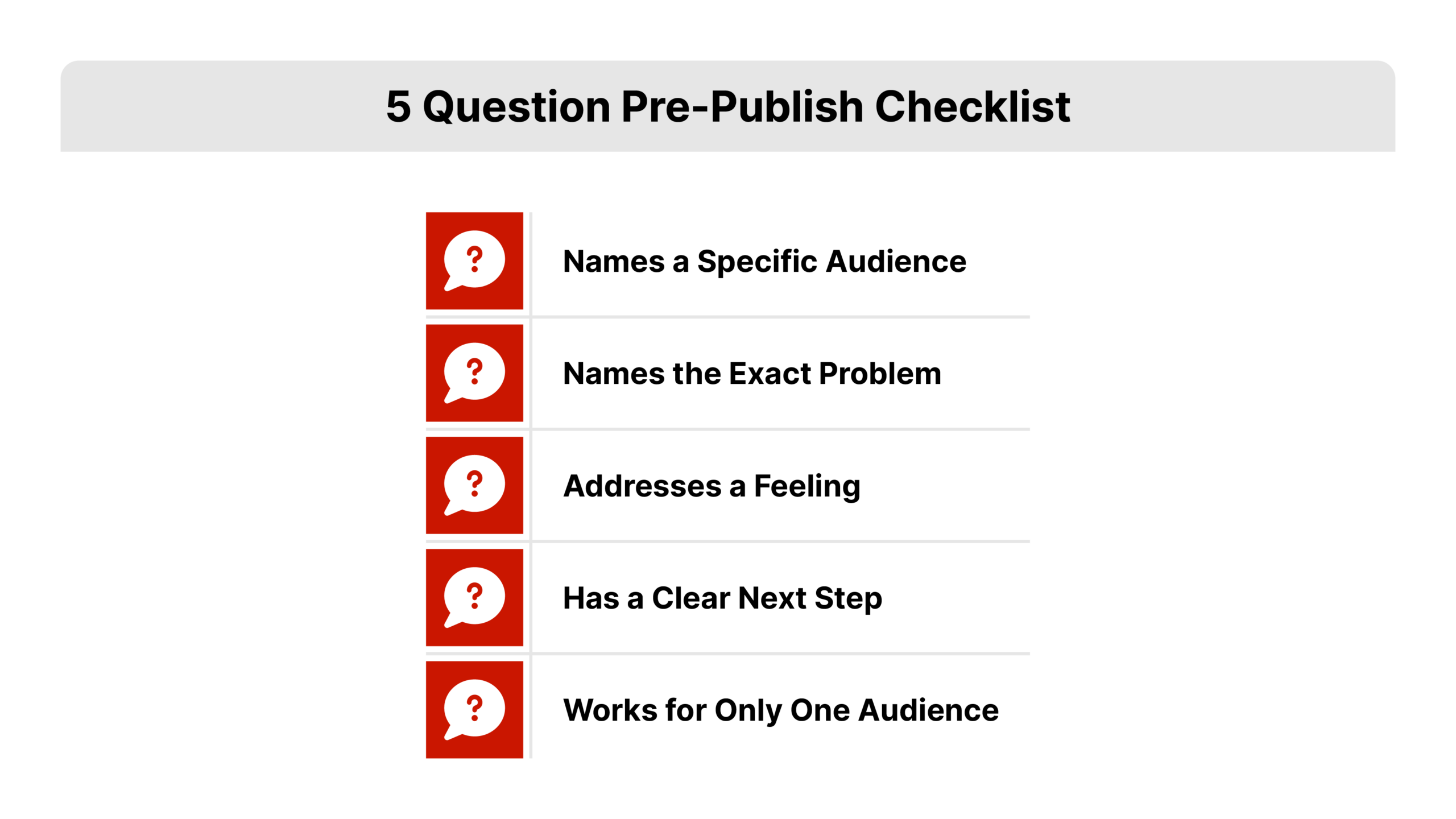
A post that passes all five questions is built for one person in one situation. That’s what makes real estate social media marketing worth their attention, and eventually, worth a phone call.