Skip to content
 You made the call, had a real conversation, and the prospect was honest with you: they are frustrated, overwhelmed, and not ready to list today. So you logged the call, maybe sent one email, and moved on to the next name on the list. Sound familiar?
That moment, the one right after a good conversation that does not turn into an appointment, is where most listings quietly slip away. The lead does not vanish. They just get buried under tomorrow’s 30 new contacts, and the day after that, and the day after that.
The good news is that this is the most fixable problem in your business. Strong real estate lead follow-up is a system you build once, and below is exactly why the gap exists and how to close it.

Co-authored by the REDX Publishing Team and:
Elena Kee
Elena Kee is the founder of Kee Technology Solutions, providing done-for-you CRM setup and follow-up systems for real estate agents, teams, and brokerages. Her team has worked inside thousands of CRM accounts across North America since 2021.
Quick Links:
- Why Do Real Estate Leads Take So Long to Convert?
- How Long Should Real Estate Lead Follow-Up Last?
- What Should You Do in the First 15 Minutes After the Call?
- How Do You Build a Follow-Up Sequence That Actually Runs?
- Which CRM Should You Use to Run This?
- Your Follow-Up System Starter Checklist
Why Do Real Estate Leads Take So Long to Convert?
Because selling a home is a timing decision, and the timing is rarely “today.” Most prospecting leads convert anywhere from six months to three years after that first conversation, long after the average agent has stopped reaching out.
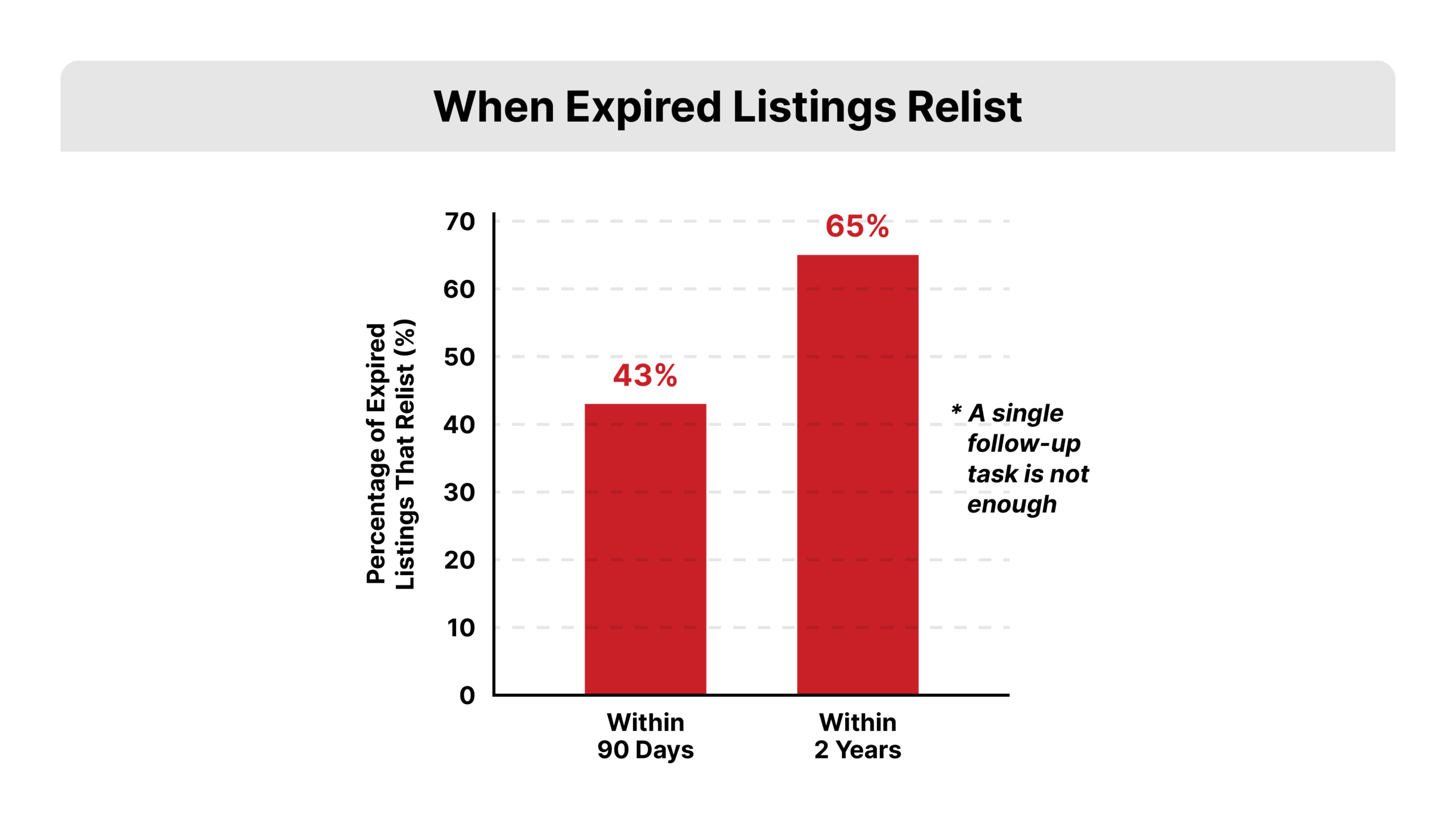
Consider expired listings. 43% of expired listings relist within 90 days, and 65% relist within two years, according to REDX internal data. The motivation that put their home on the market in the first place has not disappeared. It is paused. When it un-pauses, the only question that matters is whether you are still in front of them.
This applies to every lead type you work, not just expireds: for sale by owners, circle prospecting contacts, and neighborhood farms. Expired listing follow-up is simply the clearest example, because the relist data is so well documented. Broader industry research from the National Association of Realtors shows seller decisions play out over months, not days. The lifestyle and personality of each seller decides when and how they respond. Some reply to a text on a Tuesday. Some open an email eight months later. Your job is to still be there when they do.
How Long Should Real Estate Lead Follow-Up Last?
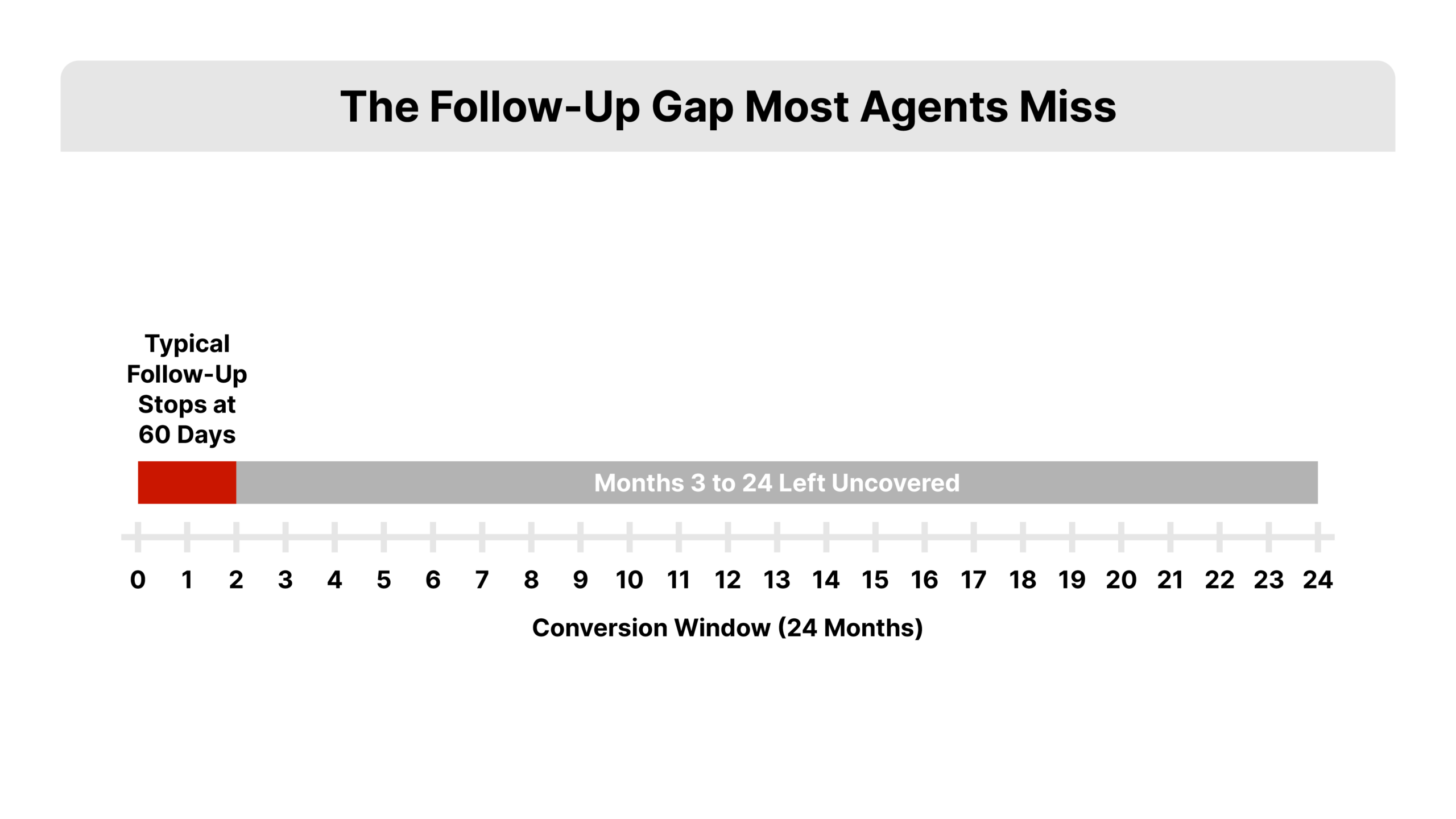
Far longer than you think. Aim for a system that runs at least 18 months, and ideally closer to three years, before you decide a contact is truly cold.
Most agents fall into one of two camps. The first stops after a week or two of manual texts and calls, then goes silent. The second keeps a loose mental note to “check in sometime” and never does. Both lose the same way: the lead converts eventually, just with someone else.
The math is simple. If 65% of expired listings relist within two years but your follow-up dies at 60 days, you are walking away from most of the value you created with that first call. Stretching the timeline is the single highest-leverage change you can make to your follow-up.
What Should You Do in the First 15 Minutes After the Call?
Capture the lead correctly before it ever leaves your dialer. The handoff from your prospecting tool to your CRM is where most follow-up systems break, so get it right at the source.
Before you push a contact from your dialer into your CRM, log these four things:
- The conversation notes. What they said, why they are frustrated, and any timeline they mentioned (for example, “maybe in two years, overwhelmed with calls”).
- Verified contact info. Confirm the name, phone number, and email. If there is a spouse or partner, capture their name too. You do not know who the decision maker is.
- The stage. Even an emotional, reactive expired is usually a warm lead. They had real motivation to sell and they will calm down.
- The tag. Tag the lead by type: expired, FSBO, or seller. This is the trigger your automation depends on.
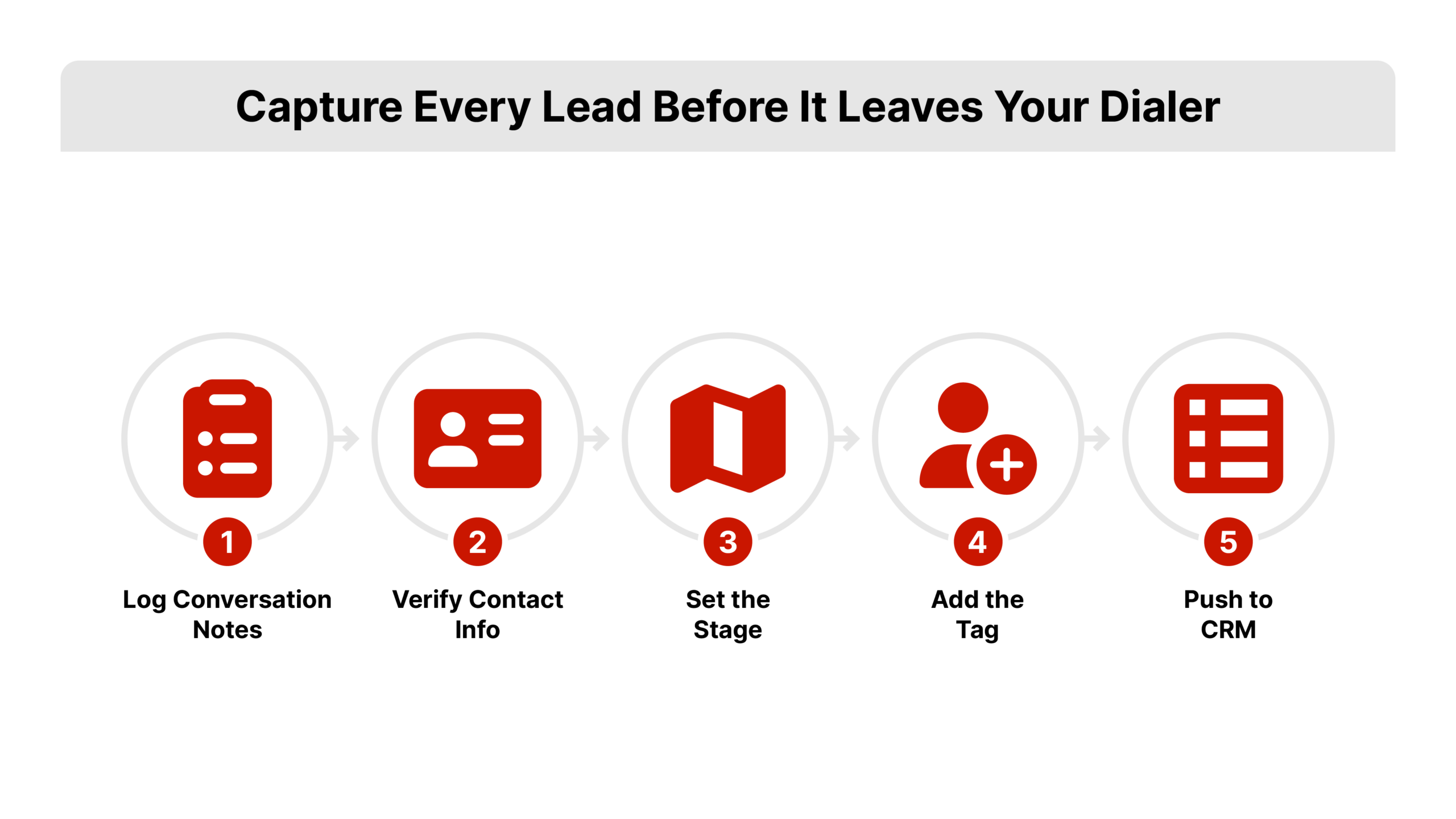
The stage and the tag matter as much as the notes. They are what tell your CRM which nurture sequence to start. Skip them and the rest of your system never fires. Vortex keeps this handoff in one place with native integrations to popular CRMs so contacts and notes stay attached to the lead instead of scattering across tools.
How Do You Build a Follow-Up Sequence That Actually Runs?
Build two separate automated sequences, one for email and one for text, both triggered by the lead’s tag and stage. This pairing is the core of your lead nurture system, and keeping the two separate is the detail that keeps the whole thing alive.
Here is the structure that works for an expired campaign, and the same blueprint applies to FSBOs and circle prospecting sellers:
- Email sequence. Send the first email the day after the call, not the same day. The prospect is already buried in calls and texts, so a one-day gap helps you stand out. Space the next emails three to five days apart, then stretch the cadence out over many months.
- Text sequence. Stagger your texts against your emails so you are showing up in both channels without doubling up on the same day. Most people check texts faster than email, so this is often where replies come from.
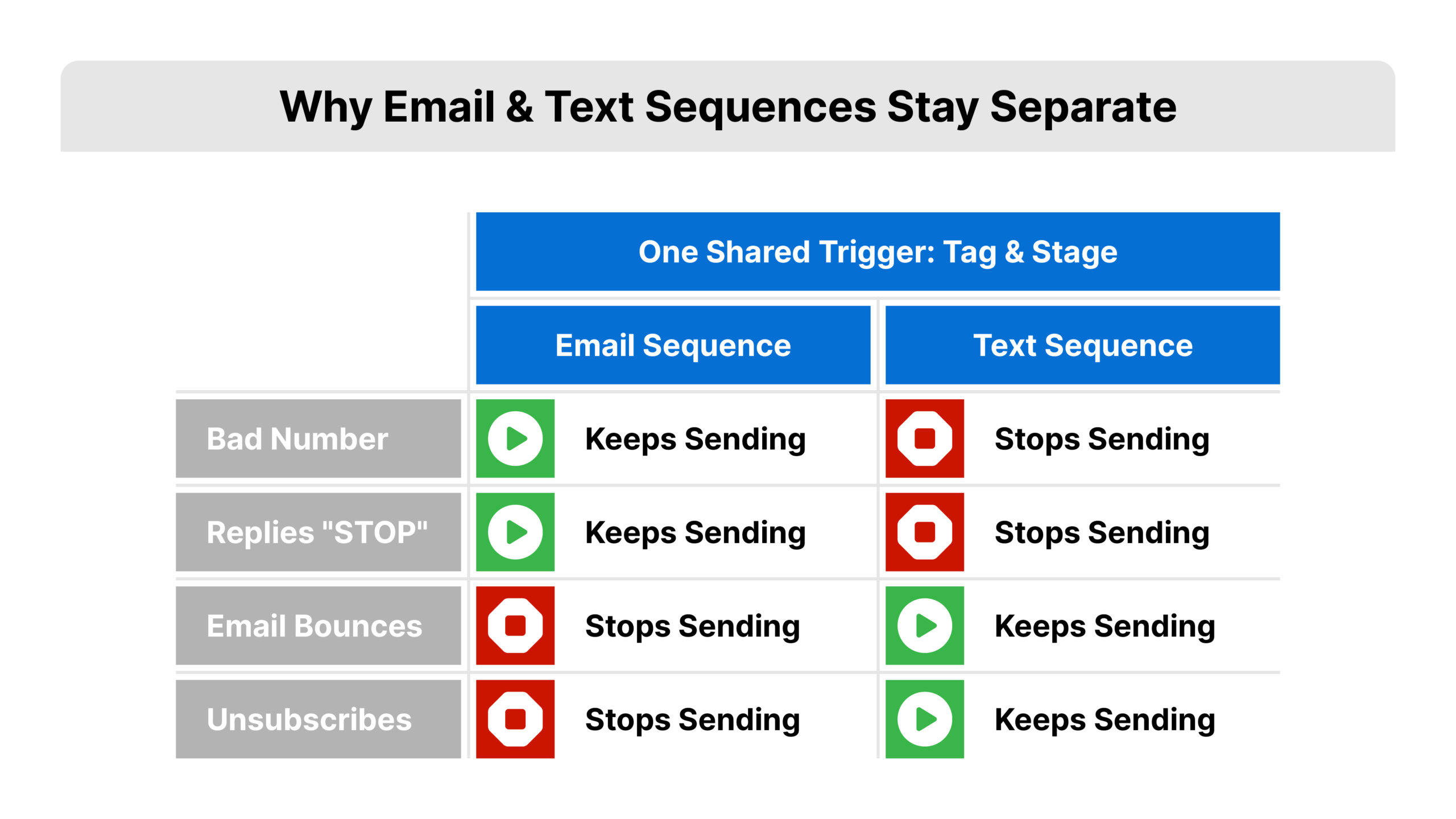
Why two separate sequences instead of one combined plan? Because if a number is bad or someone replies “stop” to your texts, a combined automation can shut down the entire campaign, including the emails. Keep them apart and a dead phone number never kills your email nurture, and a bounced email never stops your texts.
What Do the Emails Actually Say?
Lead with their situation, not your resume. A subject line as plain as “Your home didn’t sell” earns opens because it names the thing they are thinking about. Inside, acknowledge their frustration, offer a genuinely useful insight (like the three reasons homes do not sell: price, exposure, and presentation), and keep the focus on them. Mention your marketing plan briefly, if at all.
How Do You Stay Compliant With Text Messages?
Every drip text needs three things: your name, your company name, and a clear opt-out. Introduce yourself with your business name for compliance, and include an opt-out line such as “if you’d rather I don’t text you, just tell me to stop.” Place it in the middle of the message rather than the very end, where it is less likely to trigger a knee-jerk opt-out. REDX recommends agents avoid dialing or texting numbers on the Do Not Call list. See the DNC and TCPA guide before launching any automated outreach.
Which CRM Should You Use to Run This?
Whichever one you already use. CRM follow-up works in any platform that connects to your dialer, so the strategy is platform-agnostic. The principles, tag the lead, stage it, trigger two channels, and run the sequence for months, hold up no matter which system you run.
REDX integrates with major real estate CRMs, so the lead you just talked to can flow straight into the system where your nurture lives. If your CRM does not drip texts natively, third-party texting tools can add that layer. Check the REDX integrations list to see what connects to the platform you already run.
Your Follow-Up System Starter Checklist
Use this to audit and upgrade your follow-up this week. Most of it takes under an hour.
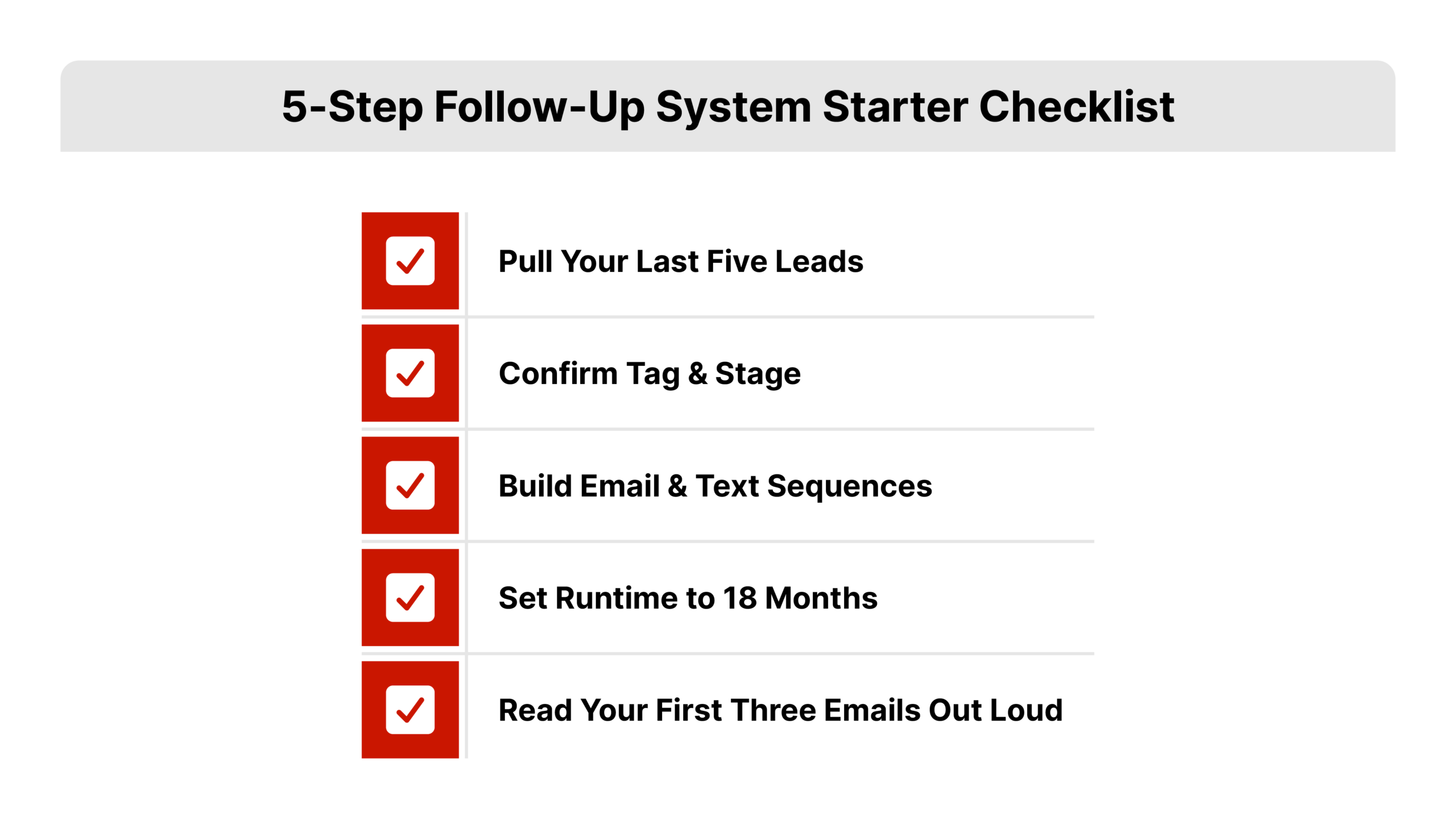
- Pull your last five leads. Open your dialer or CRM and check whether each one is on any kind of running sequence. If they are sitting with a single “follow up” task and nothing else, that is your leak.
- Confirm every lead is tagged and staged. No tag, no trigger. Make this non-negotiable before any contact leaves your dialer.
- Build one email sequence and one text sequence for the lead type you generate most. Separate automations, triggered by tag and stage.
- Set the runtime to 18 months or longer. Stretch the cadence so you are still showing up a year out.
- Read your first three emails out loud. If they are all about you, rewrite them to be about the seller’s problem.
The agents who win listings months down the road are not making more calls than you. Their real estate lead follow-up runs quietly in the background and keeps them in front of the lead until the timing is finally right. Build that system once, and every conversation you have from now on keeps working for you long after you hang up. For the front-end side of this, the expired listing prospecting guide pairs well with the follow-up system above.
- Most agents quit following up after 7 to 14 days, but the majority of prospecting leads convert months or even years after the first call.
- 65% of expired listings relist within two years. If your follow-up stops before then, another agent gets the listing you already earned a conversation with.
- The fix is a system, not more dials. A background nurture sequence across email and text keeps you top of mind without adding to your daily call load.
- Tag and stage every lead before it leaves your dialer. That one habit is what makes automated follow-up actually fire in your CRM.