Skip to content
 Key Takeaways
- Wrong numbers and Do Not Call compliance are two different problems. Confusing them leads agents to blame the wrong thing for a slow prospecting day.
- You cannot control who picks up the phone. You can control your time on the phone, your questions, and your practice, so that is where your energy belongs.
- As fewer people answer, performance matters more than ever. Tonality, confidence, and the questions you ask separate agents who get appointments from ones who get hung up on.
- Successful agents make pricing and business decisions from data. Unsuccessful ones make them from emotion, and the same principle applies to real estate cold calling.
Every agent doing real estate cold calling runs into wrong numbers, hang ups, and calls that never get picked up. Most assume that means something is broken.
Kent Brown makes roughly 100,000 prospecting calls a year and tracks the data behind every one of them, so he doesn’t guess at what’s working. He measures it.
Here’s what that data actually shows about wrong numbers, compliance, and the difference between agents who blame the phone and agents who fix their numbers.

Co-authored by the REDX Publishing Team and:
Kent Brown
Kent is a top-performing Utah real estate agent known for strategic pricing, and famous for his 1,000 call per day challenge.
Quick Links:
- Are wrong numbers the same problem as the Do Not Call list?
- Why is real estate cold calling harder than it was 10 years ago?
- What can you actually control in real estate cold calling?
- Why does performance matter more in real estate cold calling?
- Should you make business decisions from data or emotion?
- How much should you actually earn per hour doing real estate cold calling?
- What to track in 2026 before you blame your prospecting for not working
Are wrong numbers the same problem as the Do Not Call list?
The answer is no. Wrong numbers are a data quality issue, while being on the Do Not Call list is a compliance issue, and the two get mixed together far too often when agents complain about their results.
REDX recommends agents avoid dialing numbers on the Do Not Call list, and remaining compliant with TCPA and DNC requirements is not optional. That reality does affect the total number of people you can legally reach, but it is a separate issue from getting a disconnected line or a number that changed hands.
Once you separate the two, the real question becomes simple: are you using the right tools and skills to reach the people you can compliantly call, as effectively as possible?
Why is real estate cold calling harder than it was 10 years ago?
Real estate cold calling is harder today because smartphones screen unknown numbers straight to voicemail, TCPA scrutiny is at the forefront of every agent’s mind, and short-form video and social media have pulled attention toward direct messages instead of phone calls.
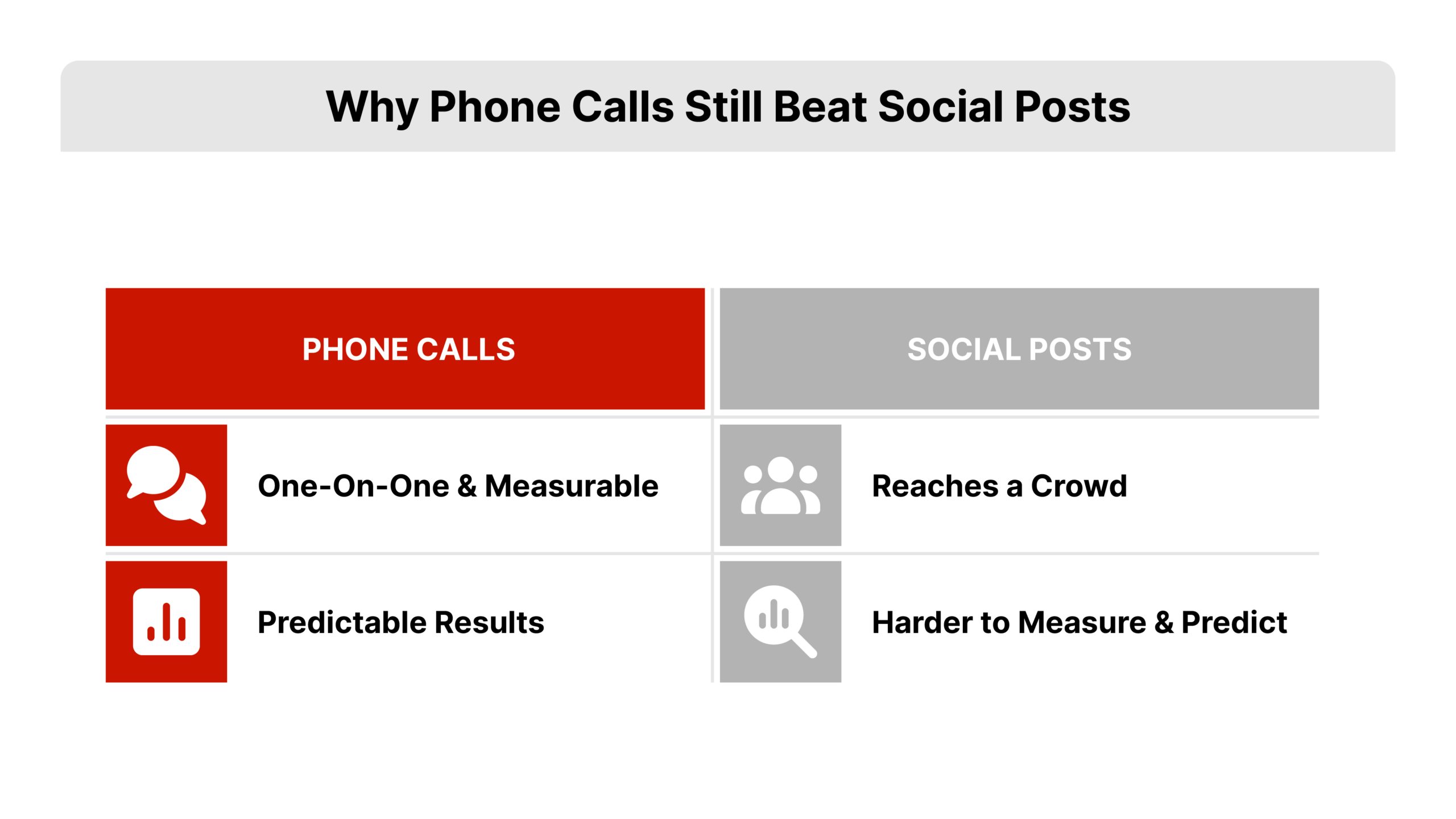
Even with all of that working against it, the phone is still the most time and cost-effective way to have a one-on-one conversation with as many people as possible in the shortest amount of time. A social media post reaches a crowd, but it is harder to measure and harder to predict. A phone call gets you a real answer.
What can you actually control in real estate cold calling?
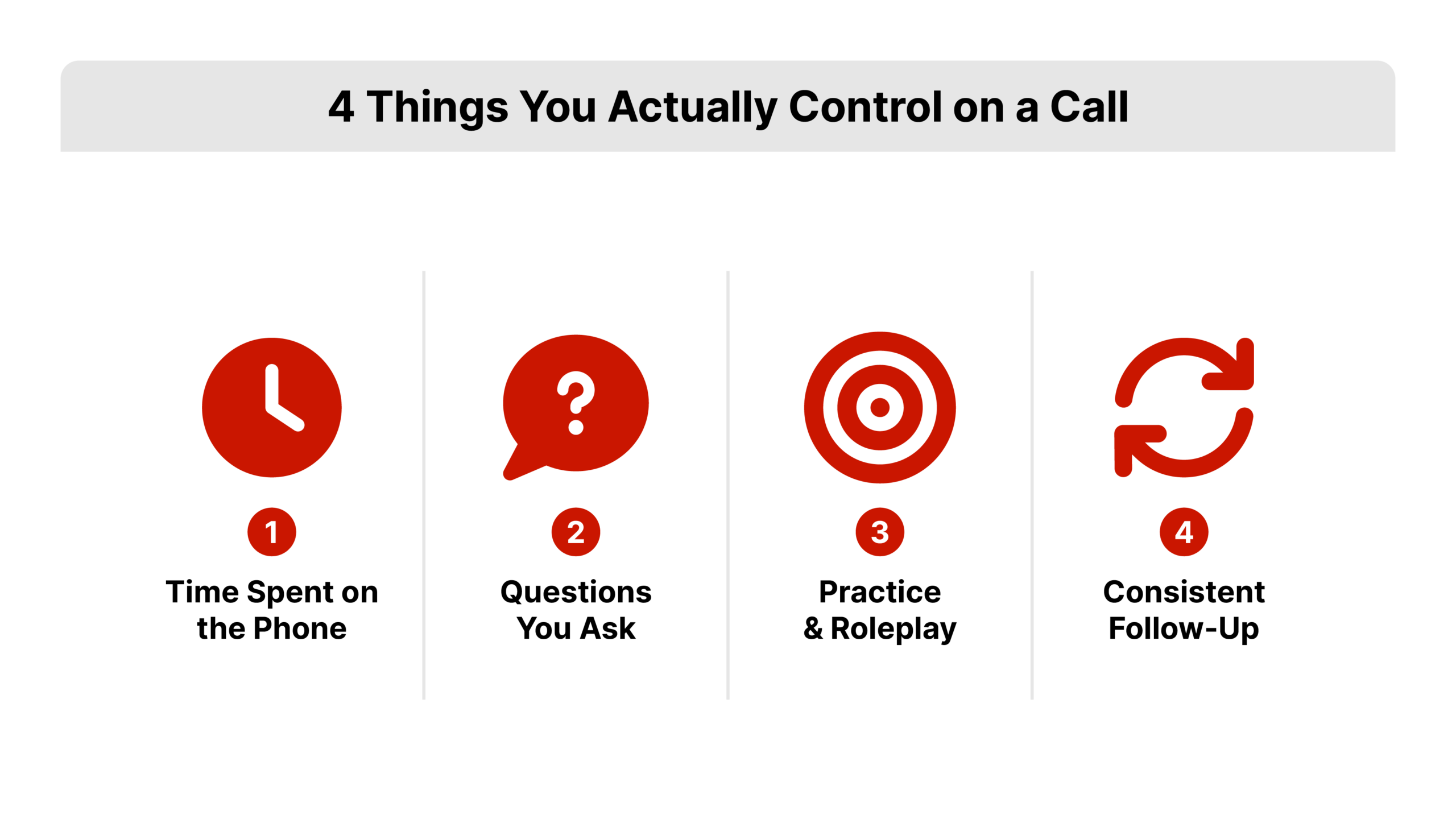
You control your time on the phone, the questions you ask, and the practice you put into your script. Nobody controls whether someone picks up, whether a number is disconnected, or whether a lead happens to be having a bad day.
Kent puts it simply: there is no reason to spend mental energy on a wrong number, because it was never something you could control in the first place. Energy spent on the controllables is energy that actually moves the needle.
Why does performance matter more in real estate cold calling?
Because with fewer answered calls, every single conversation carries more weight, and performance is what separates the agents who convert those calls from the ones who don’t.
Think about why a lesser-known actor gets paid a fraction of what Tom Hanks earns for the same role. Same script, same lines, completely different performance. Real estate cold calling works the same way. Two agents can use the identical script, and the one with better tonality, pacing, and confidence is the one who gets the appointment.
A seller who says “you’re the tenth agent to call me today” is testing your response. Agents who react with a defensive joke lose the call. Agents who respond with genuine acknowledgment, something closer to “that sounds frustrating, and I’m surprised a home like yours hasn’t sold yet,” keep the conversation open.
Should you make business decisions from data or emotion?
From data. Successful sellers price their homes based on comparable sales and what the market will actually support. Unsuccessful sellers price based on emotion, pointing to their upgraded kitchen or their better yard, and then wonder why the house sits.
The same pattern shows up in how agents run their business. Real estate agents change direction based on emotion far more often than they should, abandoning a lead source or a script after a rough week instead of waiting for enough data to know if it actually works.
How much should you actually earn per hour doing real estate cold calling?
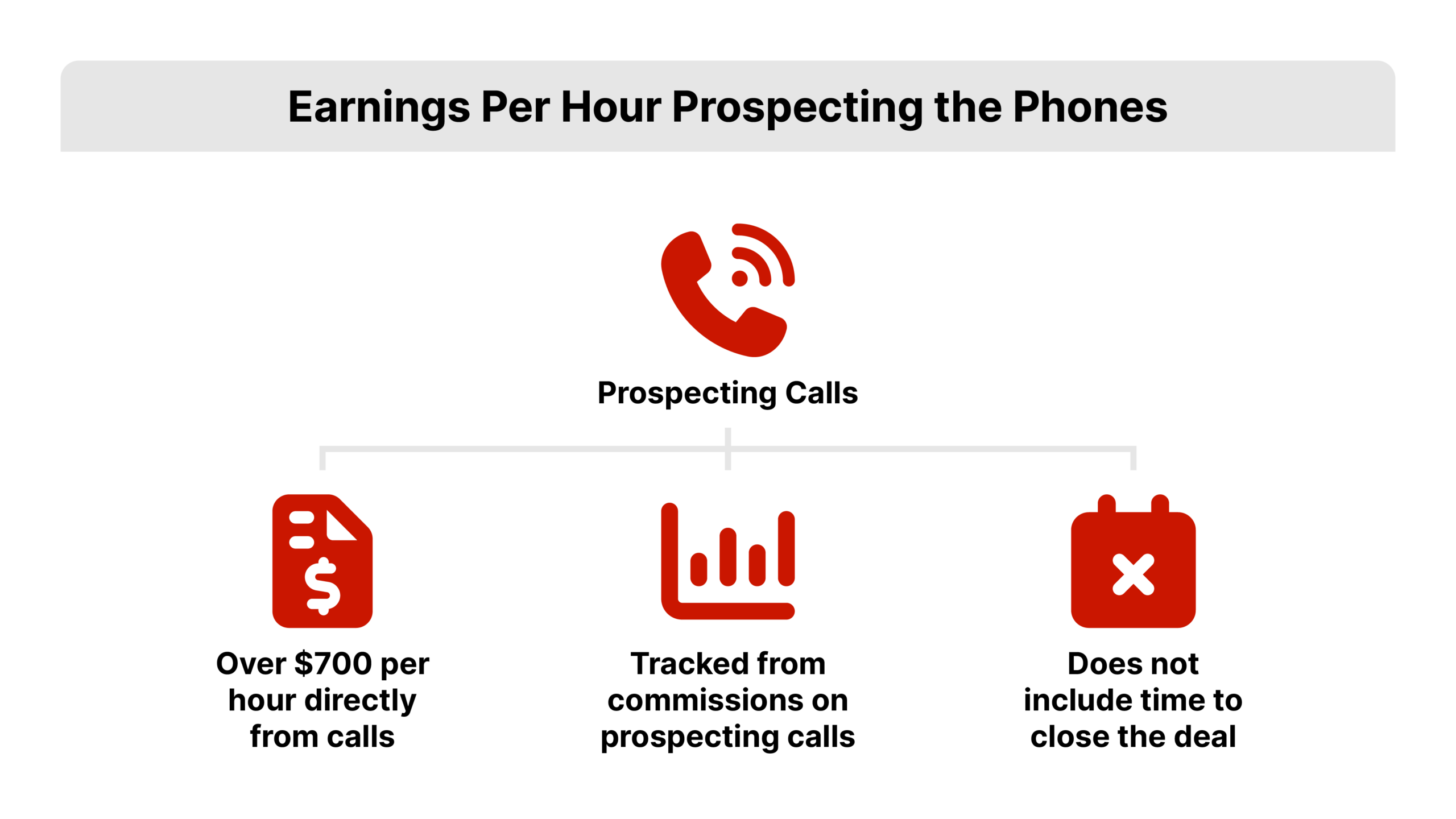
Kent tracks his earnings per hour on the phone, and it currently sits at over $700 an hour directly attributable to his prospecting calls. That number reflects commissions earned specifically from time spent dialing, not the full time it takes to close a transaction.
That tracks with the broader economics of the business. According to independent research, seller-side transactions are consistently more time-efficient for agents than buyer-side deals, which is part of why prospecting for listings through calls pays disproportionately well for the hours invested.
What to track in 2026 before you blame your prospecting for not working
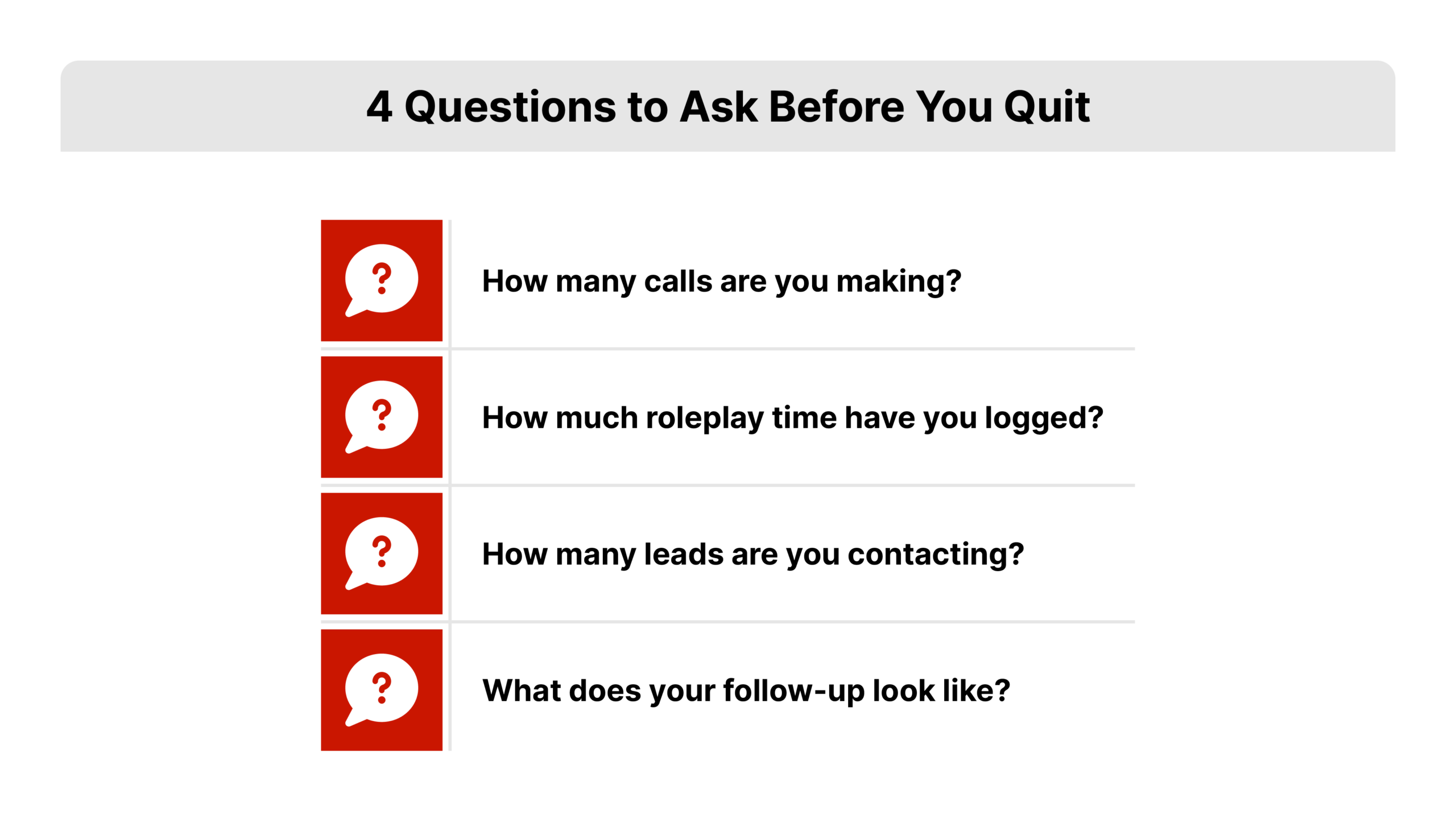
Before deciding a lead source, script, or the phone itself is the problem in your real estate cold calling, check the numbers behind these four questions:
- How many calls are you actually making? Agents who feel like nobody answers are often making far fewer calls than they think, sometimes as few as 20 in a full day.
- How much time have you spent in roleplay? Skill and performance improve with repetition, not with more wrong numbers to complain about.
- How many leads are you contacting? A single bad day of dialing, even 400 calls with almost no conversations, can still produce one of your best weeks once callbacks start coming in.
- What does your follow-up actually look like? Consistent follow-up on every conversation is what turns a single data point into a real business.
Prospecting is the act of looking for something valuable amongst the dirt, and most of what comes through the phone is dirt: no-answers, wrong numbers, and people who were never going to be sellers. The gold is in there too, and a Power Dialer combined with real data, not emotion, is how you find it fast enough to make the volume worthwhile. Pair that data discipline with the strategies in REDX’s guide on increasing your real estate income and you have a full framework for succeeding at real estate cold calling instead of blaming it.