Skip to content
 The market isn’t crashing. It’s not booming. It’s sitting still, and that is the hardest conversation to have with a seller. Unfortunately, many real estate agents don’t know how to talk to sellers about a flat market.
Its not your fault though… many real estate agents haven’t seen a flat market in a long time.
In 2026, leading housing economists are watching a market defined by near-zero appreciation and extended days on market. Sellers who bought at 2021 or 2022 prices expected continued gains. What they got instead is a flat line, and many are not ready to hear it.
Your ability to handle this conversation with confidence, data, and empathy is what separates agents who keep their pipelines full from agents who end up on the wrong side of an expired listing. Here’s exactly what to say, and what data to bring, to handle the flat market conversation and still walk out with a signed listing agreement.
Key Takeaways
- In a flat market, sellers anchored to peak prices are your biggest obstacle. Use comparable sales data, not opinions, to reset their expectations.
- The most common objection you will face is “we’ll just wait for prices to come back.” Your job is to quantify the real cost of waiting.
- Agents who set clear price expectations before taking a listing win more deals and experience fewer mid-campaign price reductions.
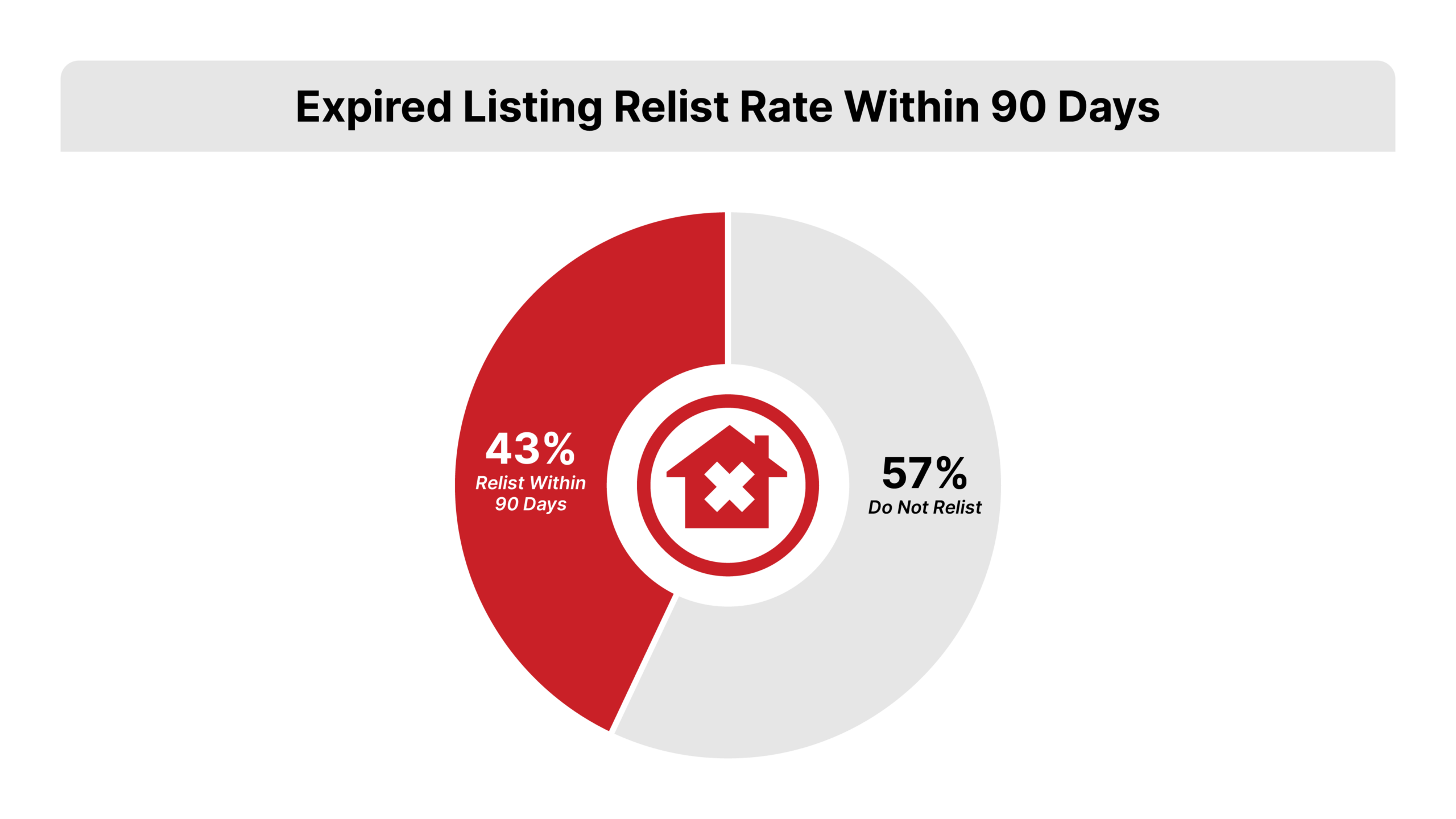
- 43% of expired listings relist within 90 days (REDX MLS tracking data), meaning flat markets create a surge of second-chance prospecting opportunities for agents who know how to handle the conversation.
What Does a Flat Market Actually Mean for Your Sellers?
A flat market means home values are holding steady, not appreciating. For sellers, this means realistic pricing is the only path to a sale.
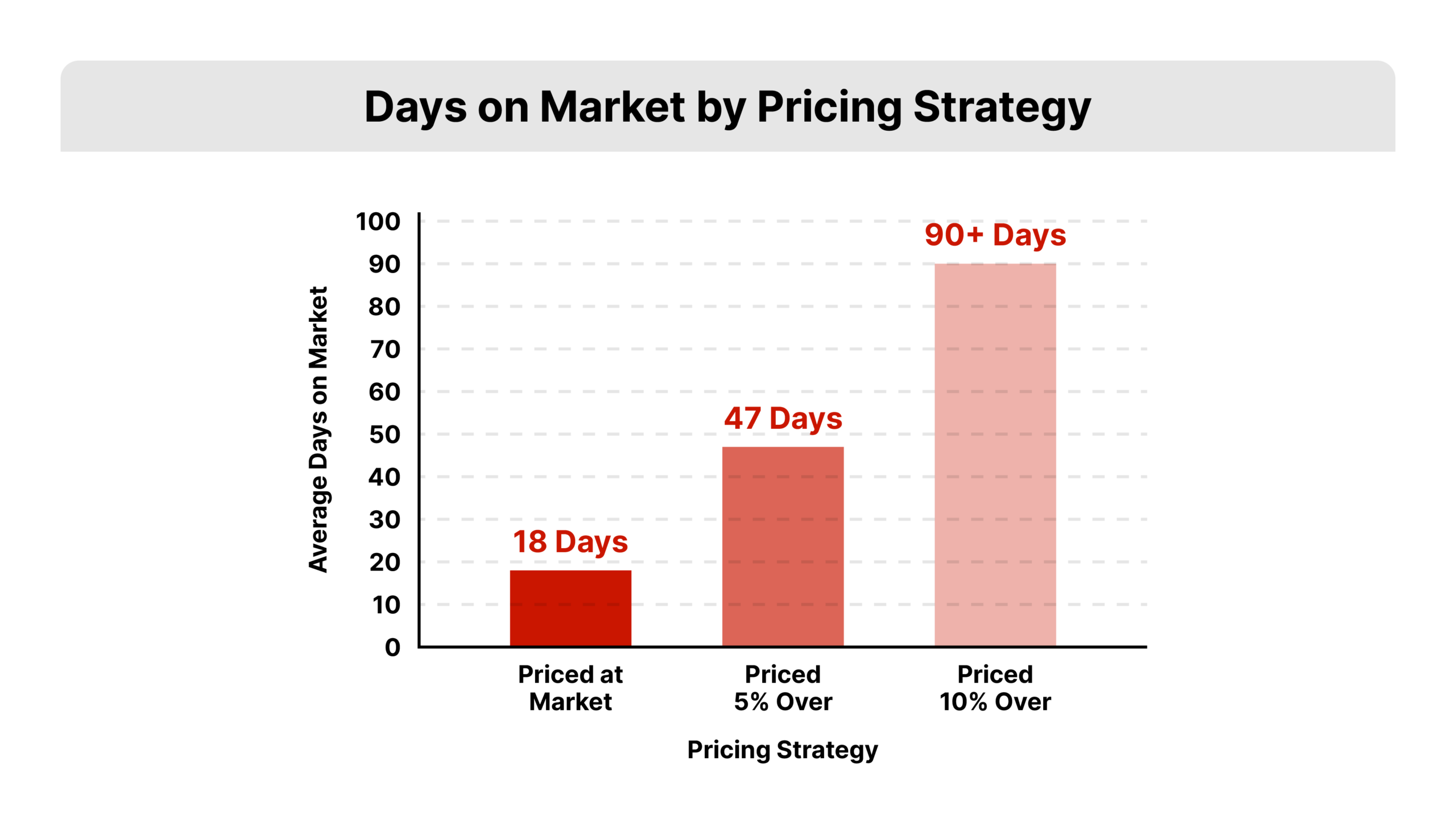
In a flat market, price per square foot stagnates. Homes sit longer. Buyers expect concessions. Sellers who price based on their purchase price or peak-market comps will not sell. They will simply expire. The important thing to understand is that a flat market doesn’t mean homes aren’t selling. It means homes priced right are selling, while overpriced homes are accumulating days on market.
Your job is to show sellers which side of that line their home is on before they make a decision, not after 60 days of no showings.
What Objections Will Sellers Raise in a Stagnant Market?
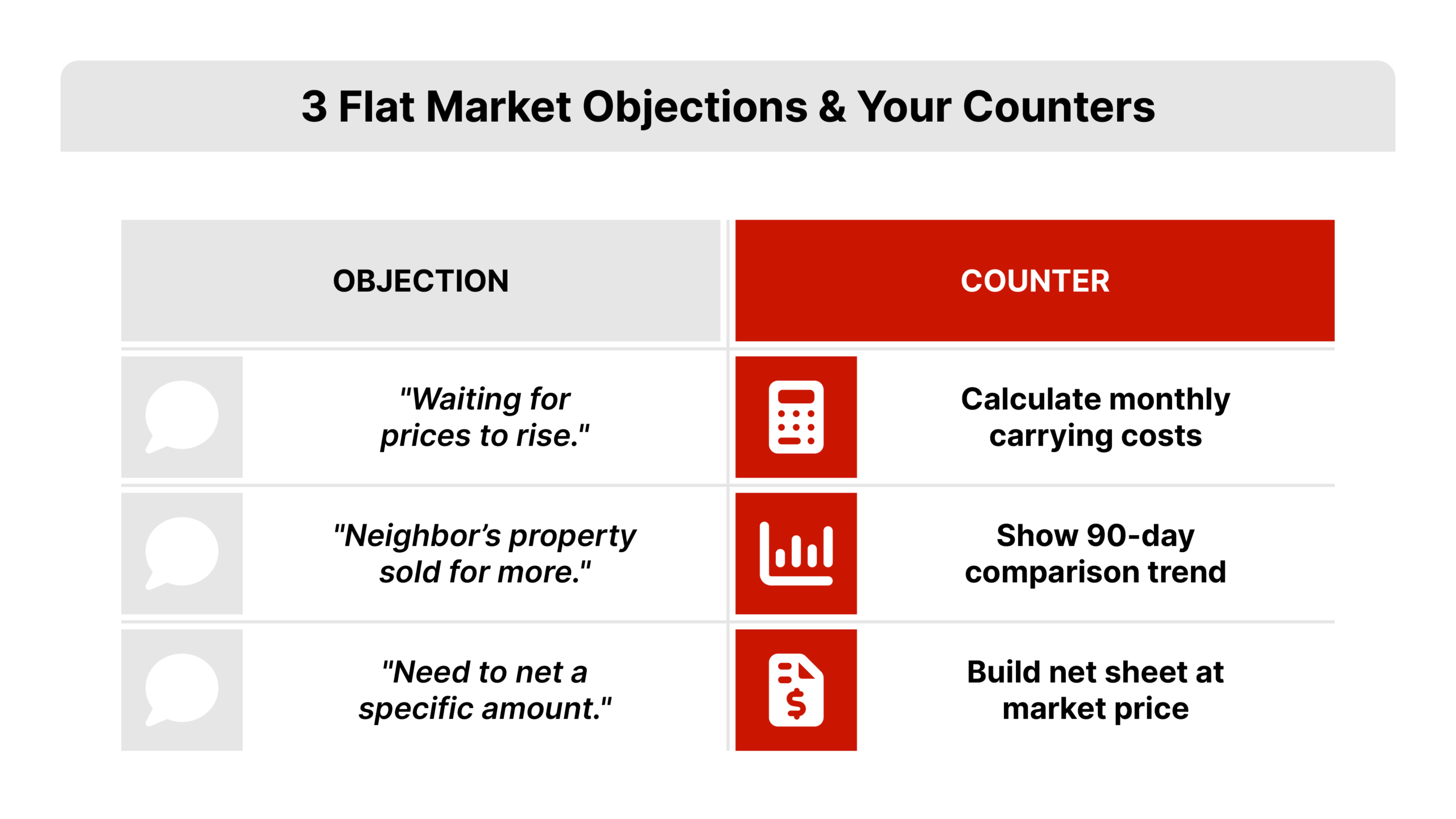
The three most common objections are “we’ll wait for prices to improve,” “our neighbor got more,” and “we need X amount to break even.” Each has a specific, data-driven counter.
Objection 1: “We’ll just wait for prices to go up.”
This sounds reasonable, which makes it dangerous. Your counter is to quantify the cost of waiting. Holding costs (mortgage, taxes, maintenance, insurance) typically run $2,000 to $4,000 per month depending on the property. If appreciation is 0%, a 12-month wait to recapture $10,000 in value costs $24,000 to $48,000 in carrying costs alone. Most sellers have not done this math. Show it to them in writing.
Objection 2: “The neighbor sold for more last year.”
Last year is not this market. Pull a 90-day comp analysis, not a 12-month average. Show the trend line. When sellers can see that the comparable sales peak was 14 months ago and recent comps tell a different story, the conversation shifts from opinion to data. Data wins arguments that emotion can’t.
Objection 3: “We need to net a specific amount to make this work.”
This is an emotional anchor, not a market anchor. Acknowledge it without arguing with it. Then show them exactly what price point achieves that net after commissions and closing costs, and compare it against current comps. If the math doesn’t work at market price, it doesn’t work at any price, and they need to know that now, not three months from now.
How Do You Set Realistic Price Expectations Without Losing the Listing?
Set price expectations before you take the listing, not after. Agents who correct price mid-campaign lose credibility and often lose the seller entirely.
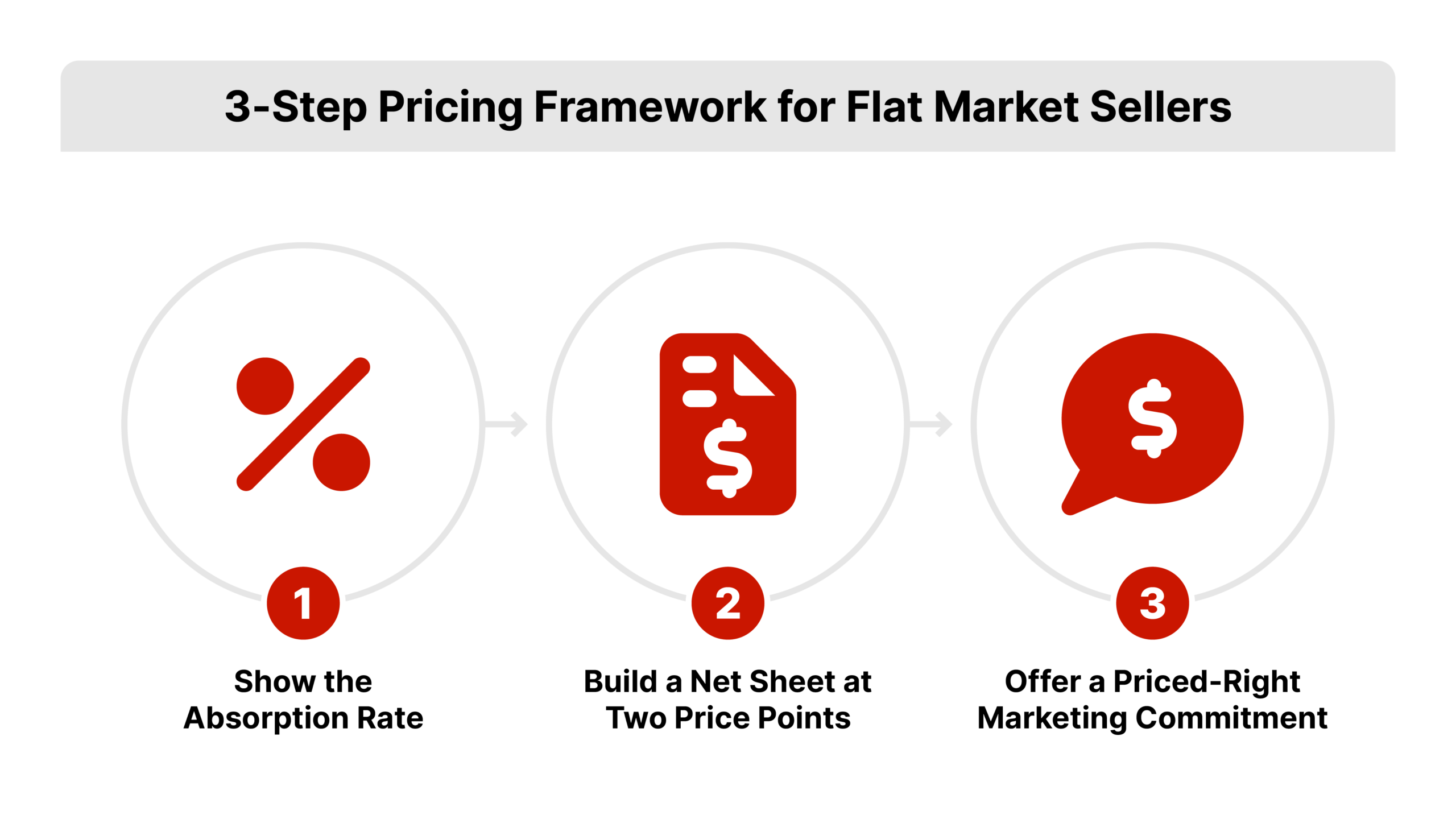
The agents who navigate flat markets best front-load the hard conversation. Instead of taking a listing at an aspirational price and hoping for a reduction later, they walk sellers through a clear pricing framework at the listing appointment. Here’s the three-step framework that works:
- Show the absorption rate. How many homes are selling per month in this price range? If 8 homes are available and 2 are selling, that is a 4-month supply. Walk the seller through what that means for their personal timeline and negotiate accordingly.
- Build a net sheet at two price points. Show exactly what they walk away with at market price vs. 5% over market price, accounting for longer days on market, a likely price reduction, and continued carrying costs. The numbers usually tell the story more convincingly than any argument.
- Offer a priced-right marketing commitment. Tell sellers that if they price at or just under your recommended value, you’ll commit to a specific marketing effort with defined milestones. This gives them a sense of control and keeps the relationship collaborative instead of adversarial.
How Do You Still Get Listings When Sellers Think the Market Is Bad?
A “bad” market for sellers is your best prospecting environment. Expired listings surge when sellers overprice, and those same sellers become highly motivated after a failed listing experience.
According to REDX MLS tracking data, 43% of expired listings relist within 90 days. When a home expires, the seller is suddenly more motivated and, often, more realistic about price. That is your window.
Agents who prospect expired listings consistently report that flat and declining markets are their most productive prospecting periods. Sellers who refused to have the pricing conversation with their first agent are now ready to listen. You walk in with data, empathy, and a specific marketing plan, and you become the agent who actually told them the truth.
GeoLeads are also valuable in flat markets because they let you target homeowners who may be considering selling but haven’t listed yet. Unlike portal leads that convert at roughly 1% annually (Ylopo), a consistent geographic farm puts your name in front of sellers before they make a decision, which means you control the pricing conversation from the start rather than inheriting someone else’s overpriced mess.
Your Flat Market Listing Appointment Checklist
The flat market conversation isn’t a pitch. It’s a trust test. Sellers are looking for an agent who will be straight with them. Most agents fail this test by either agreeing with aspirational pricing to win the listing or walking away from any seller who won’t price at market.
The winning path is to present the data clearly, help the seller run the real numbers, and let them make an informed decision. When you do that, you win the listings that are actually ready to sell, and you build a reputation as the agent who can be trusted when the market gets hard.
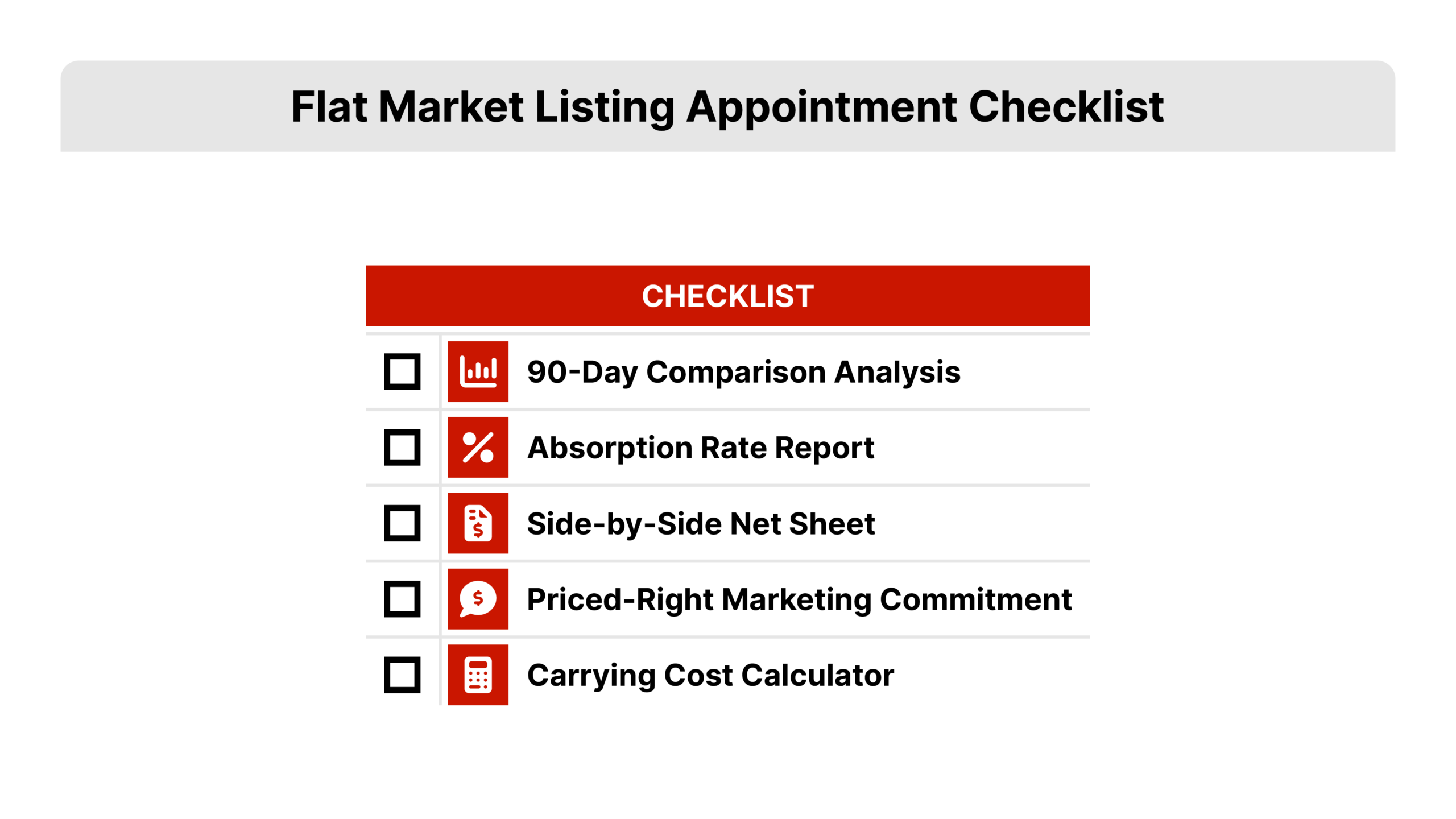
Bring these five items to every listing appointment in a flat market:
- 90-day comp analysis (not 12-month averages, which disguise the downward trend)
- Absorption rate report for the specific price band and zip code
- Side-by-side net sheet at market price vs. 5% over market, including carrying costs
- Priced-right marketing commitment with specific milestones you’ll deliver
- Carrying cost calculator that shows the monthly cost of not selling
Agents who build listing pipelines in flat markets master this conversation before conditions change. The sellers who are ready to be realistic exist right now. Your job is to find them before they go to someone willing to take an overpriced listing just to get a sign in the yard.