Skip to content
Kent Brown spent years on REDX’s own sales team, calling agents about prospecting, before he ever dialed an expired listing as an agent himself. By his own account, he closed 37 deals his first year in real estate, nearly all of them sourced through REDX. Over the eight years since, he says he has crossed roughly 300 transactions total, with about 75% of that business tracing back to cold calling, directly or indirectly.
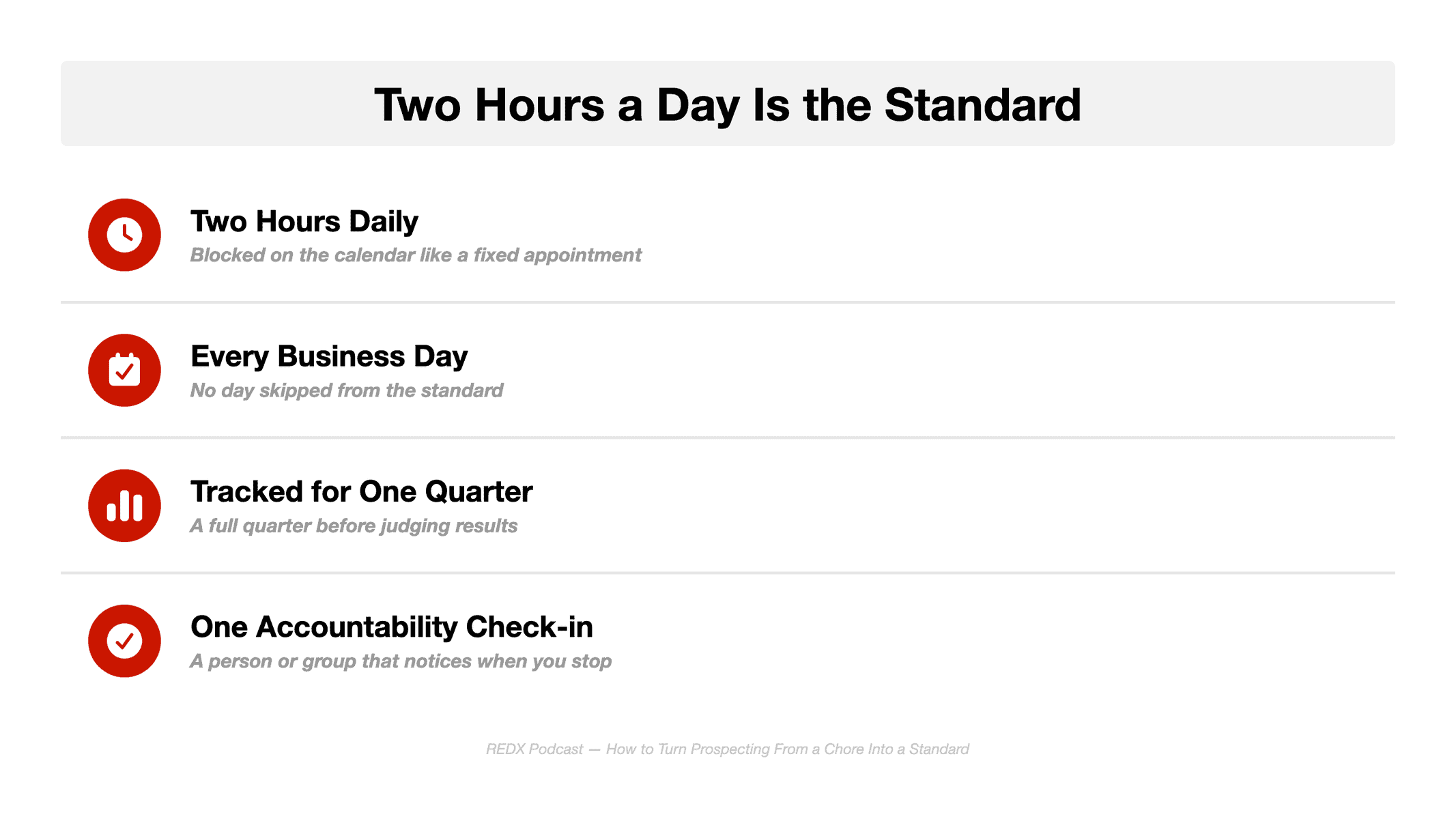
How many cold calls does it take to get a listing? The honest answer has less to do with a magic number than with a habit. Roughly two hours of dials a day, held as a fixed daily standard, builds a full pipeline over the course of a year, and the math only works when the calling happens every single day.

Co-authored by the REDX Publishing Team and:
Kent Brown
Kent is a top-performing Utah real estate agent known for strategic pricing, and famous for his 1,000 call per day challenge.
Quick Links:
- How many cold calls does it take to get a listing?
- Why does consistency beat one big push?
- How do you build prospecting into a daily standard?
- What keeps you on the phone on the days you don’t want to be?
- What do you tell agents who try cold calling, get a slow stretch, and want to quit?
- Make the standard stick this week
- Key takeaways
How many cold calls does it take to get a listing?
Agents want a single number. Kent’s answer skips it. What matters is what you do with two hours a day, every business day, for a year straight.
These days that’s roughly his own cadence, two to two and a half hours of prospecting most days. He says he now closes 9 of 10 listing appointments he goes on. For him, the bottleneck has always been making enough calls to book the appointment in the first place.
Why does consistency beat one big push?
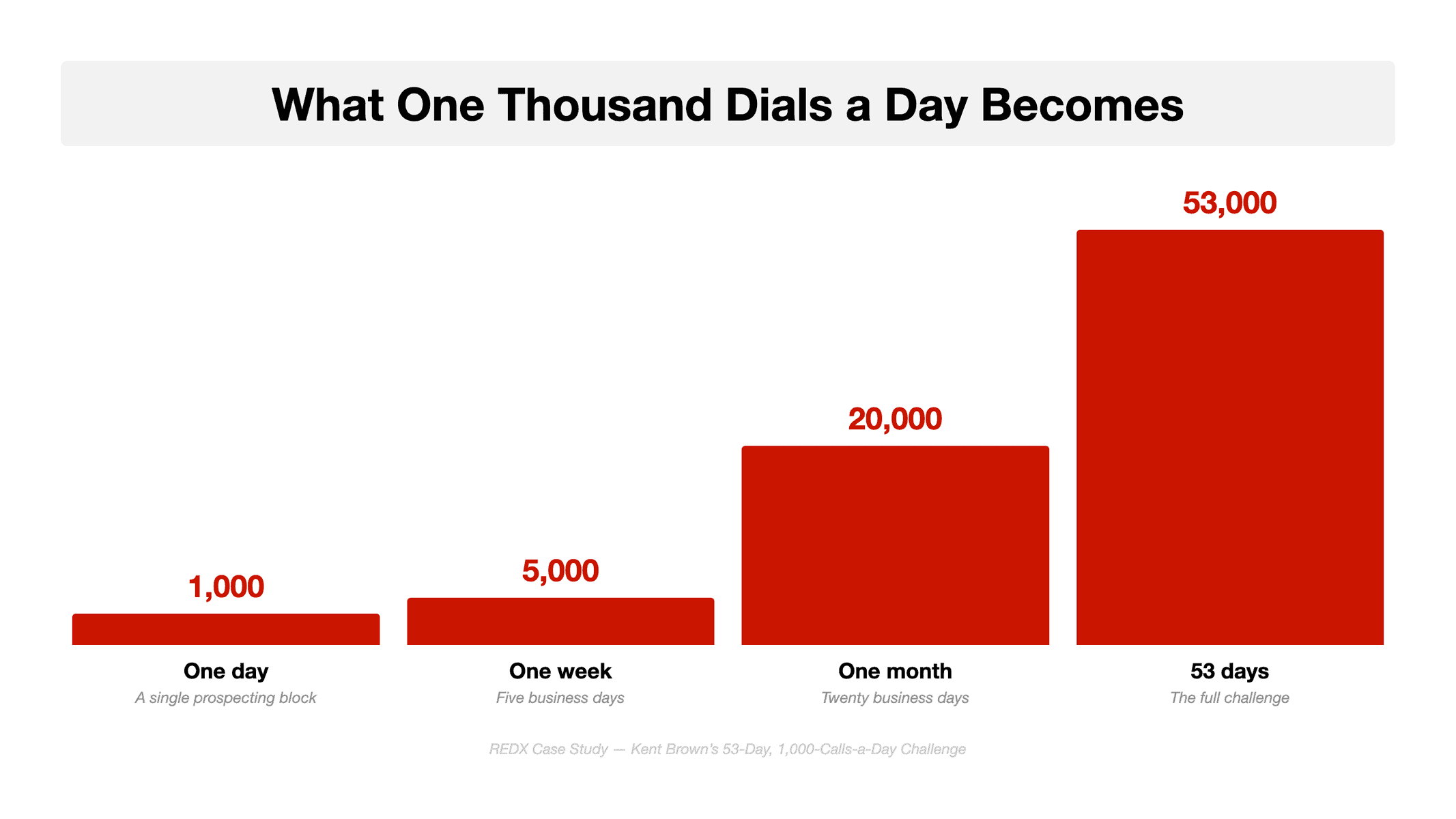
Kent has tested the extreme end of volume himself. In a REDX case study, he ran a public calling challenge over 53 days, 53,000 dials, that produced 4,797 conversations, 13 listings, and $177,000 in GCI.
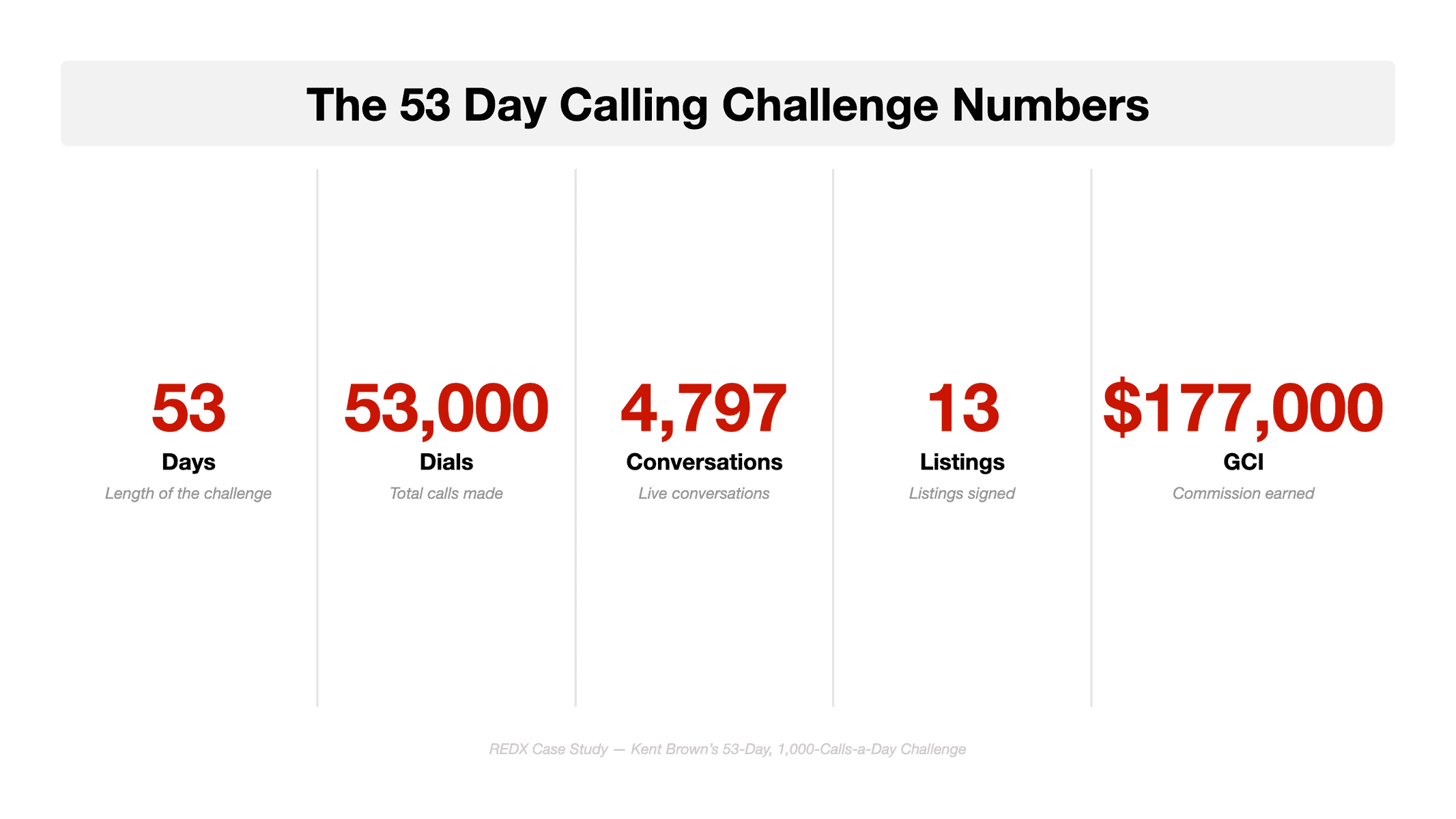
The case study proves volume works. Fifty-three days of consistent dialing turned into real conversations and 13 closed listings, proof the phone still works when the calls happen. The durable version of that result comes from holding that same daily activity as a permanent, standing habit.
“If you do enough volume with anything consistently enough for long enough, eventually your results are going to change.”
Kent’s diagnosis is simple: “One of the biggest things is people just aren’t consistent. That’s their biggest downfall.”
How do you build prospecting into a daily standard?
Kent doesn’t claim to love picking up the phone. He says he has never once woken up excited to prospect. He does it anyway, because in his business the two hours are the standard.
He compares it to brushing your teeth. You don’t decide each morning whether it’s worth doing. You just do it, because skipping it was never really on the table.
He also leans on a line he first heard on a mission trip in Africa.
“Not every lion that chased a deer caught it, but every lion that caught a deer chased it.”
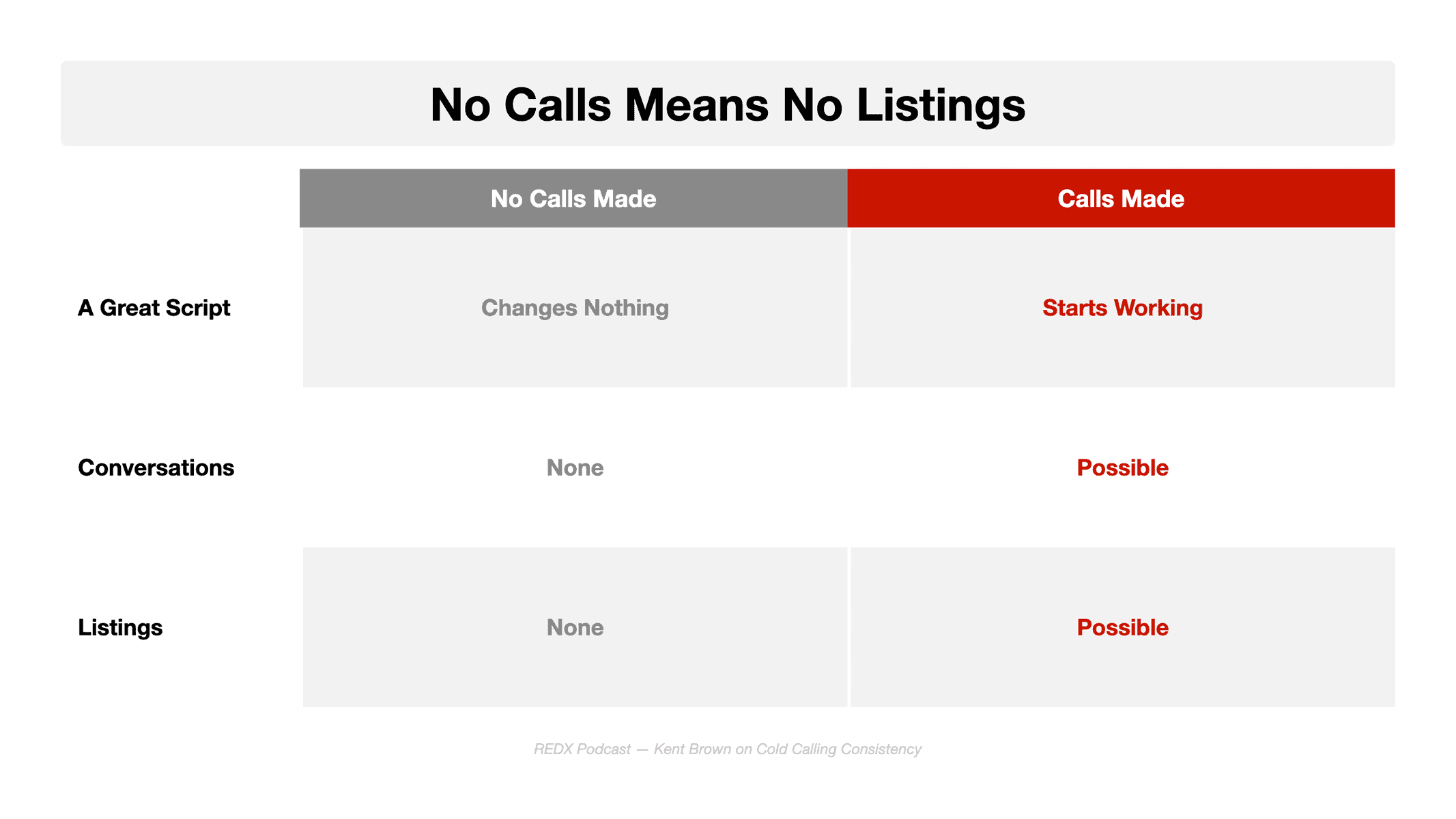
No calls, no listings, no matter how good the script is. He pairs that with a line borrowed from a motivational speaker whose name he blanked on mid-sentence: be married to the standard, committed to the process.
What keeps you on the phone on the days you don’t want to be?
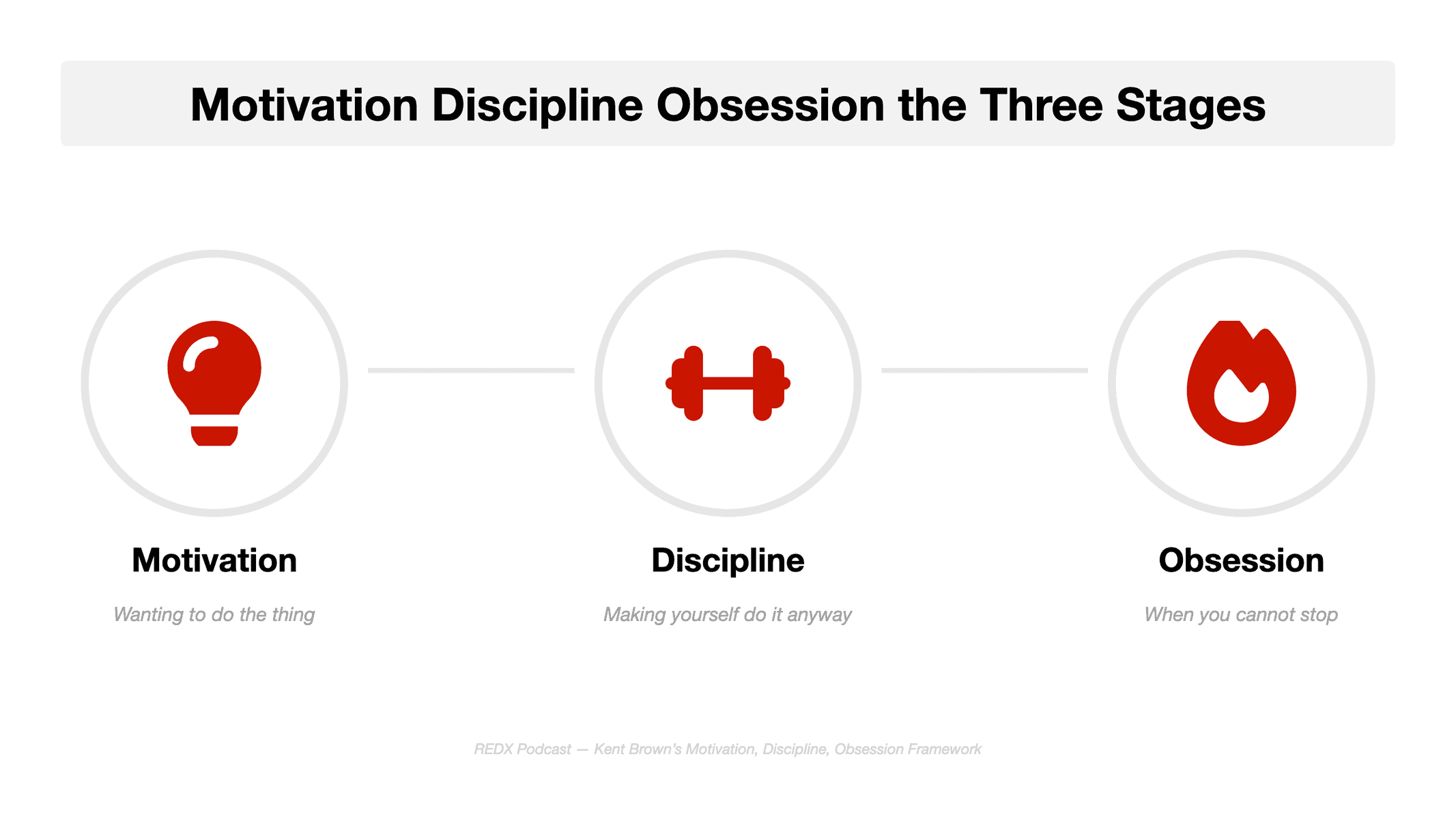
Kent breaks it into three stages. Motivation is wanting to do the thing. Discipline is making yourself do it anyway.
Obsession is when you can’t stop. Most agents start on motivation, and it runs out fast.
What replaces it, in his experience, is accountability he can’t skip. He still shows up to a daily Zoom prospecting group, mostly because missing it too many times in a month gets him kicked out. Earlier in his career, a sales coach made him write out several checks up front, and missing a door-knocking target meant the coach cashed one.
Kent’s day-to-day numbers, separate from the case-study sprint, put his own return at about $742 for every hour he spends on the phone. That kind of math is part of what keeps him showing up for the accountability group in the first place.
What do you tell agents who try cold calling, get a slow stretch, and want to quit?
Track your numbers for at least a full quarter, maybe longer, before deciding anything is or isn’t working. Kent points to how REDX itself sets goals internally on a quarterly cycle, with room to extend if things are trending the right way.
His broader point: data removes emotion from prospecting. Skip the tracking and every slow week feels like proof it doesn’t work, when it might just be a slow week.
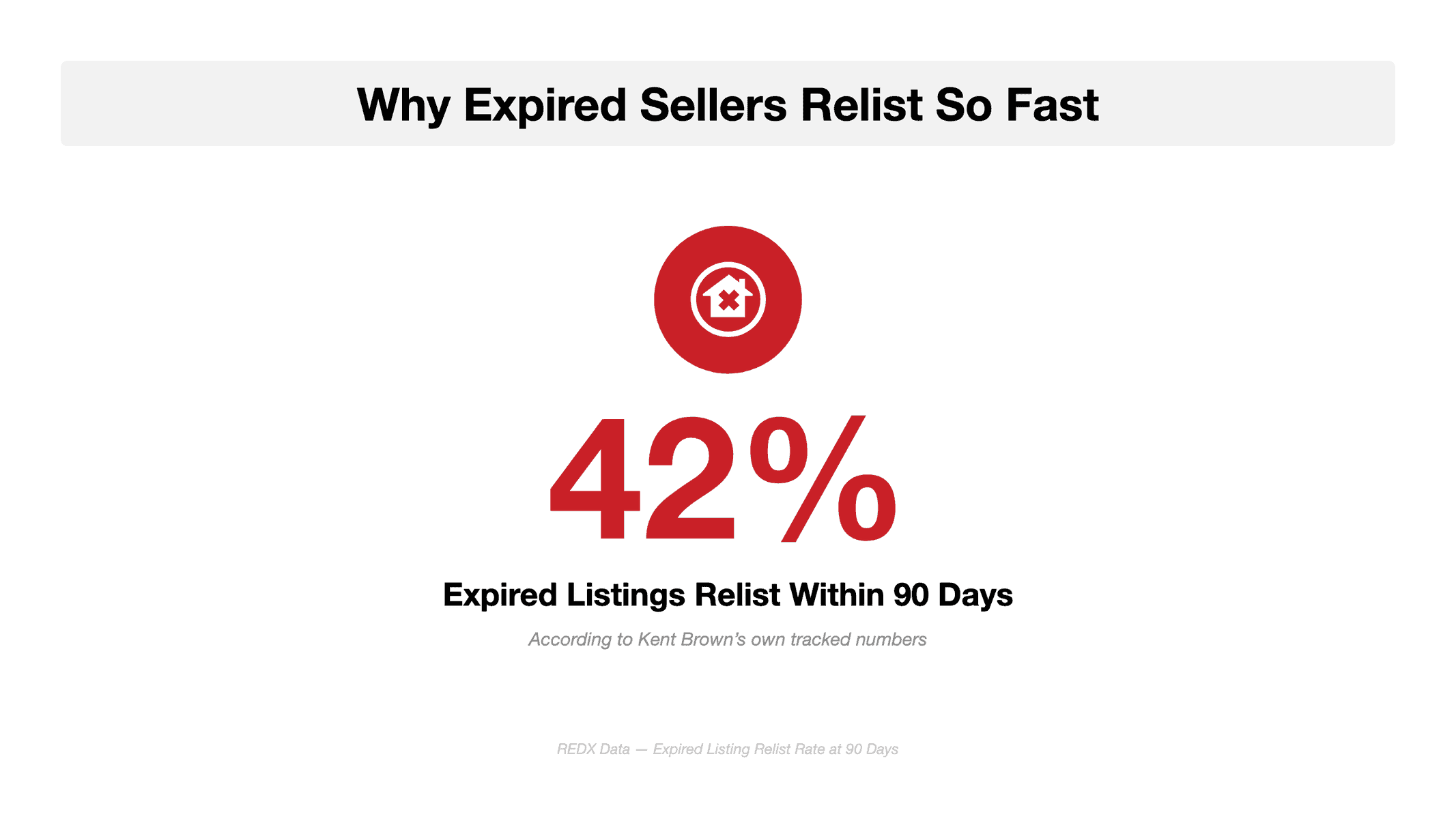
The data backs the patience. Kent points to his own numbers on this: roughly 42% of expired listings relist within 90 days. Most expired sellers do go back on the market, and they do it fast, which means the agent calling consistently is already in the conversation when that happens.
Make the standard stick this week
Block two hours on your calendar for calls, every business day, and treat that block like an appointment you can’t move. Don’t wait until your scripts feel perfect or your systems feel finished. Kent has watched plenty of agents prepare themselves right out of the business.
Track three numbers: dials, conversations, and appointments set. Do that for a full quarter before you decide whether prospecting works for you.
Find one person or one group to answer to. It doesn’t have to be dramatic. A daily accountability call, a check-in partner, or a coach who notices when you go quiet is usually enough to turn motivation into a habit.
Key takeaways
- A single burst of volume can work. Kent proved that in a REDX case study on his 53-day calling challenge, but consistency is what keeps a pipeline full once the sprint ends.
- Protect roughly two hours a day for prospecting as a fixed daily standard.
- Track your activity for a full quarter before judging whether cold calling works for you.
- Kent points to his own numbers: roughly 42% of expired listings relist within 90 days, so agents calling every day are already in the conversation when sellers come back to the market.