Skip to content
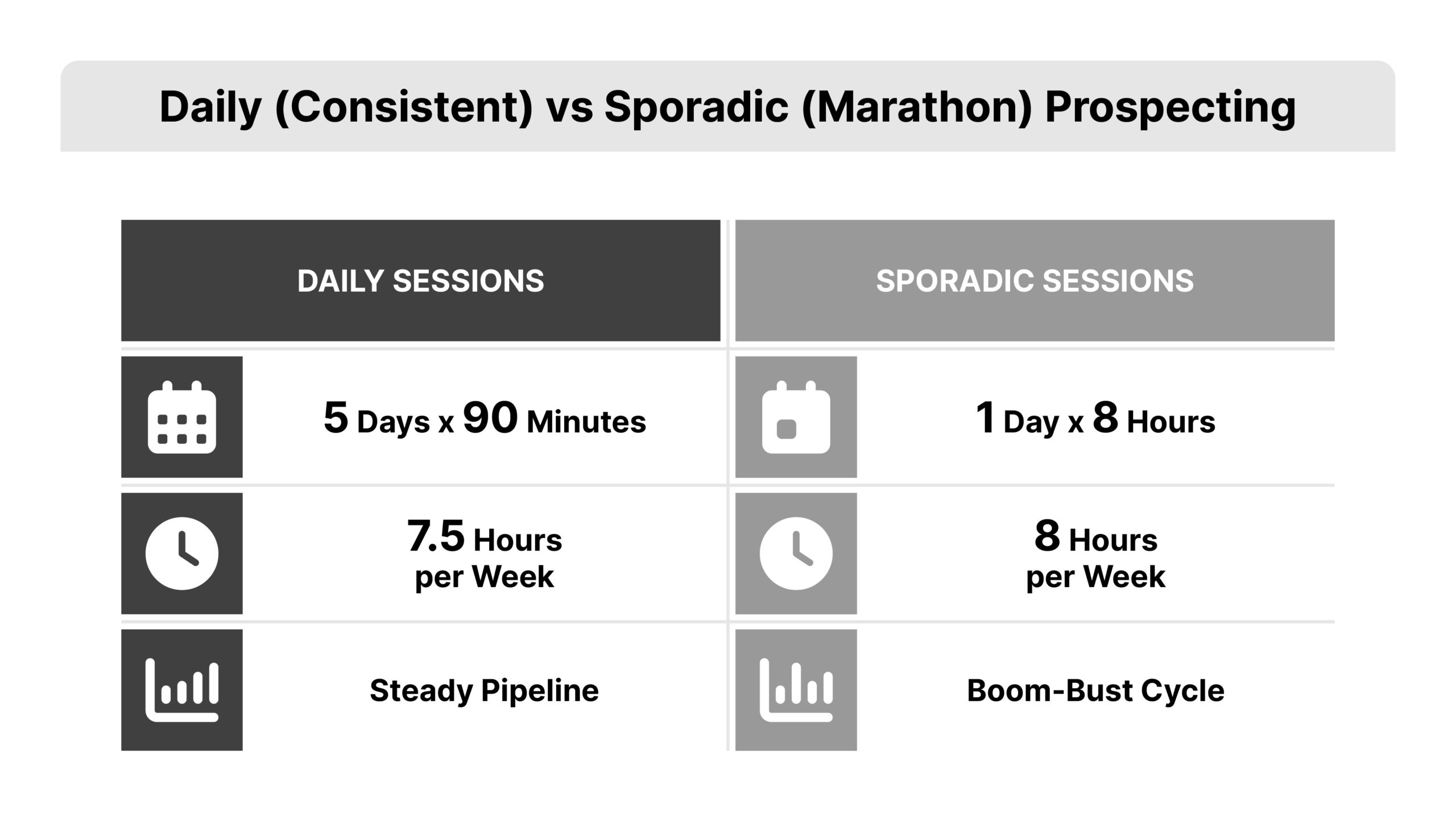
 The biggest differentiator between agents who close 30+ listings a year and agents who ride the feast-or-famine cycle isn’t talent, market knowledge, or even their script. It’s what they do before 10am.
Top producers treat prospecting the same way elite athletes treat morning training: non-negotiable, time-blocked, and done before the rest of the day has a chance to derail it. If you’re trying to build a listing pipeline that doesn’t collapse every time a transaction gets complicated, you need a daily prospecting habit that doesn’t depend on motivation or free time, because those two things are never reliably available.
Here’s the exact daily prospecting habit of top producing agents, how long it takes, and how to protect it when your calendar fills up.
Quick Links:
- How Much Time Should You Spend Prospecting Each Day?
- What Does a Top Agent Morning Prospecting Routine Look Like?
- How Do You Stay Consistent With Prospecting When You Are Busy With Transactions?
- What Is the Minimum Daily Prospecting Time to Build a Real Pipeline?
- Your 30-Day Prospecting Habit Builder
How Much Time Should You Spend Prospecting Each Day?
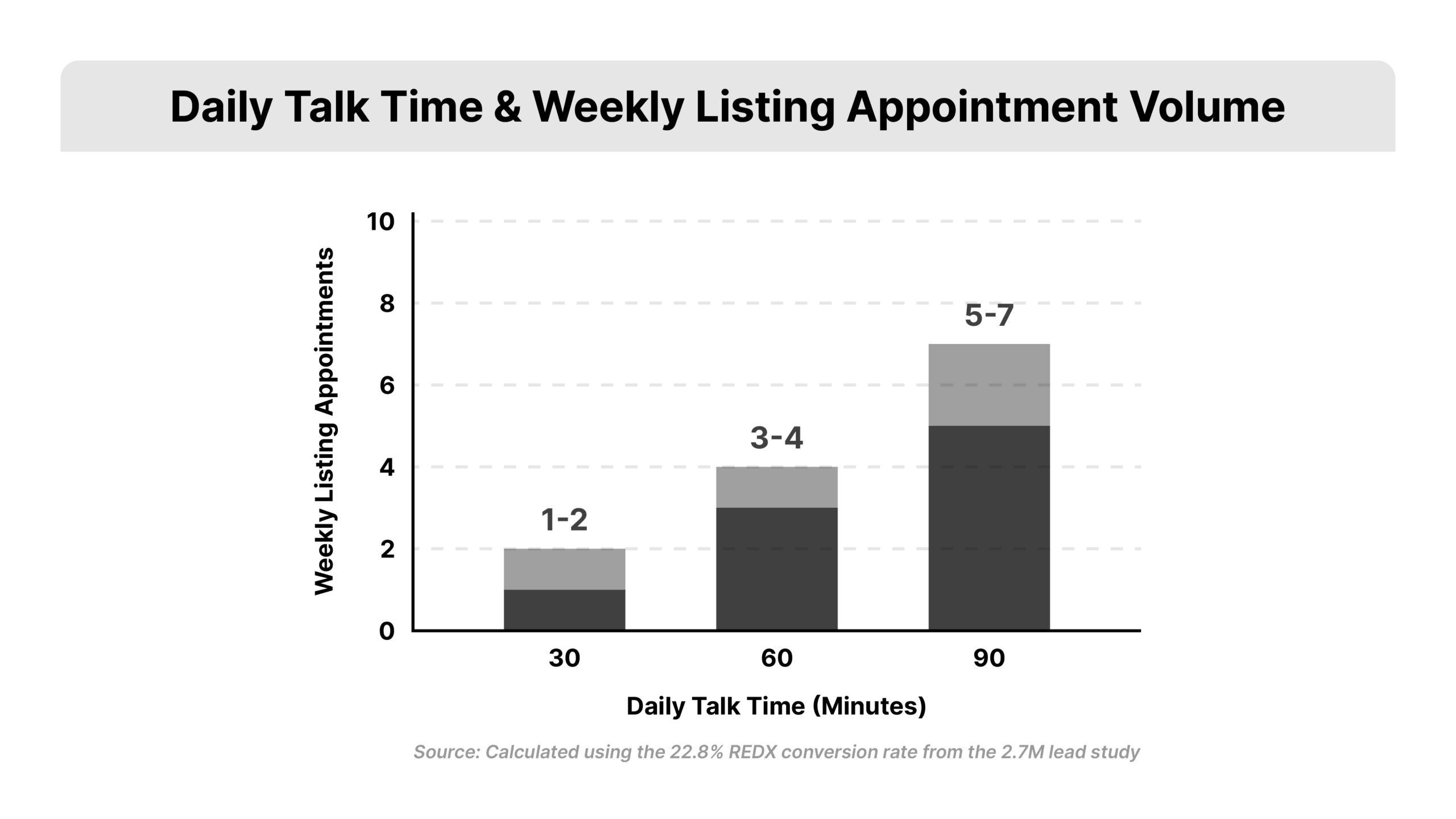
The minimum effective daily prospecting time is 60 minutes of actual talk time per day, 5 days per week. Most top producers block 90 minutes to 2 hours to create buffer.
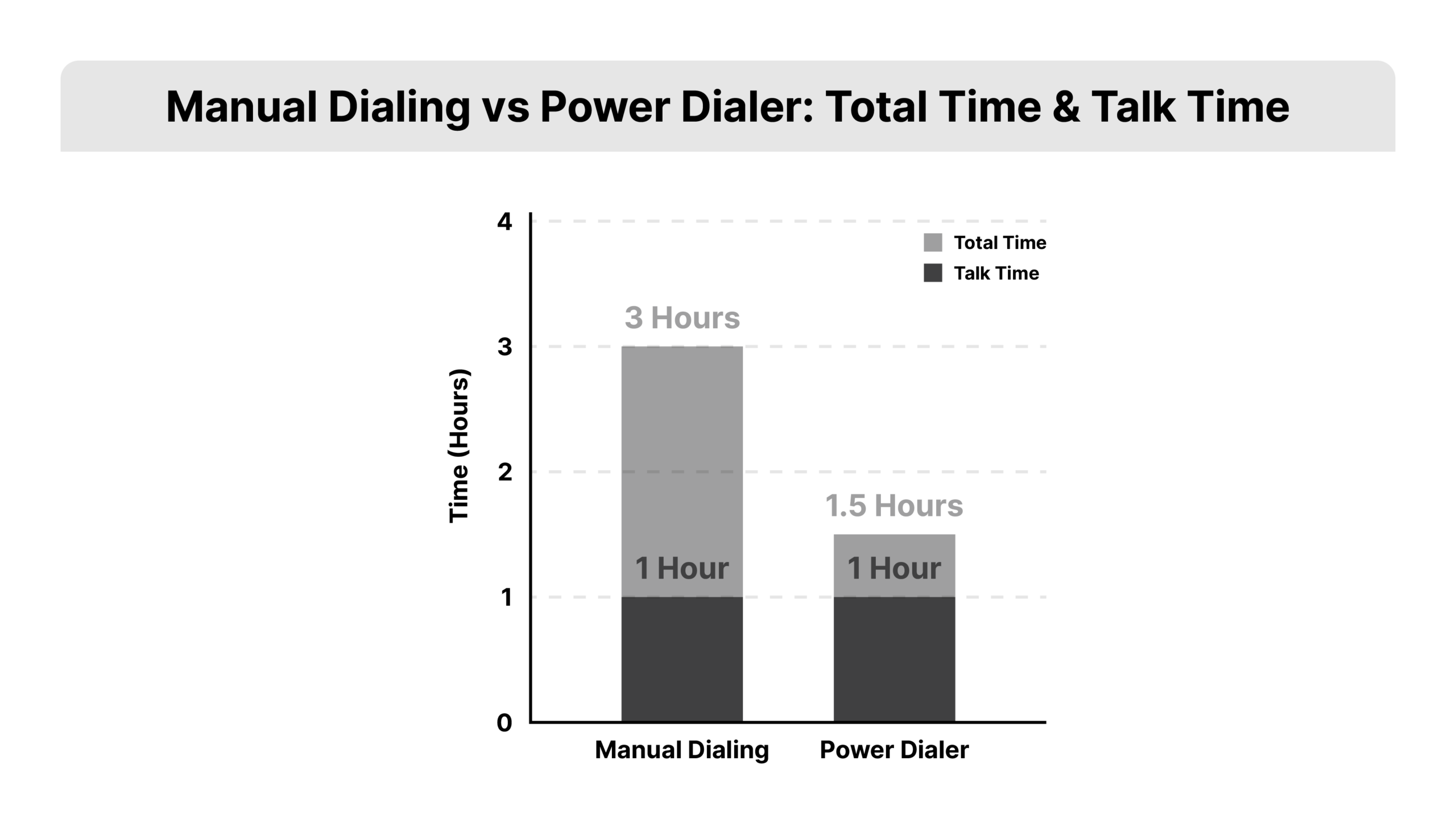
One hour of talk time is not the same as one hour on the phone. Dialing, ringing, voicemails, and dead numbers eat significant time. If you’re manually dialing, 1 hour of actual conversation typically requires 2.5 to 3 hours of total effort. Agents using the Power Dialer compress this significantly because the system sequences calls and moves past unproductive numbers automatically, without requiring the agent to redial or wait.
The practical benchmark most top agents report: 20 meaningful conversations per day, 5 days a week. At that volume, you are having 400+ seller conversations per month, and the pipeline builds predictably. Below 10 conversations per day, the math stops working reliably.
What Does a Top Agent Morning Prospecting Routine Look Like?
Top producers follow a structured morning block: review leads, warm up with scripts, dial, then debrief. This block happens before email, before social media, and before any non-urgent task.
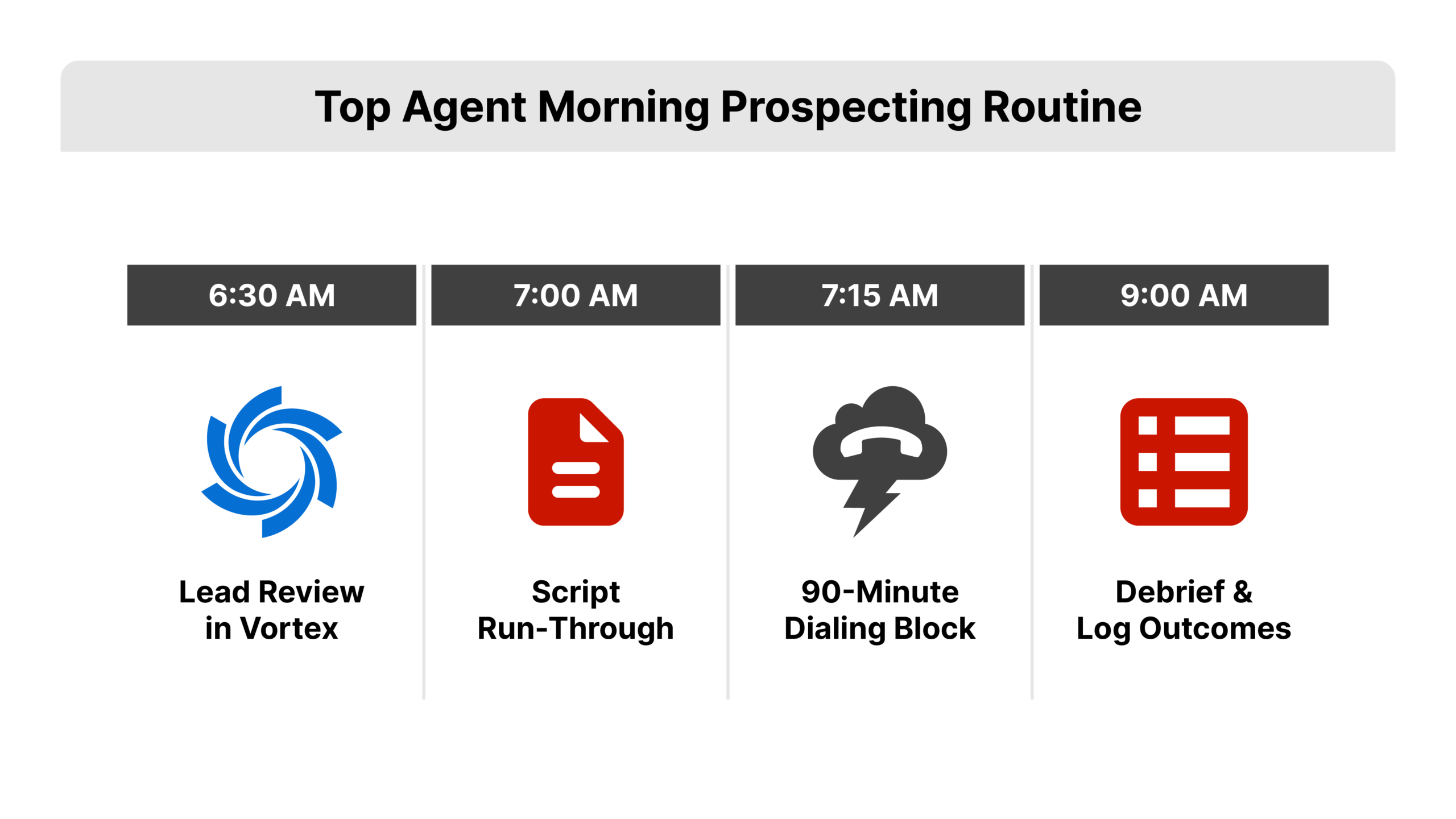
Here’s the structure that top-producing REDX agents consistently describe when asked about their morning routine:
6:30–7:00am: Lead Review
Pull your lead list in Vortex. Identify your priority calls for the day: new expireds first, then FSBOs, then follow-up calls from the previous day. Prioritizing fresh contacts keeps your pipeline moving and puts you in the highest-probability conversations before your energy drops.
7:00–7:15am: Script Run-Through
Say your opening three lines out loud, twice. This removes the mental friction of starting cold. It doesn’t need to be a full rehearsal, just enough to put your voice in prospecting mode before the first dial.
7:15–9:00am: Dialing Block
This is your core 90-minute to 105-minute block. Phone off for everything else. No texts, no email checks, no quick tasks. The agents who protect this block build pipelines. The agents who let it get interrupted do not.
9:00–9:15am: Debrief and Log
Log outcomes in Vortex: who answered, what they said, who to call back and when. This 15-minute debrief is what turns one day’s calls into a multi-week follow-up system. Skip it and you lose the compounding value of everything you just did.
How Do You Stay Consistent With Prospecting When You Are Busy With Transactions?
Transactions are the number one reason agents stop prospecting, and then wonder why their pipeline dried up 60 days later. The solution is to never let transactions touch your prospecting block.
The agents who maintain consistent pipelines operate on one rule: transactions happen after 10am, prospecting happens before 10am, no exceptions. When you allow a transaction call, an inspection question, or a buyer update to invade your morning block, you are trading future listings for current paperwork. The math on that trade always works against you.
Three practical strategies for protecting your block:
- Set client expectations upfront. Tell every new client during the onboarding conversation that you are available by phone after 10am. Most clients respect a clear boundary immediately when it’s framed as professionalism, not inconvenience.
- Batch transaction tasks in the afternoon. Paperwork, follow-up emails, and coordination calls are afternoon work. Block 1-3pm for transactions and defend that block too. When each part of your day has a dedicated function, the whole system runs more cleanly.
- Use Vortex to automate follow-up sequencing. When you log a call outcome in Vortex, the system surfaces that lead again at the right time. You don’t have to remember who to call back, which removes one more reason to check your phone during a dialing block.
What Is the Minimum Daily Prospecting Time to Build a Real Pipeline?
60 minutes of actual talk time per day, five days per week is the floor. Below that, you’re maintaining contacts, not generating new listing appointments.
If you’re calling high-quality targeted leads, the math at 60 minutes is defensible. According to REDX’s 2.7 million lead study, expired listings convert at 22.8% to a listing appointment. At 60 minutes of focused dialing into a fresh expired list, most agents reach 15-20 meaningful conversations. At 22.8%, that produces 3-5 listing appointment opportunities per day, which is a full pipeline for most agents.
What breaks down at the 60-minute floor is resilience. When a sick day, a scheduling conflict, or a demanding transaction takes out a day or two, a 60-minute habit has no buffer. Agents who build to 90 minutes per day have a cushion that lets them absorb life without their pipeline collapsing.
Your 30-Day Prospecting Habit Builder
Building a prospecting habit takes about 30 days to feel automatic. The agents who fail don’t fail because they lack the knowledge of what to do. They fail because they try to install a 2-hour habit on day one, which immediately collides with their existing schedule and obligations.
A progressive approach works better:
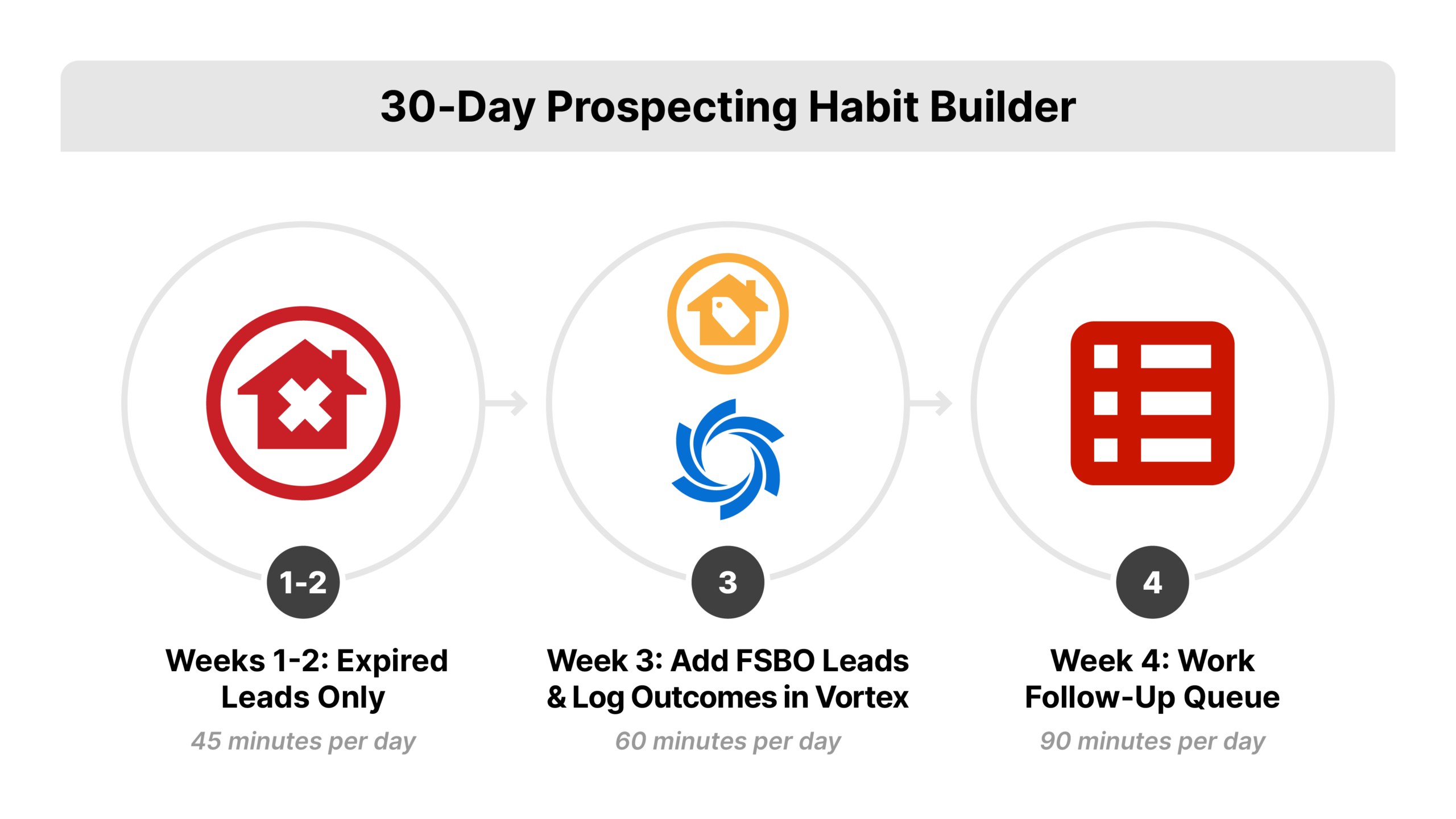
- Weeks 1-2: 45 minutes per day, expired leads only. The goal here is not results, it’s installing the time block. Dial your expired leads list and focus on getting the habit locked in before adding volume.
- Week 3: Extend to 60 minutes. Add your FSBO list alongside expireds. Start logging outcomes in Vortex after each session. You’re building the follow-up queue now.
- Week 4: Push to 90 minutes. Review your Vortex follow-up queue before dialing each morning. You should start receiving callbacks and re-engagements from your week 1-2 calls.
After 30 days, the habit is established and the pipeline is beginning to fill. Most agents who reach this point don’t go back to inconsistency, because the math becomes visible. Every 90-minute morning block is a direct investment in the listings you will close 60 to 90 days from now. For a detailed week-by-week structure with scripts and lead prioritization guidance, REDX’s 30-Day Prospecting Plan covers each step of the ramp-up in detail.