Sellers ask about timing in every listing consultation. Inexperienced agents might say something like “spring is the best time” and move on. The experienced agents who win the consultation usually give a better answer: a specific window, with local data behind it, and a clear recommendation.
In today’s market, timing matters, and it matters a lot. If you’re an agent looking for the right time to start working leads seriously, the time to start is this week!.
In this blog, we’re going to break down the best week to list a home, how to identify your exact window of opportunity, and how to have the conversation with sellers to get their home on the market at the right time so you can make money off the commission.
Key Takeaways
- Mid-April is the optimal listing window in most U.S. markets. Buyer demand peaks, inventory is still building, and motivated buyers are actively searching
- Agents who can cite specific local data on listing timing win seller consultations over those who give generic spring advice
- Sellers who list the first week of April vs. the last week of May see meaningful differences in days on market and final sale price in most markets
- The right timing answer is always local. Agents who pull their own market’s week-by-week data are more compelling than any national statistic
What Week in 2026 Is Best for Listing a Home?
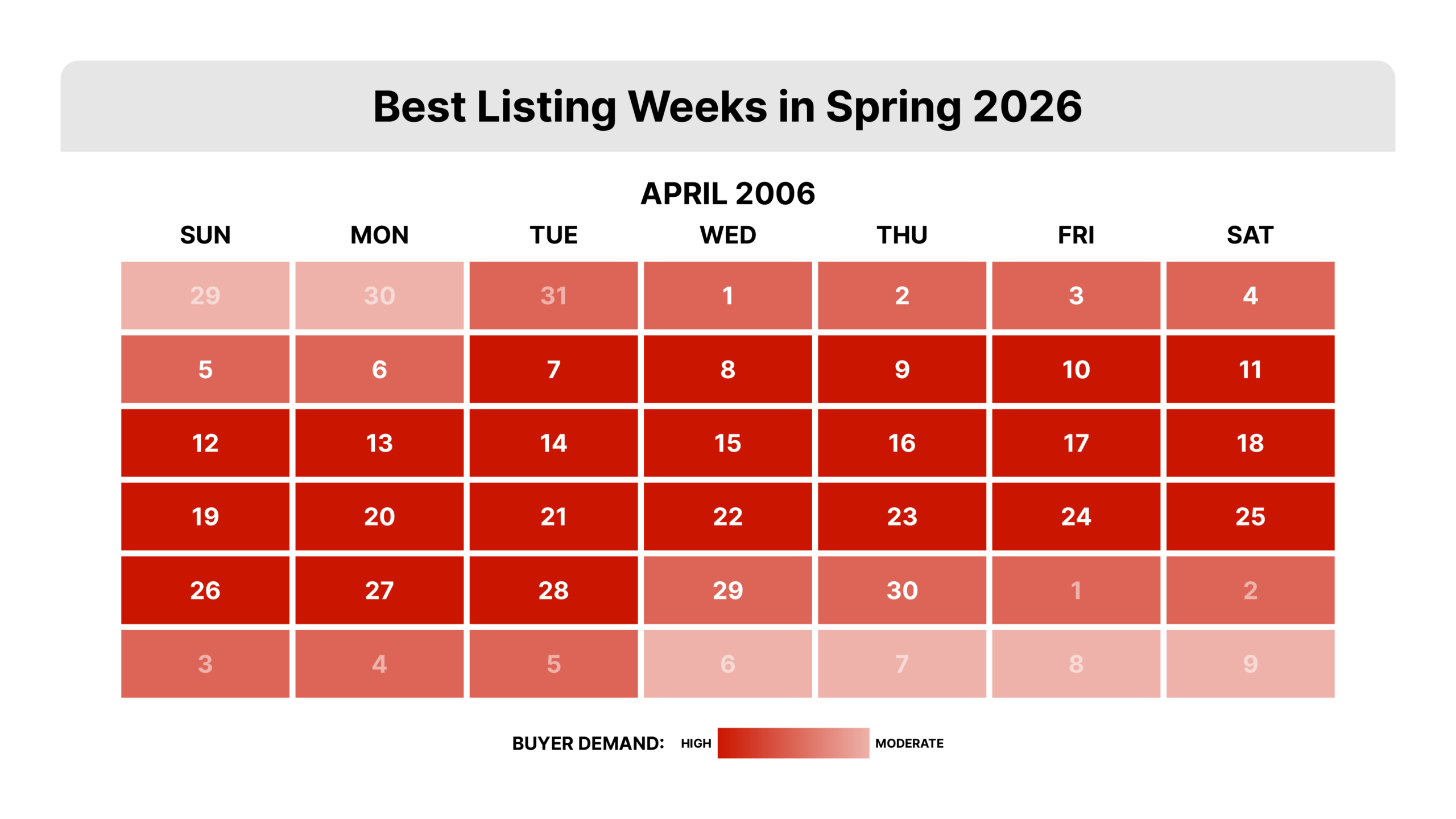
The first three weeks of April represent the optimal listing window in most U.S. markets. This isn’t a new phenomenon — consistent analysis of listing data from NAR and Redfin shows that homes listed between April 7 and April 28 sell faster and closer to list price than homes listed at any other time of year.
The reason this window works:
- Buyer demand has already ramped up from the winter lull, but the spring supply glut hasn’t fully arrived
- Serious buyers are active — families trying to be settled before the school year, professionals with spring start dates, and motivated buyers who have been waiting since January
- Less competition: By listing in early April rather than late May, your seller’s home is competing against fewer alternatives
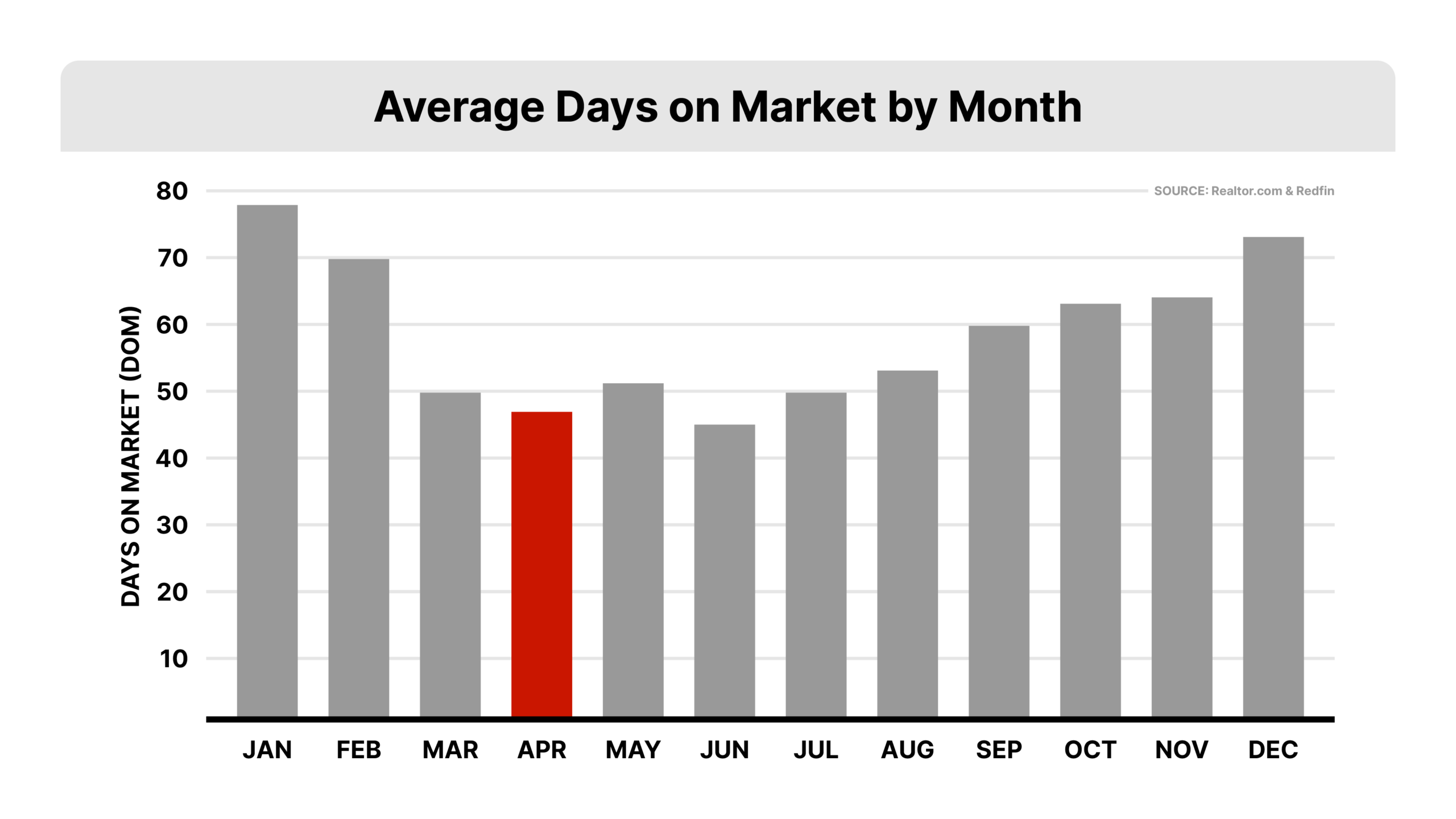
According to NAR’s 2026 guidance on listing timing, the specific week of listing within the spring window produces statistically significant differences in both final sale price and days on market. This isn’t a marginal difference — it’s the kind of difference that shows up in the seller’s net proceeds.
How Does the Optimal Window Vary by Local Market?
National data tells you where to look, but local data tells you what to do. Every market has its own seasonal rhythm, and the agent who pulls week-by-week DOM and list-to-sale data for their specific market will give more precise advice than the one citing national averages.
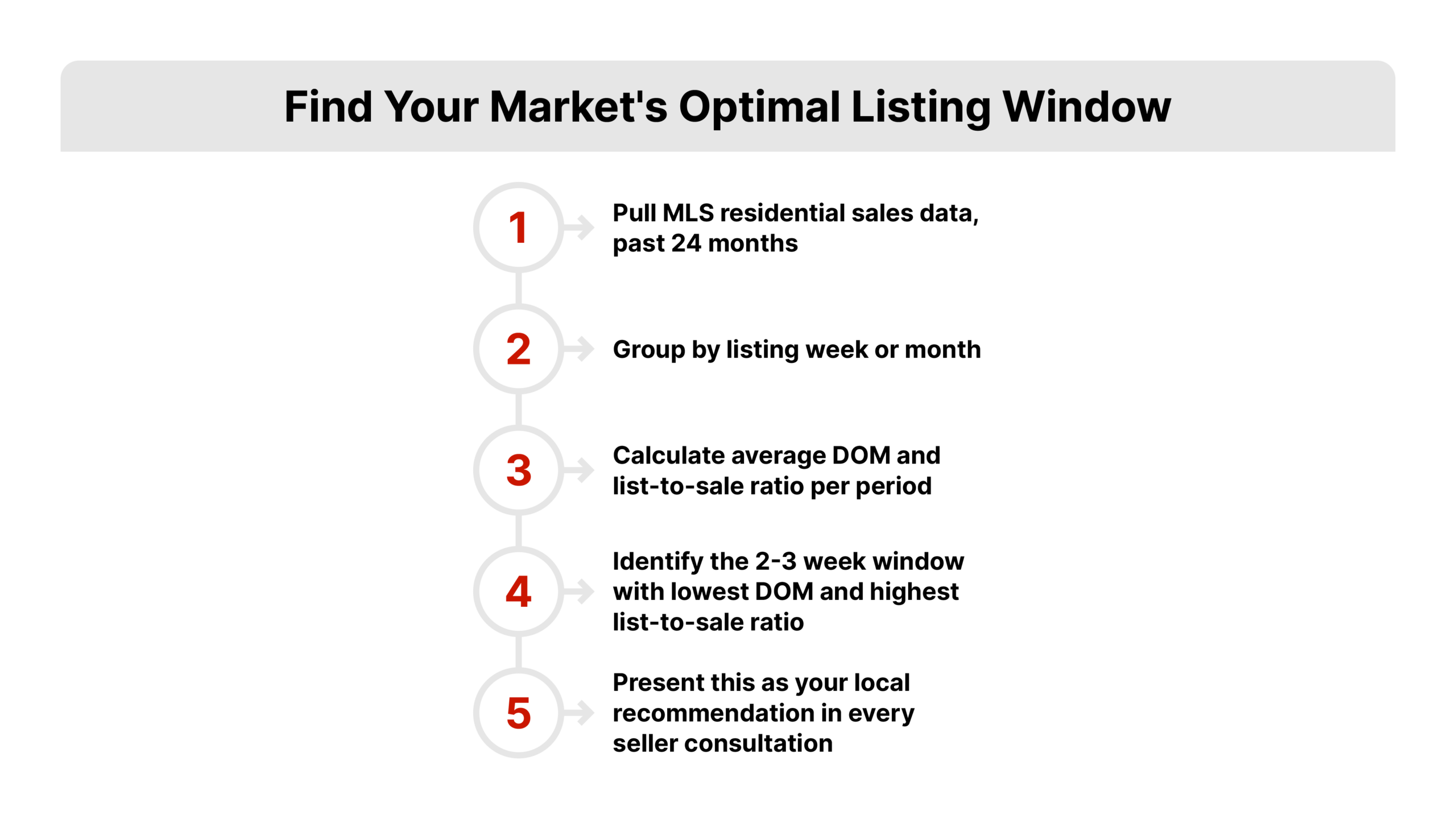
How to find your market’s optimal window:
- Pull MLS data for your primary market: filter for residential sales in the past 24 months
- Group by listing date week (or month, if week-level data is hard to pull)
- Calculate average days on market and average list-to-sale price ratio for each period
- Identify the two to three week window with the lowest DOM and highest list-to-sale ratio
- That’s your market’s peak window — and that’s what you present to sellers
In most markets this exercise confirms early-to-mid April as the peak. In some high-growth Sun Belt markets, it’s earlier. In cold-weather markets, it can be later. The point is that you’re giving a locally-grounded recommendation rather than a generic one.
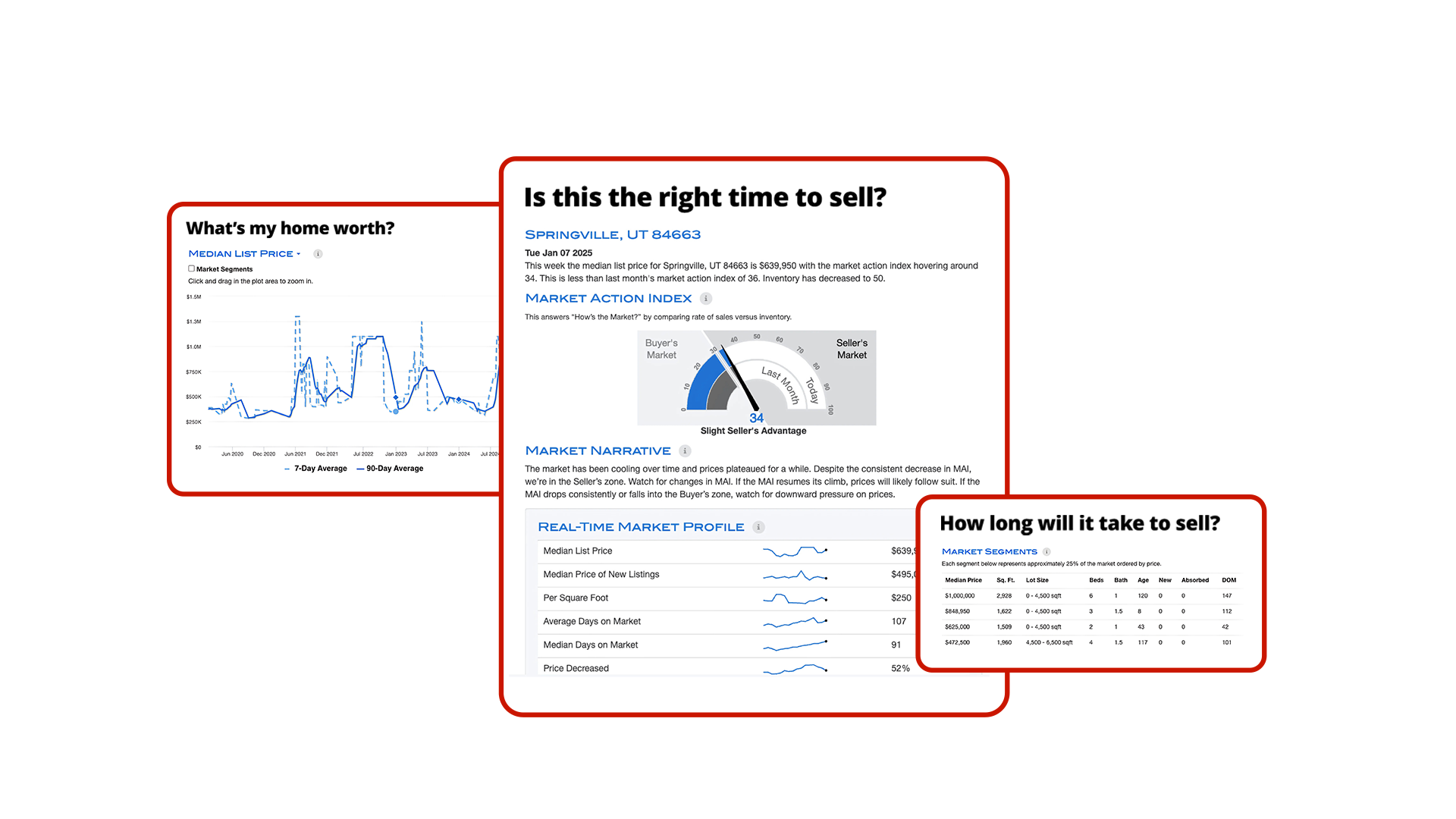
Pro Tip: To get immediate information on local markets without scouring your MLS, every REDX lead type includes local market insights with days on market, median list prices, 90-day averages, and more. Just open the lead and click on “Market Insights.” Market Insights available for most leads — mileage may vary.
How Do You Handle the “I Want to Wait Until Summer” Conversation?
This is the most common seller timing objection, and it’s based on a reasonable-sounding but data-deficient assumption.
Many sellers believe that summer is the peak selling season because it’s when the most homes are actively on market. But more activity doesn’t necessarily mean better seller outcomes — it often means more competition.
If you’re having that conversation with a client, try using the template below to compare different listing months and let the seller come to their own conclusion to list earlier.
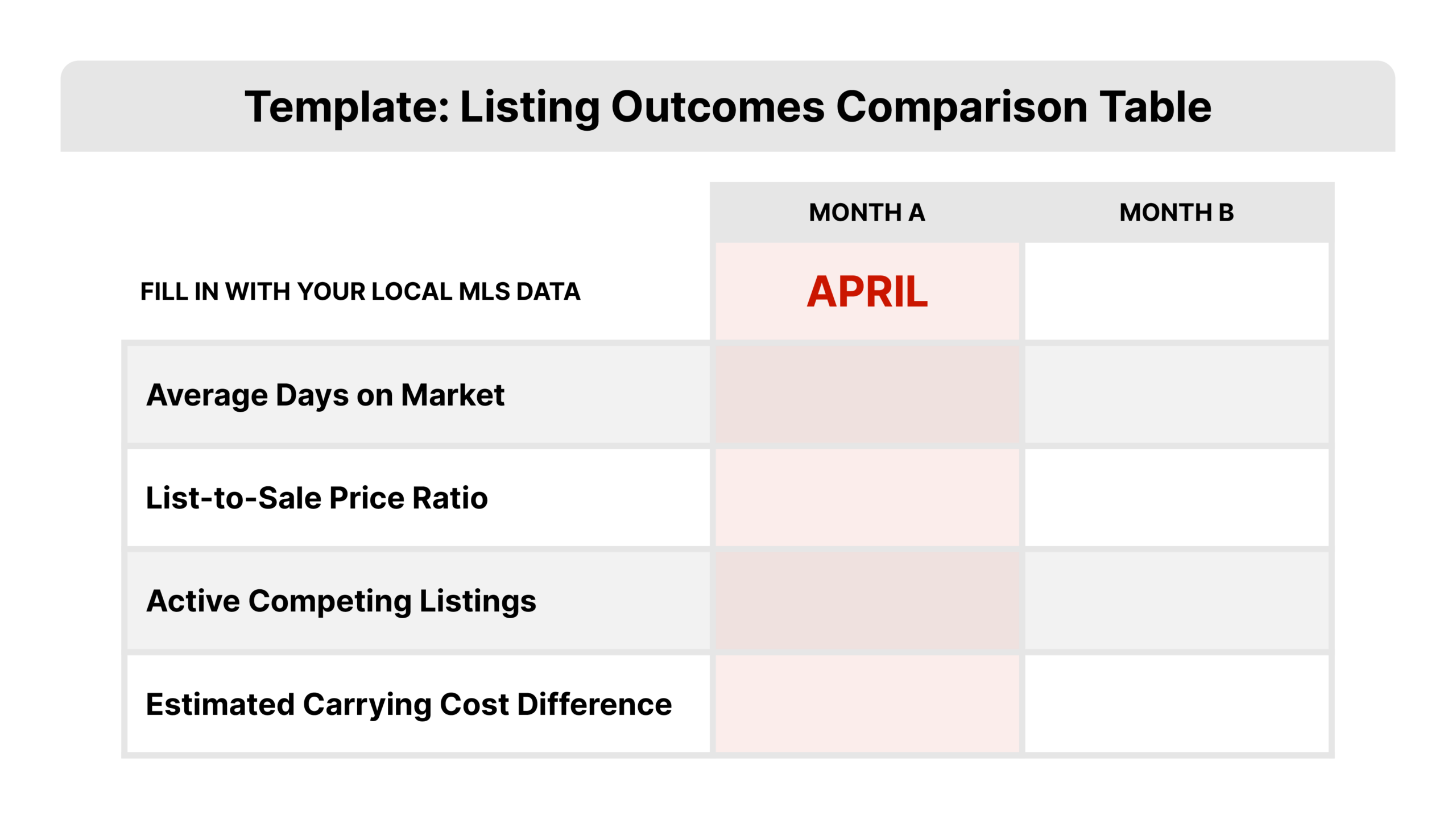
If you get pushback from the seller, here are a few responses you can give that might help change their mind:
- “Let me show you what happened to homes that were listed in April versus June in your price range last year.” Pull local stats.
- “In April, the average days on market was X days. In July, it was Y days. That’s Z extra days of carrying costs and uncertainty.”
- “More buyers are looking in April, but more homes are also listing in June. In April, your home has fewer competitors. That’s usually better for the seller.”
- “If we start preparing now, we can hit the April window. If you wait until you ‘feel ready’ in summer, you may be competing with 40% more listings.”
This conversation works best when you lead with the local numbers rather than the argument. Let your data make the case for you.
Pro Tip: If you’ve been waiting to get the best leads in real estate with data and insights to secure the listing every time, now might be the best time for you to try out REDX Leads. Get immediate insights on listings that expired, pre-foreclosure data, and owners trying to sell their home on their own.
What Should You Tell a Seller Whose House Won’t Be Ready Until June?
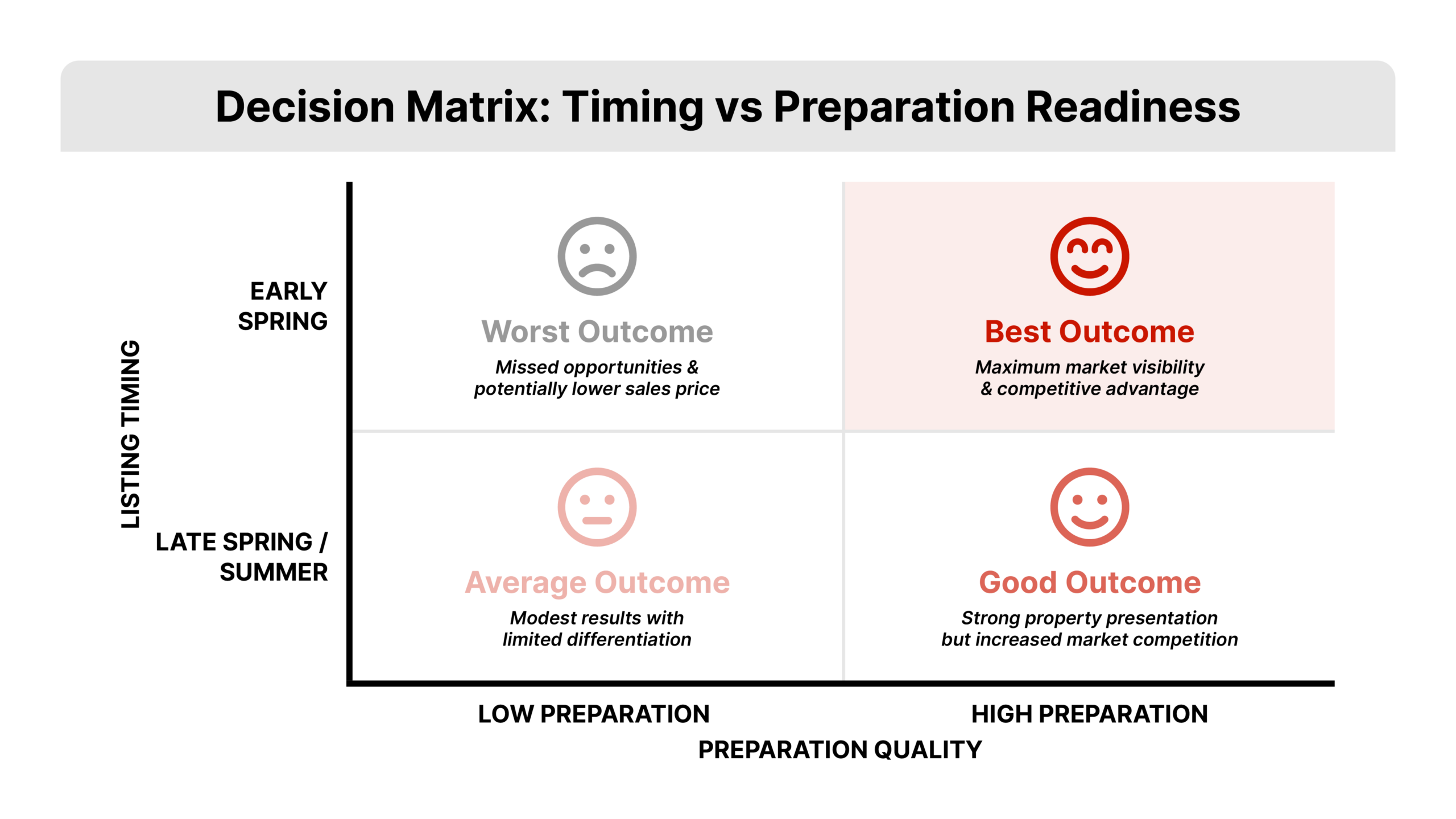
Give them the realistic choice between timing and preparation. Not every home will be ready for the April window, and a poorly prepared home listed in April is worse than a well-prepared home listed in June.
The honest answer:
“The April window is the best market. But a home that isn’t ready to show well will struggle even in a strong market. Let’s look at what it would take to get you ready for early April versus mid-May, and decide together which timeline is realistic.”
This conversation demonstrates that you’re managing their actual outcome, not just their listing date. Sellers who understand the tradeoff between timing and preparation make better decisions and have more realistic expectations when the listing goes live.
How Agents Use Timing Expertise to Win Consultations
The listing consultation where you walk in with a slide or chart showing the best listing week in your specific market — along with the data behind it — is a fundamentally different consultation than the one where you say “spring is usually best.”
Sellers remember the agent who brought the data. They reference it when talking to friends (“The agent I chose showed me the exact week that homes sold fastest in our neighborhood”). They trust the pricing recommendation more because the timing recommendation was backed by evidence.
Before your next listing appointment:
- Pull the week-by-week or month-by-month DOM data for your market
- Identify the peak window (it will almost certainly be in April)
- Build one clean visual — a chart, a table, a calendar heat map — that shows it clearly
- Practice presenting it in 60 seconds as part of your opening remarks
This one addition to your listing presentation will win you listings you would otherwise have lost to less-prepared competitors.
For more information on how to make a listing presentation that converts, check out this guide on the 5 steps for listing appointment success.