Skip to content
 Updated May, 2026 – REDX Publishing team
The real estate investment landscape is constantly evolving, with new markets emerging while others stabilize or cool. For agents working with investors or looking to expand their own portfolios, identifying the next hot markets before they peak is crucial for maximizing returns. This analysis breaks down the most promising and best cities for real estate investments in 2026, based on economic indicators, population trends, job growth, and housing market dynamics.
This blog post is provided for informational purposes only and does not constitute investment, financial, legal, or tax advice. Real estate markets are subject to change, and individual investment decisions should be based on personal objectives and consultations with a licensed professional. REDX does not guarantee future returns or outcomes.
Quick Links:
Emerging Markets with the Highest ROI Potential
When advising clients on investment opportunities, ROI potential should be at the forefront of your analysis. These emerging markets show strong indicators for exceptional returns in 2026.
1. Boise, Idaho: The Mountain West Powerhouse
Boise continues its impressive growth trajectory, with the market maturing into a period of sustainable, steady appreciation for 2026. The city’s combination of outdoor lifestyle, growing tech sector, and relative affordability compared to West Coast markets makes it a standout investment opportunity. After years of rapid appreciation, Boise’s market has stabilized — a sign of strength, not weakness — with home values anchored by genuine demand from relocating professionals and a diversifying local economy.
Key investment metrics:
- Median home price: $495,000
- Average rental yield: 5.8%
- Population growth rate: 2.3% annually
- Job growth forecast: 3.2% for 2026
2. Raleigh-Durham, North Carolina: The Research Triangle Boom
The Research Triangle continues to attract major employers in technology, healthcare, and education sectors. With three major universities and a highly educated workforce, Raleigh-Durham offers investors stable growth and strong rental demand. Home prices have risen meaningfully from prior years, yet the market is transitioning toward a more balanced environment — which is good news for investors looking to enter without competing in a frenzied seller’s market.
Key investment metrics:
- Median home price: $490,000
- Average rental yield: 5.5%
- Population growth rate: 2.2% annually
- Job growth forecast: 3.0% for 2026
3. Nashville, Tennessee: Music City’s Sustained Momentum
Nashville’s diverse economy, no state income tax, and vibrant cultural scene continue to attract both young professionals and retirees. The city’s strong job market and relatively affordable housing (compared to similar cultural hubs) position it for continued growth. Corporate relocation activity remains robust — with Oracle, Amazon, and AllianceBernstein all deepening their Nashville footprint — while a meaningful expansion in housing inventory is creating more opportunity for investors to enter the market at the right price.
Key investment metrics:
- Median home price: $475,000
- Average rental yield: 5.5%
- Population growth rate: 1.9% annually
- Job growth forecast: 2.8% for 2026
Economic and Demographic Trends Shaping Investment Markets
Understanding the underlying forces driving market growth is essential for making informed investment decisions. These economic and demographic trends are reshaping the real estate landscape for 2026.
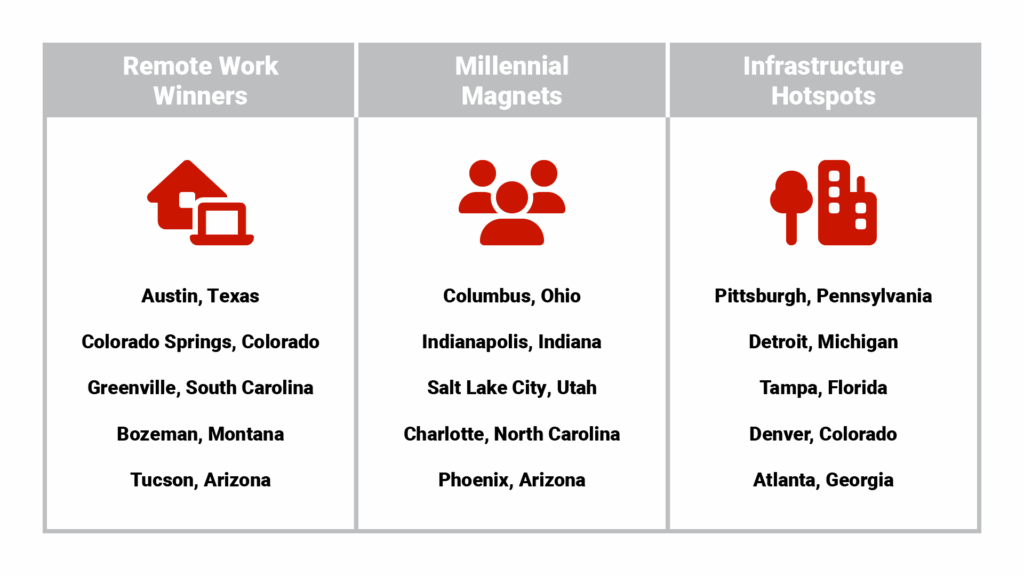
Remote Work Migration Patterns
The remote work revolution continues to influence housing markets, with secondary cities benefiting from migration away from expensive coastal hubs. What’s now clear is that this shift is structural — remote work is projected to drive a 27% reduction in U.S. office space by 2028 and a corresponding 20% rise in suburban housing demand. Cities with strong digital infrastructure, outdoor amenities, and lower costs of living are capturing these relocating professionals for the long haul.
Top beneficiaries of remote work migration:
- Austin, Texas
- Colorado Springs, Colorado
- Greenville, South Carolina
- Bozeman, Montana
- Tucson, Arizona
- Knoxville, Tennessee
- Tulsa, Oklahoma
Millennial and Gen Z Homebuying
Millennials are now firmly in their peak earning years, driving demand for single-family homes in affordable markets with good schools and family-friendly amenities. Older millennials (ages 36–45) have become the highest-earning generation of homebuyers, with a median household income of $132,700 and a preference for larger homes in established suburban communities. Meanwhile, Gen Z is entering the market in force — with over half purchasing homes solo, twice the rate millennials did at the same age — creating a powerful new wave of first-time buyer demand in affordable markets. This generational double-engine is creating investment opportunities in suburban areas around growing metro regions.
Markets with strong millennial and Gen Z homebuying activity:
- Columbus, Ohio
- Indianapolis, Indiana
- Salt Lake City, Utah
- Charlotte, North Carolina
- Phoenix, Arizona
Infrastructure Investment Impact
The federal infrastructure bill continues to drive economic development in cities receiving significant funding. These investments create jobs, improve quality of life, and enhance property values in the surrounding areas — and the markets that acted early are now seeing the payoff.
Cities benefiting from major infrastructure projects:
- Pittsburgh, Pennsylvania (a $10.7M FAA infrastructure grant in 2026 funds terminal expansion at Pittsburgh International Airport, reinforcing the city as a growing regional hub)
- Detroit, Michigan (now leading the nation in home appreciation, with a reported 26.8% housing market premium as neighborhood revitalization draws investment from across the country)
- Tampa, Florida (coastal resilience projects continue, supporting long-term market confidence)
- Denver, Colorado (transit expansion ongoing, strengthening suburban connectivity)
- Atlanta, Georgia (“The Stitch,” a federal-backed project to cap portions of the Downtown Connector with parks and mixed-use development, is advancing and driving new investment into surrounding corridors)
Best Cities for Rental Property Investments
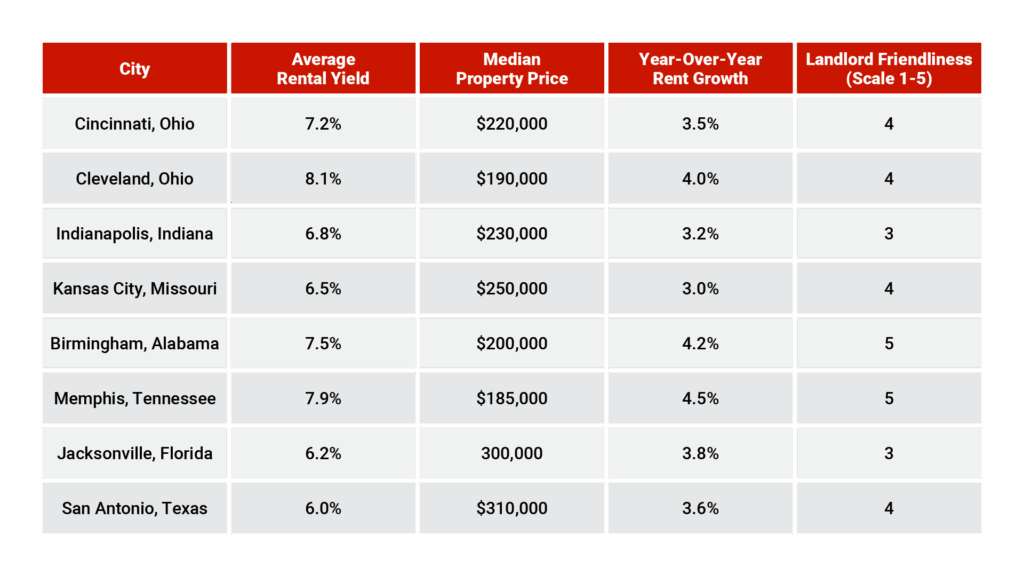
For investors focused on cash flow rather than appreciation, these markets offer the strongest rental yields and tenant demand for 2026.
Midwest Markets: Affordability Meets Stability
The Midwest continues to offer some of the best cash flow opportunities for rental property investors — and in 2026, it’s pulling ahead of Sun Belt markets in rental demand, with 11 of the top 30 most in-demand rental cities now located in the region. Cities with diverse economies, strong universities, and affordable housing stock provide reliable returns, and limited new supply is keeping vacancy rates in check.
Top Midwest rental markets:
- Cincinnati, Ohio: 7.5% average rental yield (currently ranked the most in-demand rental market in the U.S.)
- Cleveland, Ohio: 9.8% average rental yield (leading all major metros, with entry-level home prices still around $110,000)
- Indianapolis, Indiana: 7.1% average rental yield
- Kansas City, Missouri: 6.8% average rental yield
Southern Growth Centers: Yield Plus Appreciation
Several Southern markets offer the dual benefit of strong rental yields and solid appreciation potential, creating opportunities for both cash flow and equity growth. It’s worth noting that some of these markets saw rent corrections heading into 2026 due to new supply coming online — which, for patient investors, is creating attractive entry points at lower acquisition prices.
Top Southern rental markets:
- Birmingham, Alabama: 7.5% average rental yield (very low entry prices around $180,000 median maximize return potential)
- Memphis, Tennessee: 7.9% average rental yield (approximately 53% of households rent, providing a deep and reliable tenant pool)
- Jacksonville, Florida: 5.8% average rental yield (a median price dip to ~$302,000 is creating a compelling buy-in window as demand picks back up)
- San Antonio, Texas: 5.5% average rental yield (modest rent growth of ~3% expected as supply and demand rebalance)
Factors to Consider When Advising Rental Property Investors
When guiding clients toward rental property investments, consider these critical factors that will influence success in 2026:
- Local employment diversity – Markets with multiple strong industries provide insulation against sector-specific downturns
- Landlord-tenant laws – States vary significantly in their regulatory environment for landlords
- Property tax burden – High property taxes can significantly impact cash flow
- Insurance costs – Climate-related insurance increases continue to affect coastal and wildfire-prone areas, and have risen meaningfully across many Sun Belt markets in 2025–2026
- Population age demographics – Areas with growing young professional populations and strong Gen Z buyer activity typically have stronger rental demand
Cities with Highest Projected Appreciation
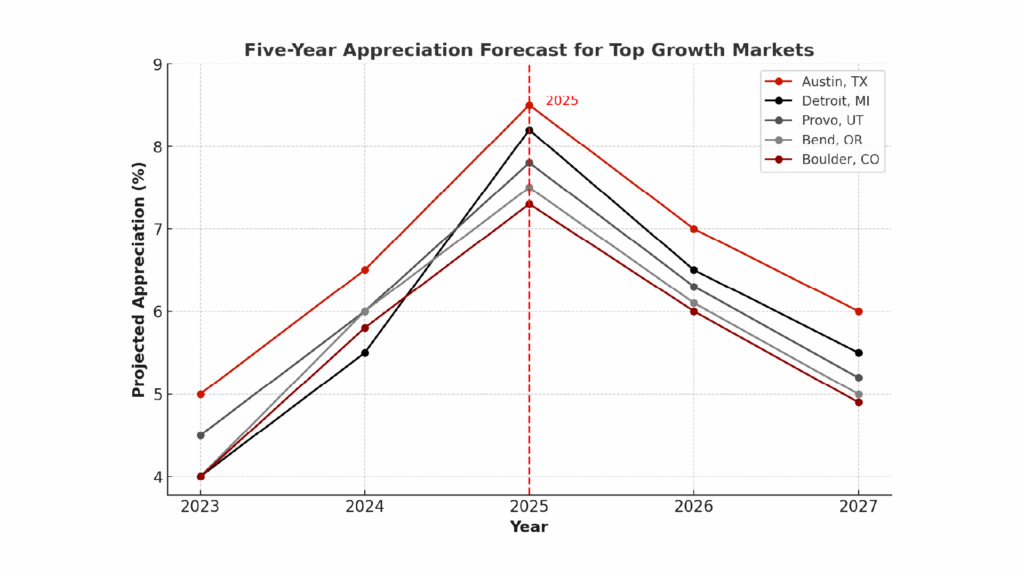
For investors focused on equity growth rather than immediate cash flow, these markets show the strongest indicators for significant appreciation through 2026.
Tech Hub Expansion Markets
As established tech hubs become increasingly expensive, nearby cities are benefiting from the spillover effect, creating new opportunities for appreciation. That said, some of the most hyped markets from earlier in the decade have moderated, while supply-constrained tech corridors continue to outperform.
Top tech expansion markets:
- Austin, Texas: 3–4% projected annual appreciation (market balanced after prior correction; steady, not speculative)
- Provo, Utah: 2–3% projected annual appreciation (Silicon Slopes corridor remains active)
- Boulder, Colorado: 5.0% projected annual appreciation (limited supply continues to drive steady gains)
- Portland, Oregon: 2–3% projected annual appreciation (market recovering)
Lifestyle Migration Destinations
Cities offering exceptional quality of life, outdoor recreation, and cultural amenities continue to attract affluent residents, driving property values upward.
Top lifestyle migration markets:
- Asheville, North Carolina: 8–10% projected annual appreciation (strong demand and limited supply driving outsized gains)
- Bend, Oregon: 6.0% projected annual appreciation
- Sarasota, Florida: 5.0% projected annual appreciation (coastal market moderating with insurance headwinds)
- Charleston, South Carolina: 8–10% projected annual appreciation (one of the hottest markets in the Southeast in 2026)
Revitalization Success Stories
Several cities experiencing successful urban revitalization are seeing property values rise as downtown areas become more desirable and attract new investment.
Top revitalization markets:
- Detroit, Michigan: 9–10%+ projected annual appreciation — now leading the nation with a reported 26.8% housing market premium; the comeback story of the decade
- Cleveland, Ohio: 7.0% projected annual appreciation (in select neighborhoods)
- Pittsburgh, Pennsylvania: 6.7% projected annual appreciation
- Baltimore, Maryland: 5.5% projected annual appreciation (in select neighborhoods)
How to Leverage This Information as a Real Estate Agent
Understanding the best investment markets positions you as a valuable resource for investor clients. Here’s how to capitalize on this knowledge:
Build Your Expertise in Target Markets
If you operate in or near one of these high-potential markets, develop specialized knowledge about investment opportunities:
- Research neighborhood-level data to identify micro-markets with the strongest potential
- Build relationships with property managers who can provide insights on rental demand and tenant quality
- Track local development projects that could impact future property values
- Monitor zoning changes that might create opportunities for investors
Expand Your Network Through Referrals
If you don’t operate in these markets, build referral relationships with agents who do:
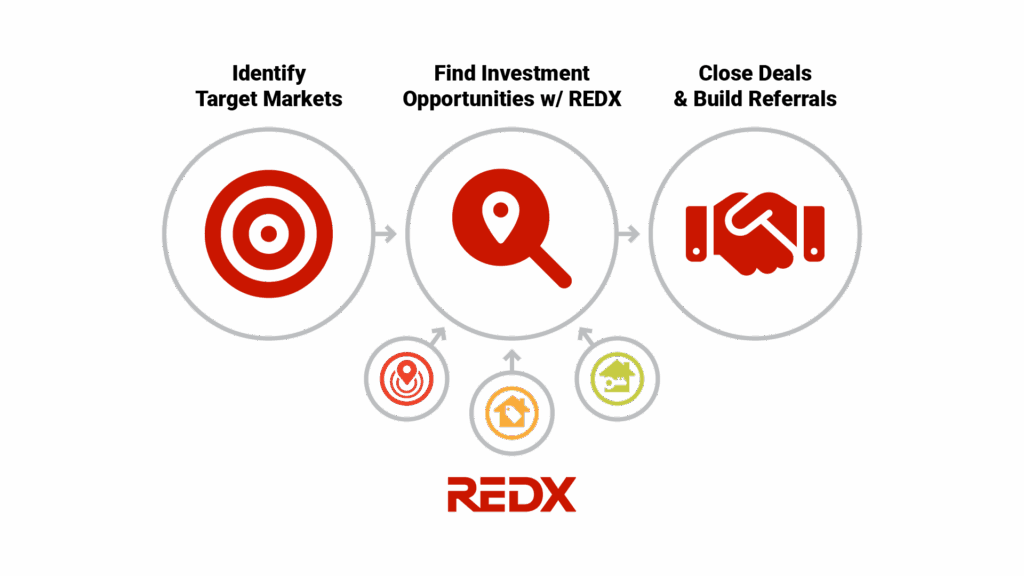
- Identify 2-3 target markets most relevant to your client base
- Connect with top-performing agents in those markets through professional networks
- Establish formal referral agreements with clear terms
- Stay informed about those markets to maintain value for your clients
Use REDX to Identify Investment Opportunities
REDX’s lead generation tools can help you find potential investment properties and connect with motivated sellers in high-growth markets:
- Use GeoLeads to target specific high-potential neighborhoods in investment markets
- Leverage FSBO Leads to find motivated sellers who might accept investor offers
- Connect with FRBO Leads to identify landlords who might be ready to sell their rental properties
- Find opportunities with Pre-Foreclosure Leads in markets with strong rental demand
Conclusion
The best cities for real estate investments in 2026 offer diverse opportunities across different investment strategies. Whether your clients seek cash flow from rental properties, long-term appreciation, or a balanced approach, understanding these market trends positions you as a valuable advisor.
Remember that national trends provide a starting point, but successful real estate investing always requires local expertise. By combining these broader market insights with your detailed knowledge of specific neighborhoods and properties, you can help your investor clients make informed decisions that align with their financial goals.
Ready to start finding investment opportunities in these high-potential markets? Explore REDX’s lead generation tools to connect with motivated sellers and build your investment property niche.
Additional Resources:
- How to Use GeoLeads to Target Investments: https://www.redx.com/blog/real-estate-farming-go-to-agent/
- National Association of Realtors Investment and Vacation Home Buyers Reports: https://www.nar.realtor/research-and-statistics
- Urban Land Institute Emerging Trends in Real Estate 2026: https://knowledge.uli.org/en/reports/emerging-trends/2026/emerging-trends-in-real-estate-united-states-and-canada-2026