Skip to content
 Updated July, 2026 – REDX Publishing Team
KEY TAKEAWAYS
- The baby boomer downsizing wave puts a huge share of home equity in motion, making retiring homeowners one of the most active selling-and-buying groups and a top listing target for 2026.
- The fastest way to find downsizing sellers is to farm the neighborhoods where they already live, not to wait for them to call you.
- Most boomer objections are emotional (leaving the family home), not financial, so your job is to guide, not to pressure.
- Tools like GeoLeads, Vortex, and the Power Dialer let you build and work a downsizing-seller list in hours instead of months.
A massive group of homeowners is sitting on paid-off houses they no longer need. They are retiring, their kids are gone, and the four-bedroom home feels like a lot to clean, heat, and climb the stairs in. They are ready to make a move, but most of them have not called an agent yet.
Below you will learn why baby boomer downsizing makes retiring homeowners such a strong listing source right now, exactly how to prospect them, and how to answer the emotional objections that hold them back.

Co-authored by the REDX Publishing Team and:
Tyler Fenn
Tyler Fenn is the founder of Listing Academy and a real estate agent actively in production.
Quick Links:
Why Are Baby Boomers a Top Listing Source in 2026?
Baby boomer downsizing is a top listing source because these owners hold the most home equity and are actively moving to homes that fit their next stage of life.
Many boomers bought their homes decades ago and have paid off most or all of the mortgage. That equity gives them options. They can buy a smaller home outright, move closer to family, or relocate to a lower-cost area without needing financing to fall in line first.
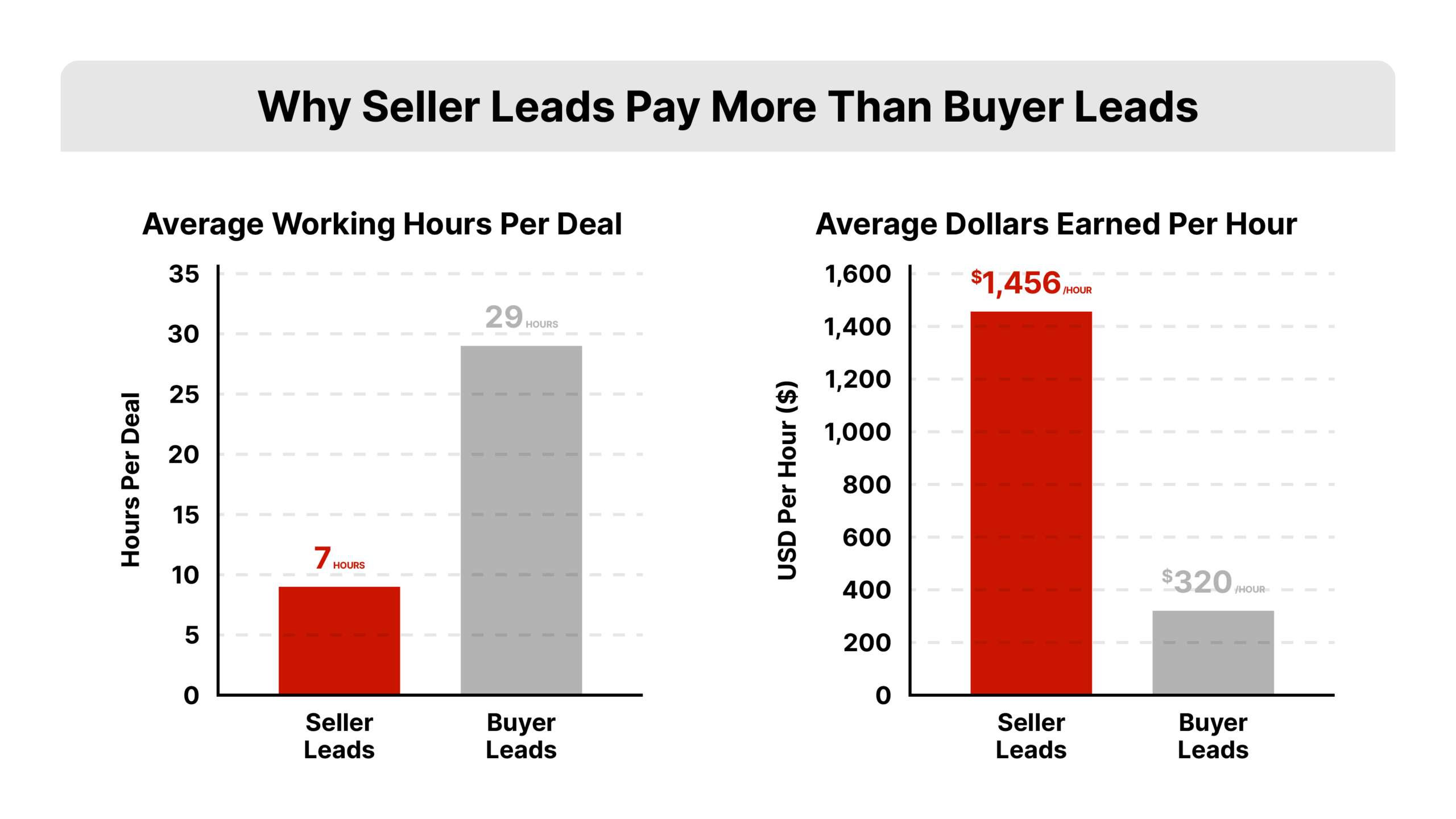
This matters for you because seller leads are far more profitable to work than buyer leads. According to Redfin agent data, the average seller deal takes about 7 working hours to complete, while the average buyer deal takes about 29 working hours. When you do the math on a Redfin audit, agents earn roughly $1,456 per hour on seller leads versus about $320 per hour on buyer leads.
What Makes a Baby Boomer Downsizing Seller Different From Other Leads?
A downsizing seller is usually both a seller and a buyer in one relationship. They need to sell the big house and buy the smaller one, which means two transactions and a longer, more trusting relationship with you.
That double opportunity is rare. Treat it well and you can earn the listing, the buy-side deal, and years of referrals to their friends in the same stage of life.
How Do I Prospect Baby Boomer Downsizing Sellers?
The most reliable way to find baby boomer downsizing sellers is to farm the established neighborhoods where long-term owners live, then reach out by phone, mail, and ads at the same time. You are looking for homeowners who have lived in place for many years, not people who just moved in.
Established neighborhoods full of original owners are gold. Many of those owners are at or near retirement, and a steady share of them will move in any given year. Your job is to be the name they already know when that day comes.
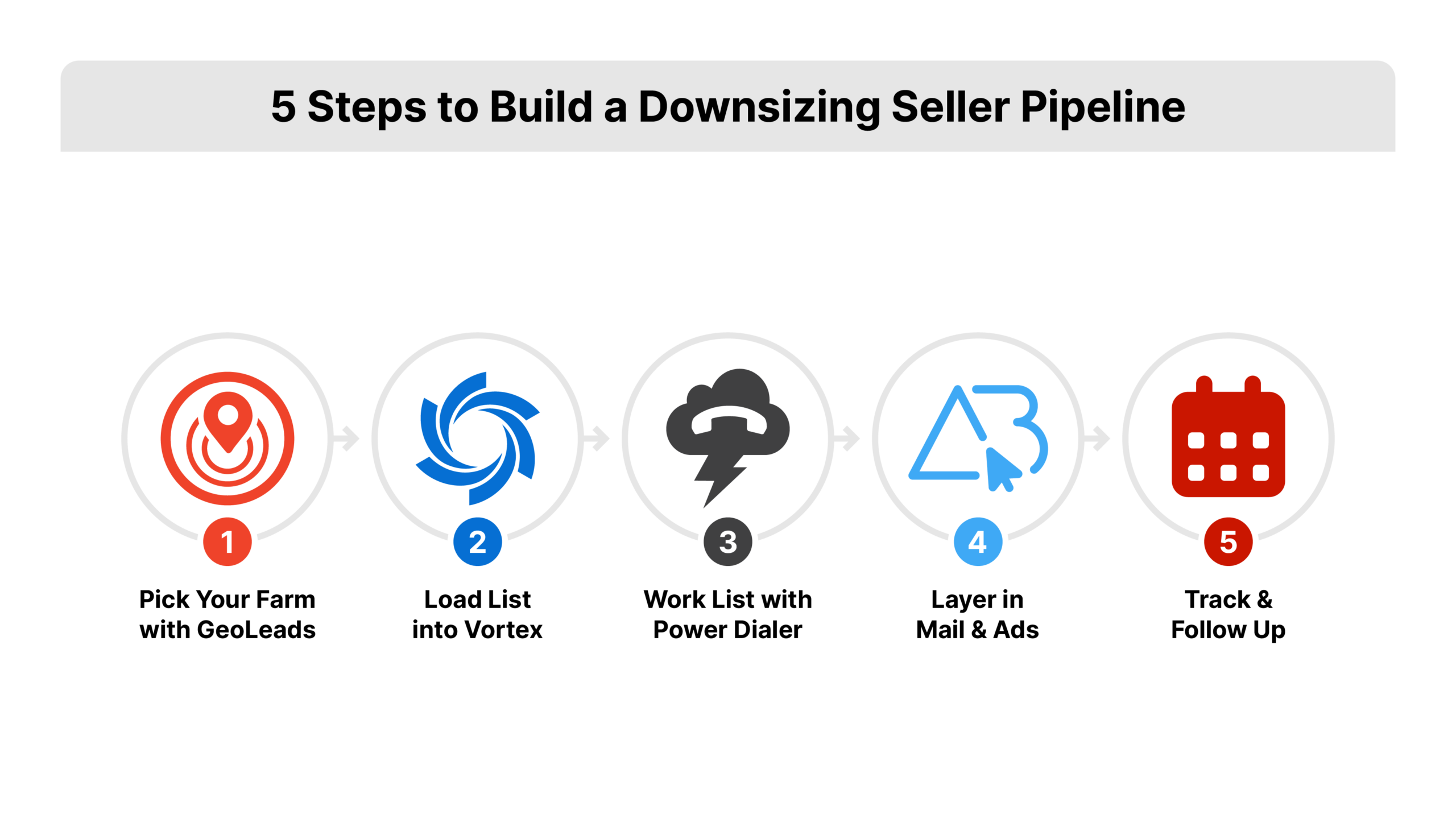
Here is a simple system to build and work your baby boomer downsizing list:
- Pick your farm. Use GeoLeads to build a targeted homeowner list by drawing the exact neighborhoods where older, long-term owners live.
- Load the list into Vortex. Pull accurate contact data and organize every homeowner in one place so nothing slips through the cracks.
- Work the list with the Power Dialer. The Power Dialer speeds up your calls by dialing your list in sequence, so you spend your time talking instead of punching in numbers.
- Layer in mail and ads. Send postcards and run local ads so your name shows up between calls.
- Track and follow up. Log every conversation and set a follow-up date, because most boomers move on their own timeline, not yours.
How Many Marketing Channels Should I Use?
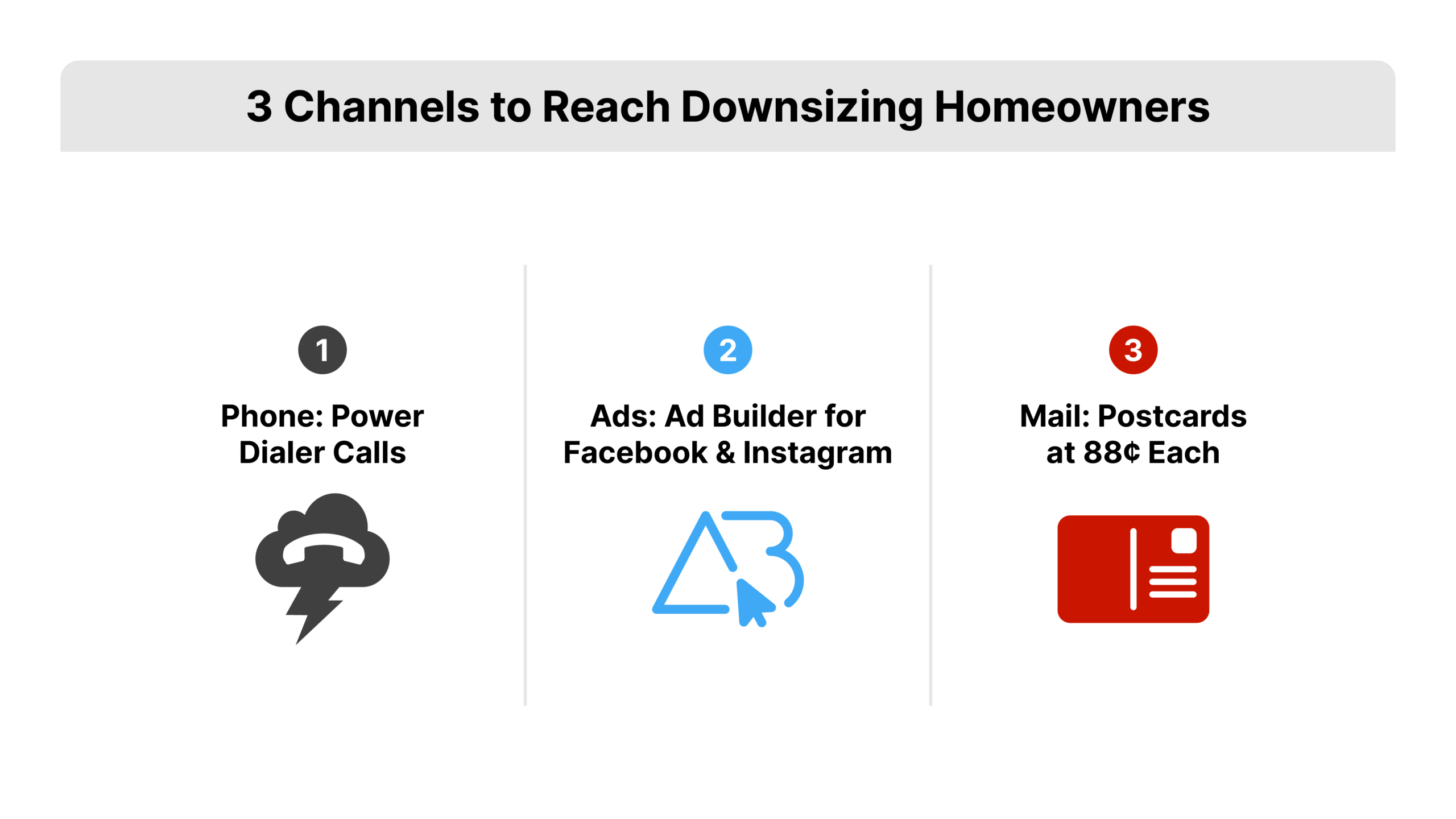
Use at least three channels at once, because repetition is what turns a stranger into the agent they call. REDX gives you three built-in ways to reach the same baby boomer downsizing homeowner.
- Phone: Power Dialer calls to start real conversations.
- Ads: Ad Builder Facebook and Instagram ads to stay visible.
- Mail: Built-in postcards at 88 cents per postcard to land in the mailbox.
When a homeowner hears from you on the phone, sees your ad, and finds your postcard in the same month, you stop being a cold caller. You become the local expert they already recognize.
What Objections Do Retiring Homeowners Have and How Do I Handle Them?
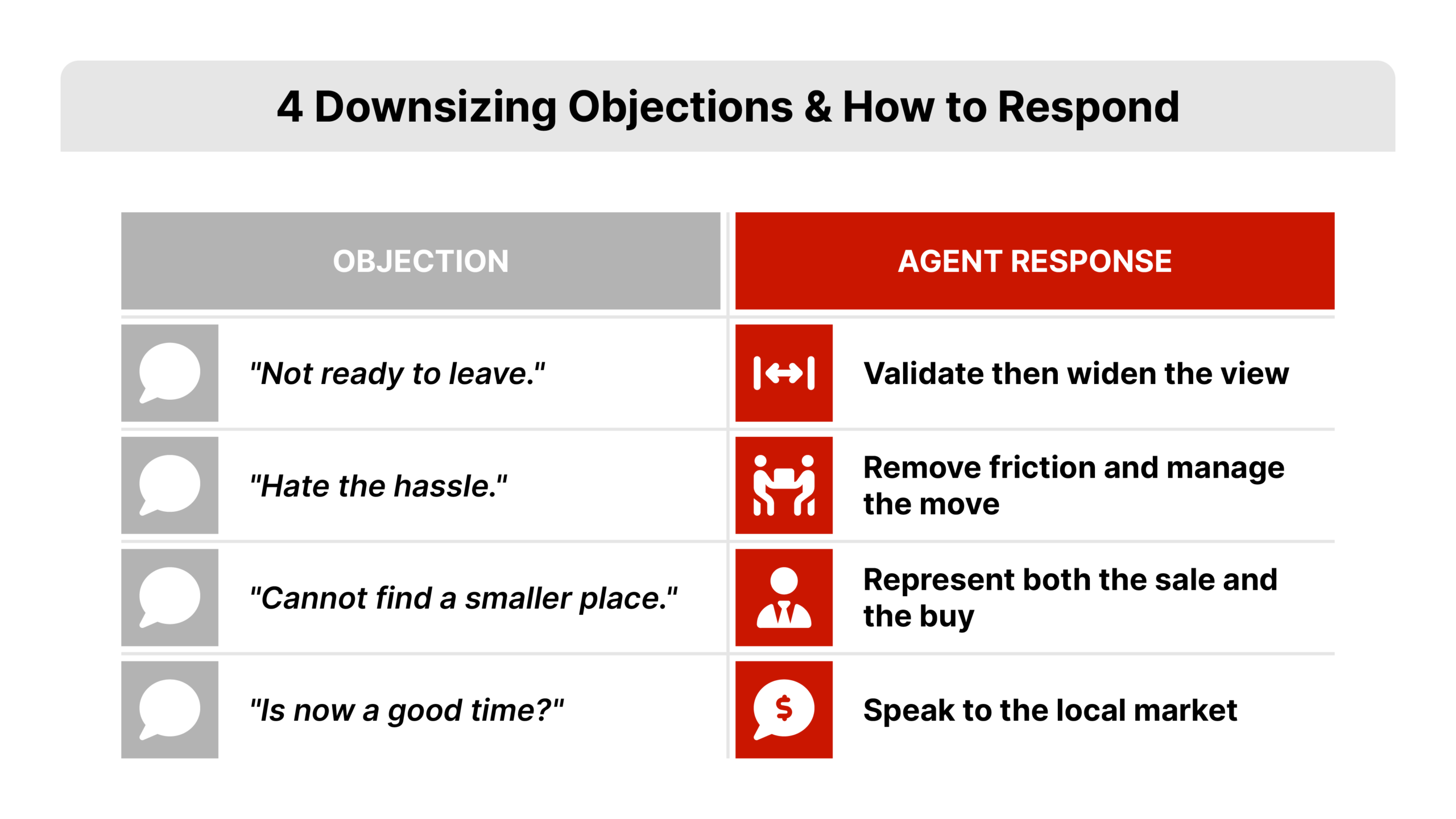
Most baby boomer downsizing objections are emotional, not financial, so the right move is to listen, validate, and guide rather than push. These owners are leaving a home full of memories, and that weight is real.
When you treat the objection as a feeling to honor instead of a wall to break, you earn trust. Here are the four you will hear most and how to handle each one.
“This is our family home. I am not ready to leave.”
Validate it first. Say something like, “Of course, you raised your family here, and that means everything.” Then gently widen the view: ask what the next chapter could look like with less upkeep and more freedom. You are not selling a house, you are helping them picture a better day-to-day.
“I do not want to deal with the hassle of moving.”
This is where you win by removing friction. Walk them through how you handle the timeline, the prep, the staging, and the coordination with their next home. The less they have to carry, the easier “yes” becomes.
“What if I sell and cannot find the right smaller place?”
Address the buy side directly. Remind them that you represent them on both ends, so you can line up the next home before they list, or build in the time they need. A downsizing seller is also a buyer, so guiding both sides is your job.
“Is now even a good time to sell?”
Keep it grounded and local. Speak to their specific neighborhood and the buyers who want exactly their kind of home, rather than national headlines. If a homeowner asks you to call them, remember to follow good calling practices and avoid numbers on the Do Not Call list. Review the REDX DNC and TCPA compliance guide before you start dialing.
How Should I Follow Up With a Baby Boomer Downsizing Lead?
Follow up on a long, patient cadence, because retiring homeowners often think about moving for months or years before they act. A one-and-done call wastes the lead.
Log every conversation in Vortex, set a clear next touch, and check in with helpful, low-pressure value each time. The agent who stays present without nagging is the one who gets the call when the decision finally lands.
Your Downsizing-Seller Action Checklist
Use this checklist to turn the baby boomer downsizing wave into booked listing appointments. Work through it this week, not someday.
- Map your farm: Identify two or three established neighborhoods full of long-term owners who fit the baby boomer downsizing profile.
- Build the list: Use GeoLeads to pull homeowner contact data for those streets.
- Organize in Vortex: Load every contact and set up your follow-up fields.
- Block call time: Schedule daily Power Dialer sessions and protect that time.
- Go multi-channel: Add postcards and local ads on top of your calls.
- Script the objections: Practice the four responses above until they feel natural.
- Stay compliant: Honor the Do Not Call list and follow the case for focusing on seller leads as you plan your week.
- Follow up forever: Treat every “not yet” as a future “yes” and keep the relationship warm.
The baby boomer downsizing wave is already here, the equity is already built, and the homeowners are already in their houses waiting for the right agent. The only question is whether you reach them before someone else does.